Ichnos Glenmark Innovation (IGI), the oncology research company associated with India’s Glenmark Pharmaceuticals, has submitted an Investigational New Drug (IND) application to the United States Food and Drug Administration (FDA) for ISB 2301, an experimental multispecific cancer immunotherapy being developed to treat solid tumours. Announced on November 17, 2026, the submission represents an important milestone in the company’s development of advanced biological medicines designed to harness the human immune system against cancer.
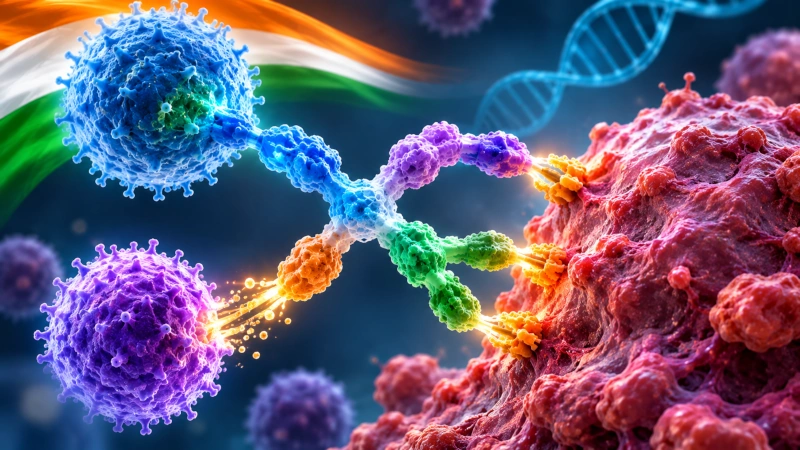
ISB 2301 is an investigational pentaspecific immune-cell activator designed to recognise three tumour-associated antigens while engaging two major components of the immune system: T cells and natural killer (NK) cells. By combining multiple tumour-recognition and immune-activation functions within a single molecule, the company aims to develop a treatment capable of addressing some of the biological challenges associated with solid tumours.
According to the official company announcement, IGI plans to initiate a Phase 1 clinical trial involving patients with solid tumours during 2027, subject to the applicable regulatory process. The proposed study will examine the treatment’s safety, tolerability, behaviour in the human body, biological activity and preliminary anti-tumour effects.
ISB 2301 Represents a New Approach to Cancer Immunotherapy
ISB 2301 belongs to a developing category of cancer medicines known as multispecific biological therapeutics. Unlike conventional antibodies designed to recognise a single molecular target, multispecific antibodies are engineered to interact with several biological targets through a single molecular structure.
The experimental therapy developed by IGI contains five distinct binding specificities. Three are designed to recognise tumour-associated antigens, while the remaining two support interactions with T cells and natural killer cells, which participate in the body’s immune response against abnormal cells.
The development approach is intended to improve the recognition of tumour cells while engaging complementary immune mechanisms capable of attacking cancer. Combining these functions within one molecule could potentially provide advantages over therapeutic approaches that rely on a single target or immune pathway, although these potential benefits remain to be established in clinical studies.
The company describes ISB 2301 as a first-in-class investigational therapy because of its intended combination of tumour-targeting and immune-cell-engaging functions. This classification reflects the novelty of the proposed treatment mechanism rather than established clinical effectiveness.
Targeting Three Tumour-Associated Antigens
One of the important features of ISB 2301 is its ability, by design, to recognise three tumour-associated antigens. These are molecular structures that may be expressed by cancer cells and can serve as targets for therapeutic antibodies.
Solid tumours present particular challenges for cancer treatment because their cells are often biologically diverse. Different cells within the same tumour may express different molecular markers, and the expression of these markers can change as a tumour develops or responds to treatment.
This biological diversity, known as tumour heterogeneity, can reduce the effectiveness of therapies directed against a single target. Cancer cells that do not express the selected target may remain unaffected, potentially contributing to treatment resistance or disease progression.
By incorporating recognition of three tumour-associated antigens, ISB 2301 is intended to address this challenge through a broader tumour-recognition strategy.
The approach is designed to identify cancer cells displaying different antigen combinations while simultaneously supporting immune-cell activity. However, whether this strategy improves treatment outcomes will depend on evidence generated through clinical trials.
Engaging T Cells and Natural Killer Cells
Another distinguishing feature of ISB 2301 is its intended ability to engage both T cells and natural killer cells, two important types of immune cells involved in recognising and eliminating abnormal cells.
T cells are specialised immune cells that participate in adaptive immune responses. Certain T-cell populations can recognise abnormal cells and destroy them through tightly regulated immune mechanisms. Cancer immunotherapies frequently seek to strengthen these responses or overcome mechanisms that prevent T cells from attacking tumours effectively.
Natural killer cells form part of the innate immune system and can recognise and destroy certain abnormal cells without requiring the same antigen-specific recognition process used by conventional T cells.
Both cell populations contribute to the body’s ability to identify and respond to malignant cells, although tumours can develop mechanisms that reduce their effectiveness.
ISB 2301 is designed to combine tumour recognition with engagement of these two immune-cell populations, potentially allowing complementary immune mechanisms to act against malignant cells.
The proposed approach reflects growing scientific interest in therapies that coordinate multiple components of the immune system rather than relying on a single immune pathway.
Addressing the Immunosuppressive Environment of Solid Tumours
Solid tumours can create a complex biological environment that interferes with the ability of immune cells to recognise and destroy cancer cells.
This environment, often described as the tumour microenvironment, contains cancer cells, supporting tissues, blood vessels, immune cells and signalling molecules. Interactions between these components can influence tumour growth, immune responses and resistance to treatment.
Some tumours develop mechanisms that suppress immune activity, limiting the effectiveness of treatments intended to stimulate the body’s natural defences.
IGI has designed ISB 2301 to address aspects of this immunosuppressive environment by combining tumour recognition with complementary immune mechanisms.
According to the company, the experimental molecule is intended to support antibody-dependent cellular cytotoxicity, checkpoint inhibition and a sustained type 1 immune response.
Antibody-dependent cellular cytotoxicity is a process through which immune cells recognise antibodies attached to target cells and participate in their destruction. Checkpoint inhibition involves interfering with molecular mechanisms that can restrain immune-cell activity, while type 1 immune responses are associated with cellular immune mechanisms relevant to controlling infections and malignant cells.
By incorporating these functions into one investigational molecule, IGI is exploring a strategy intended to address multiple barriers to effective anti-tumour immunity.
Developed Using IGI’s BEAT Multispecific Technology Platform
ISB 2301 was engineered using Ichnos Glenmark Innovation’s proprietary BEAT multispecific antibody technology platform.
The platform is designed to support the development of antibody-based therapeutics capable of interacting with several biological targets. Such technologies require specialised expertise in molecular engineering, protein design, antibody development and the biological processes governing immune-cell activity.
Multispecific antibody engineering is technically demanding because individual binding functions must be incorporated into a molecular structure that remains sufficiently stable, manufacturable and biologically active.
The resulting molecules must also undergo extensive evaluation to assess their behaviour in biological systems, including their potential for unintended immune reactions or other adverse effects.
The BEAT platform provides the technological foundation for IGI’s research into multispecific oncology therapies. ISB 2301 represents an application of this platform to solid tumours, extending the company’s development activities beyond its existing research involving haematological cancers.
Preclinical Studies Support Progression Towards Human Trials
Before submitting the IND application, IGI conducted preclinical studies to evaluate ISB 2301’s biological activity, pharmacokinetic characteristics and tolerability.
According to the company, the experimental molecule demonstrated favourable pharmacokinetic and tolerability profiles in non-human primates. These findings formed part of the supporting evidence for the company’s decision to seek regulatory clearance for human clinical testing.
Pharmacokinetic studies examine how a biological medicine behaves in the body, including its distribution, persistence and elimination. Such information helps researchers understand potential dosing requirements and assess the suitability of a candidate for further investigation.
Preclinical tolerability studies are intended to identify potential safety concerns before a medicine is administered to human participants. However, results obtained in laboratory models or animals cannot establish that a therapy will be safe or effective in humans.
IGI has described the preclinical anti-cancer findings for ISB 2301 as encouraging. The results provide a basis for further investigation but do not constitute clinical evidence that the treatment benefits patients with cancer.
The submission of the IND application therefore represents the transition towards a proposed programme of human clinical evaluation rather than completion of the medicine’s development.
Phase 1 Clinical Trial Planned for 2027
IGI plans to begin a Phase 1 clinical trial of ISB 2301 in patients with solid tumours during 2027, subject to completion of the applicable regulatory requirements.
The proposed trial will focus on evaluating safety, tolerability, pharmacokinetics, pharmacodynamics and preliminary anti-tumour activity in patients with advanced solid tumours.
Safety and tolerability assessments are particularly important for experimental immunotherapies because treatments that engage immune cells may produce complex biological responses.
Pharmacodynamic assessments will examine how the medicine affects biological processes, while pharmacokinetic evaluations will investigate how the treatment behaves within the body.
The study is also expected to collect preliminary information about anti-tumour activity, which can help researchers determine whether the therapeutic approach warrants further clinical development.
Phase 1 studies are an early stage of human drug development and are not designed to establish the full clinical effectiveness of a medicine. Even if the initial study produces encouraging results, additional clinical investigations would ordinarily be required before a treatment could receive marketing authorisation.
The November 17 announcement confirms the submission of the IND application. It does not establish that the FDA has approved the therapy for commercial use or that clinical testing has already commenced.
Ichnos Glenmark Innovation Expands Its Oncology Research Portfolio
Ichnos Glenmark Innovation is a New York-headquartered clinical-stage biotechnology company focused on developing innovative biological medicines for cancer treatment.
The company was established through the combination of oncology research capabilities associated with Glenmark Pharmaceuticals and Ichnos Sciences, bringing together expertise in antibody engineering and multispecific therapeutics.
Its research portfolio includes investigational medicines intended for haematological malignancies and solid tumours.
One of the company’s important development programmes is ISB 2001, an investigational trispecific T-cell engager targeting CD38, BCMA and CD3. The therapy is being studied for relapsed or refractory multiple myeloma, a cancer affecting plasma cells in the bone marrow.
According to IGI, its BEAT technology platform has demonstrated clinical proof of concept through early-stage clinical research involving ISB 2001. The company has reported encouraging anti-tumour activity and safety findings in heavily pretreated patients participating in an investigational Phase 1 study.
The development of ISB 2301 represents an expansion of the company’s multispecific antibody research into solid tumours, a broad category that includes many cancers arising in organs and tissues.
Although ISB 2001 and ISB 2301 are both based on multispecific therapeutic approaches, they are distinct investigational medicines with different molecular targets and intended clinical applications.
Indian Pharmaceutical Innovation Extends into Advanced Biological Medicines
The IND submission represents a noteworthy development for Glenmark Pharmaceuticals’ research and innovation activities because it highlights the company’s participation in advanced biological drug development.
India’s pharmaceutical industry has traditionally been recognised internationally for manufacturing generic medicines, active pharmaceutical ingredients and affordable pharmaceutical products. Alongside these established capabilities, Indian pharmaceutical companies have increasingly invested in innovative drug discovery, biotechnology and the development of complex biological medicines.
Multispecific antibodies represent a particularly specialised area of pharmaceutical research, requiring expertise in molecular biology, protein engineering, immunology, translational science and clinical development.
The development of ISB 2301 through Ichnos Glenmark Innovation illustrates the participation of Indian-origin pharmaceutical research enterprises in this advanced segment of oncology drug development.
The programme also reflects the international nature of contemporary pharmaceutical innovation, with research organisations combining scientific expertise, specialised development platforms and regulatory processes across different countries.
The submission to the US FDA is an important regulatory milestone for the investigational programme, although successful clinical development and eventual commercial approval remain dependent on future evidence.
An Important Milestone in Glenmark’s Cancer Research Programme
The submission of the Investigational New Drug application for ISB 2301 marks an important step in Ichnos Glenmark Innovation’s efforts to develop a new generation of multispecific cancer immunotherapies.
The experimental medicine is designed to combine recognition of three tumour-associated antigens with engagement of T cells and natural killer cells, bringing multiple tumour-targeting and immune functions together within a single molecular structure.
This approach is intended to address challenges associated with tumour heterogeneity and immune suppression, two important barriers to effective treatment of solid cancers.
Preclinical research has provided the initial scientific basis for advancing ISB 2301 towards human evaluation, while the planned Phase 1 programme in 2027 will seek to establish essential information about its safety and biological activity.
The development also highlights Glenmark’s continuing investment in innovative pharmaceutical research and the growing participation of Indian-origin companies in the development of advanced biological medicines.
Although ISB 2301 remains an investigational therapy whose effectiveness in humans has not yet been established, its progression to the regulatory submission stage represents a constructive milestone in the company’s oncology research programme.
The announcement reinforces the importance of sustained investment in scientific research, molecular engineering and clinical innovation as Indian pharmaceutical enterprises expand their contribution to the international development of new cancer therapies.
You may also like
-
IN-SPACe Selects Three Indian Space Companies to Develop Indigenous Satellite-Based 3D City Mapping Technology
-
Sigma Advanced Systems and Spain’s EM&E Launch Joint Venture for Advanced Defence Manufacturing in India
-
Aether Industries Partners with Baker Hughes to Establish India’s First Dedicated Drag-Reducing Agents Manufacturing Facility
-
India’s Solar Power Capacity Reaches 175 GW, Expanding 62-Fold Since 2014
-
Bharat Dynamics and Italy’s WASS Sign Agreement to Strengthen India’s Underwater Weapons Manufacturing Capabilities
