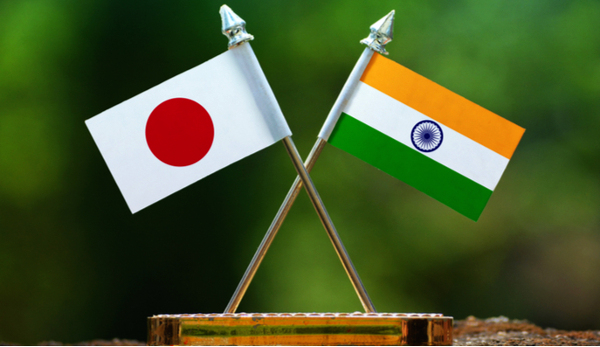
India and Japan are set to strengthen their strategic and defence partnership through the fourth India–Japan Foreign and Defence Ministers’ Dialogue, scheduled to take place in Tokyo during Defence Minister Rajnath Singh’s official visit to Japan from 18 to 19 November 2026. The discussions will focus on expanding defence technology cooperation, maritime security, joint military exercises and industrial partnerships between the two countries.
Defence Minister Rajnath Singh and External Affairs Minister Dr S. Jaishankar will co-chair the dialogue alongside Japanese Defence Minister Shinjiro Koizumi and Foreign Minister Toshimitsu Motegi.
The meeting will review the full spectrum of bilateral strategic and defence cooperation, exchange assessments of regional and global security developments, and reaffirm the commitment of both countries to a free, open, inclusive and rules-based Indo-Pacific.
The dialogue comes amid expanding defence engagement between India and Japan, including growing cooperation between their armed forces, discussions on defence technology transfers and efforts to develop closer partnerships between their defence industries.
Defence Ministers to Review Military and Industrial Cooperation
During his two-day visit, Rajnath Singh will also hold separate bilateral discussions with Japanese Defence Minister Shinjiro Koizumi. This will be their third meeting in 2026, following engagements in New Delhi in August and during the ASEAN Defence Ministers’ Meeting-Plus in Cebu, Philippines, in October.
The discussions are expected to examine opportunities for advancing cooperation in defence equipment and technology, maritime security and military exercises involving the armies, navies and air forces of both countries.
The two ministers will also review ways to deepen defence industrial partnerships, including opportunities for collaboration between Indian and Japanese manufacturers.
India and Japan have increasingly emphasised the importance of translating their strategic partnership into practical military and technological cooperation. The forthcoming dialogue provides another opportunity to review existing programmes and identify areas requiring further coordination.
Maritime Security and Naval Cooperation
Maritime security is expected to remain a major component of the discussions, building upon the Memorandum of Arrangement on Maritime Security Cooperation signed by the two defence ministers in New Delhi on 20 August 2026.
The arrangement established a framework for closer cooperation between the Indian Navy and the Japan Maritime Self-Defense Force, particularly in maritime domain awareness, search and rescue, and humanitarian assistance and disaster relief.
Both countries agreed to strengthen information-sharing concerning maritime activities and improve coordination for protecting important sea lines of communication.
The August discussions also examined the potential for closer cooperation in mine countermeasures, naval shipbuilding, ship design and maintenance facilities.
India and Japan have complementary maritime interests because major international trade routes connect the Indian Ocean with the Western Pacific through Southeast Asian waters.
For India, stronger naval cooperation with Japan supports its maritime security partnerships across the Indo-Pacific and complements efforts to improve regional maritime domain awareness.
Japan–India Defence Technology Cooperation and UNICORN System
Defence equipment and technology cooperation represents another important dimension of the bilateral relationship.
During their August 2026 meeting, the two defence ministers reaffirmed their commitment to advancing the proposed transfer of Japan’s shipborne UNICORN integrated communications antenna system to India.
The project has been identified by both governments as the first defence equipment transfer project between the two countries and an important step in expanding their technology partnership.
The UNICORN system integrates multiple communications antennas into a consolidated arrangement designed for installation aboard naval vessels. Its configuration is intended to improve antenna management and reduce the radar signature associated with conventional antenna installations.
The two countries have been working to advance the project through the necessary technical, administrative and governmental procedures.
The forthcoming dialogue offers an opportunity to review progress in defence equipment cooperation, including the UNICORN initiative, while examining additional areas of technological collaboration.
Opportunities for Joint Naval Shipbuilding and Make in India
India and Japan have also identified naval shipbuilding and ship design as potential areas of industrial cooperation.
During their previous discussions, the two defence ministers agreed to explore opportunities for combining Japan’s technological expertise with India’s shipbuilding and manufacturing capabilities.
The discussions included the possibility of joint development in naval shipbuilding and design, strengthening mine countermeasure capabilities and expanding cooperation in ship maintenance and repair.
Both sides also expressed interest in examining how India’s production capabilities could support Japanese defence requirements under the Make in India framework.
Such cooperation could provide opportunities for Indian shipyards, naval equipment manufacturers and specialised engineering companies to develop industrial partnerships with Japanese firms.
However, joint shipbuilding projects remain areas under discussion, and the governments have not announced a completed bilateral shipbuilding production agreement under these proposals.
Expanding Joint Military Exercises Across Three Services
India and Japan are also seeking to increase the scale and complexity of joint military exercises involving their armed forces.
Existing bilateral engagements include Exercise Dharma Guardian between the armies, the Japan–India Maritime Exercise (JAIMEX) between the navies and Exercise Veer Guardian involving their air forces.
The two countries have discussed expanding these exercises to incorporate more complex operational scenarios, unmanned systems and opportunities for exercises conducted at shorter notice.
An important development in 2026 was the participation of Japan Air Self-Defense Force fighter aircraft in Exercise Veer Guardian 26 in India, marking the first visit of Japanese fighter aircraft to India for the exercise.
The October 2026 meeting between the defence ministers acknowledged progress in air force cooperation and the significance of expanding interactions between the two services.
Closer military exercises provide opportunities for personnel to familiarise themselves with each other’s operational procedures, communications practices and approaches to coordinated missions.
Defence Research and Industrial Partnerships
India and Japan have also agreed to strengthen cooperation between India’s Defence Research and Development Organisation and Japan’s Acquisition, Technology and Logistics Agency.
The cooperation is intended to support engagement in advanced defence technologies and research areas of mutual interest.
In addition, the two countries have been encouraging closer interaction between their defence industries.
An India–Japan Defence Industry Forum held at the Embassy of India in Tokyo brought together representatives of approximately 40 companies from the two countries.
The forum provided an institutional platform for industry representatives to explore technological cooperation, manufacturing partnerships and opportunities in the defence equipment sector.
The forthcoming ministerial dialogue will provide an opportunity to build upon these engagements and examine ways to strengthen coordination between government agencies, research institutions and private defence manufacturers.
Strategic Cooperation in the Indo-Pacific
India and Japan share a Special Strategic and Global Partnership founded on longstanding diplomatic relations, economic cooperation and expanding security engagement.
Both countries have emphasised the importance of maintaining freedom of navigation, peaceful dispute resolution and respect for international law across the Indo-Pacific.
The geographical positions of India and Japan give them important roles in regional maritime security, with India situated along major Indian Ocean shipping routes and Japan occupying a strategically significant position in the Western Pacific.
Their expanding defence cooperation reflects the growing importance of maritime connectivity, technological resilience and cooperation among regional security partners.
The bilateral relationship also operates alongside wider multilateral engagements, including cooperation through the Quad framework involving India, Japan, Australia and the United States.
Strengthening India’s Defence and Maritime Capabilities
The fourth India–Japan 2+2 Ministerial Dialogue provides an important opportunity to consolidate progress made during successive defence engagements in 2026.
The discussions on maritime domain awareness, defence technology, naval shipbuilding and military exercises are particularly relevant to India’s efforts to strengthen its defence capabilities and expand international industrial partnerships.
Potential cooperation involving Japanese defence technologies and Indian manufacturing facilities also aligns with the objectives of Atmanirbhar Bharat and Make in India.
The dialogue reflects the commitment of both countries to developing practical cooperation across operational, technological and industrial domains.
By strengthening defence engagement and exploring complementary capabilities, India and Japan are advancing a partnership that contributes to maritime security, technological cooperation and greater stability across the Indo-Pacific.
You may also like
-
India and Egypt Strengthen Strategic Partnership, Target USD 12 Billion Bilateral Trade
-
Quad Leaders Announce New Maritime Security, AI and Cybersecurity Initiatives at Manila Summit
-
From Enemy Prince to Allied King: Vibhīṣaṇa and the Politics of Strategic Realignment
-
Data Patterns Advances Indigenous Counter-Drone Systems, Electronic Warfare Technologies and Microsatellites
-
TechEra Engineering Secures Indian Air Force Order for Electrical Coolanol Unit
