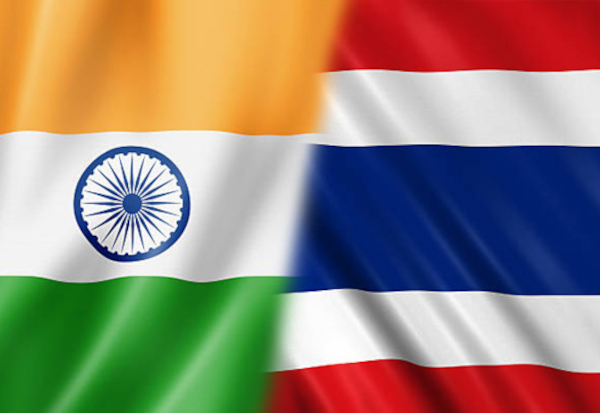
India and Thailand reviewed their expanding bilateral economic partnership at the 14th meeting of the India–Thailand Joint Trade Committee (JTC), held in Nonthaburi, Thailand, on November 16, 2026. The discussions focused on strengthening trade and investment, improving market access, expanding cooperation in emerging industries and exploring greater integration between the two countries’ digital payment systems.
The meeting was co-chaired by Nitin Kumar Yadav, Additional Secretary, Department of Commerce, Ministry of Commerce and Industry, Government of India, and Chotima Iemsawasdikul, Director-General, Department of Trade Negotiations, Ministry of Commerce, Thailand. Representatives of relevant ministries, departments and organisations from both countries participated in the discussions.
Bilateral Trade Registers 12.6% Growth
India and Thailand recorded bilateral trade of USD 21.49 billion during the financial year 2025–26, representing an increase of 12.6% over the previous financial year. Thailand accounted for 16.7% of India’s total trade with the Association of Southeast Asian Nations (ASEAN), highlighting its importance as one of India’s major economic partners in Southeast Asia.
Both delegations acknowledged the positive momentum in bilateral trade and the contribution of the Joint Trade Committee in facilitating commercial engagement. The two sides reaffirmed their commitment to expanding trade and investment, improving market access and addressing challenges affecting businesses operating between the two countries.
The meeting also provided an opportunity to review existing economic arrangements and identify additional sectors where closer cooperation could strengthen commercial relations.
India Highlights Investment Opportunities in Manufacturing and Infrastructure
India presented investment opportunities across several priority sectors, including infrastructure and logistics, automotive manufacturing, electric vehicles, food processing, agro-industries, electronics, semiconductors, tourism, hospitality and wellness.
These sectors represent important areas for industrial investment and economic cooperation between India and Thailand. Both countries have established manufacturing capabilities and participate in regional supply chains, particularly in automotive components, electronics and industrial products.
Thailand presented its economic outlook and investment facilitation measures, including its Co-Creation Co-Investment approach to encouraging collaborative investment.
India welcomed the Thai initiative and agreed to examine the proposal further in consultation with the relevant ministries and departments. The discussions did not constitute the announcement of a finalised investment agreement under the proposed framework.
Reviewing ASEAN–India Trade Agreements
An important component of the meeting was the discussion on improving utilisation of the ASEAN–India Trade in Goods Agreement (AITIGA) and the India–Thailand Early Harvest Scheme.
Both countries examined the possibility of establishing a mechanism for the annual exchange of bilateral trade data and information concerning the utilisation of preferential trade arrangements.
Such a mechanism would help officials identify sectors where existing trade preferences are underutilised, examine implementation challenges and explore measures to improve the effectiveness of preferential trade arrangements.
The two delegations also emphasised the importance of achieving an early and meaningful conclusion to the ongoing review of AITIGA.
The review is particularly relevant to efforts aimed at improving the functioning of the trade agreement and addressing concerns that have emerged during its implementation.
Addressing Market Access and Non-Tariff Barriers
India and Thailand discussed several regulatory and procedural challenges affecting bilateral trade, particularly in agricultural, livestock and marine products.
The discussions covered sanitary and phytosanitary measures, certification procedures, quality standards and other regulatory requirements that influence the movement of goods between the two markets.
Both sides also examined the removal of non-tariff barriers and improvements in market access conditions for exporters.
These issues are significant for businesses seeking to expand trade in agricultural commodities, processed foods, marine products and other regulated goods, where compliance with technical and certification requirements forms an important part of international commerce.
The discussions reflected the two governments’ intention to address practical trade-related difficulties through continued engagement between their respective authorities.
UPI–PromptPay Linkage and Local Currency Settlement Discussed
Digital payments and financial connectivity emerged as another important area of discussion during the Joint Trade Committee meeting.
India and Thailand explored the proposed linkage between India’s Unified Payments Interface (UPI) and Thailand’s PromptPay payment system.
The two countries also discussed local currency settlement arrangements and opportunities for financial technology cooperation between the Reserve Bank of India and the Bank of Thailand.
A potential linkage between UPI and PromptPay would provide a framework for improving cross-border payment connectivity between the two countries, subject to the necessary technical, regulatory and institutional arrangements.
Local currency settlement was also examined as an area of possible cooperation in bilateral financial transactions.
The meeting represented a continuation of discussions on these financial connectivity initiatives rather than the announcement of an operational UPI–PromptPay linkage or a finalised local currency settlement mechanism.
Expanding Cooperation in Pharmaceuticals, AYUSH and Services
The two delegations identified several additional sectors for strengthening bilateral economic engagement.
These included pharmaceuticals and healthcare, AYUSH and traditional medicine, textiles, plastics and petrochemicals, gems and jewellery, and services.
Cooperation in pharmaceuticals and healthcare offers an avenue for closer engagement between the two countries’ medical and industrial sectors. The inclusion of AYUSH and traditional medicine also reflects opportunities for exchanging knowledge and developing institutional and commercial partnerships in established systems of traditional healthcare.
The discussions further covered cooperation between trade promotion organisations, recognising their role in connecting businesses, encouraging commercial exchanges and facilitating participation in international markets.
Strengthening India–Thailand Economic Partnership
The 14th Joint Trade Committee meeting reaffirmed the commitment of India and Thailand to expanding their bilateral economic relationship through trade facilitation, investment cooperation, regulatory engagement and financial connectivity.
Both co-chairs encouraged officials to continue discussions through working-level meetings before the next Joint Trade Committee session. These engagements will provide opportunities to pursue the issues identified during the Nonthaburi meeting and examine practical measures for improving bilateral commercial cooperation.
The next meeting of the India–Thailand Joint Trade Committee will be held in India.
With bilateral trade reaching USD 21.49 billion in FY 2025–26, the discussions underline the growing economic engagement between the two countries. Continued cooperation in manufacturing, emerging technologies, digital payments and market access forms an important component of the India–Thailand partnership and India’s wider economic engagement with ASEAN.
You may also like
-
Vibhīṣaṇa’s Counsel to Rāvaṇa: The Importance of Dissent in Foreign Policy
-
The Debate Over Vibhīṣaṇa: Intelligence Assessment, Security Risks and Political Asylum
-
India and Singapore Strengthen Innovation and Education Cooperation Through Fourth Bilateral Hackathon
-
India–Philippines Development Partnership Focuses on Local Communities, Healthcare and Livelihoods
-
Piyush Goyal Visits Egypt to Strengthen Trade and Investment Ties as Bilateral Commerce Reaches $6.5 Billion
