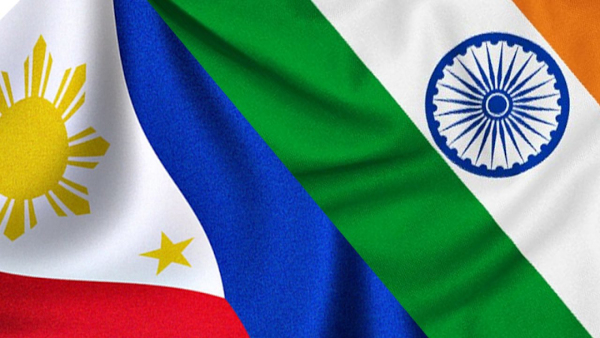
India’s development partnership with the Philippines is guided by the priorities and requirements of local communities, Indian Ambassador to the Philippines Harsh Kumar Jain has said, highlighting the people-centric approach that underpins bilateral cooperation between the two countries.
Speaking in an exclusive interaction with Akashvani News ahead of Prime Minister Narendra Modi’s scheduled visit to the Philippines on November 16–17, Ambassador Jain expressed optimism about the bilateral relationship and the opportunities for strengthening cooperation in development and other mutually beneficial sectors.
India and the Philippines have established institutional mechanisms for development assistance, including grant-supported community projects, capacity-building programmes and technical cooperation. These initiatives form part of the broader bilateral relationship, which also encompasses economic engagement, maritime cooperation, defence, technology and cultural exchanges.
Development Cooperation Guided by Local Priorities
India’s development partnership with the Philippines follows an approach that places the needs of local communities at the centre of project identification and implementation.
A significant institutional development occurred on February 7, 2023, when India and the Philippines signed an agreement establishing a framework for Indian grant assistance to implement Quick Impact Projects in the Philippines.
The agreement created a mechanism through which India could provide financial assistance for small-scale socioeconomic development projects identified in consultation with Philippine authorities.
The Quick Impact Projects framework is designed to support initiatives that deliver direct and visible benefits to local communities, particularly through improvements in essential infrastructure and public services.
The agreement covers the creation and improvement of physical infrastructure, including roads and community centres, as well as social infrastructure associated with education, healthcare, sanitation and community development.
The number of projects and their corresponding financial allocations are to be mutually agreed upon by the governments of India and the Philippines.
Six Community Development Projects Identified
The development partnership acquired a further institutional dimension on July 15, 2024, when implementing agencies from the two countries signed individual Memoranda of Agreement for six Quick Impact Projects.
The agreements were concluded between the Embassy of India in Manila and the Philippines’ Department of the Interior and Local Government.
According to the Ministry of External Affairs, the six projects cover four important sectors: agriculture, disaster risk reduction and management, healthcare and livelihood support.
These sectors reflect the practical priorities of community development, particularly in areas where improvements in agricultural productivity, access to healthcare, disaster preparedness and income-generating opportunities can contribute to local socioeconomic progress.
The agreements established the framework for implementing the identified projects through cooperation between Indian and Philippine authorities.
Cooperation in Agriculture and Rural Development
Agriculture constitutes an important component of India–Philippines development cooperation, supported by an existing bilateral agreement on agricultural collaboration.
The two countries signed a Memorandum of Understanding on Cooperation in Agriculture and Related Fields on November 13, 2017.
This agreement provides an institutional foundation for exchanges involving agricultural knowledge, technical expertise and cooperation in related fields.
India has also shared experience in agricultural risk management with Philippine officials. In May 2022, a training session on the Pradhan Mantri Fasal Bima Yojana was organised for representatives of the Philippine Department of Agriculture, Department of Finance and Philippine Crop Insurance Commission.
The programme provided an opportunity for Philippine officials to examine India’s experience with agricultural insurance and mechanisms intended to protect farmers against crop-related risks.
Agricultural cooperation also extends to research and crop development. In October 2023, samples of ultra-low glycaemic index rice developed by the International Rice Research Institute’s Regional Research Centre in Varanasi were presented to Philippine President Ferdinand Marcos Jr. during the sixth International Rice Congress in Manila.
These exchanges demonstrate the scope of agricultural cooperation between the two countries, encompassing institutional training, research and the sharing of technical knowledge.
Healthcare, Disaster Preparedness and Livelihood Support
Healthcare and disaster risk management are among the sectors identified under the six Quick Impact Project agreements signed in July 2024.
The inclusion of these areas reflects the importance of strengthening community-level services and improving local capacity to address developmental and environmental challenges.
Disaster preparedness is particularly relevant to the Philippines, which regularly faces tropical cyclones and other natural hazards. Community-oriented development cooperation provides a framework for supporting locally identified disaster risk reduction and management requirements.
Healthcare-related projects fall within the wider objective of improving access to essential social infrastructure and services.
Livelihood support initiatives similarly form part of the bilateral development framework, with the objective of addressing socioeconomic requirements identified by local communities and Philippine implementing agencies.
By including healthcare, agriculture, disaster management and livelihoods within its development cooperation framework, India has established a mechanism for supporting practical development priorities identified by its Philippine partner.
Capacity Building and Technical Cooperation
Training and professional development constitute another important dimension of India–Philippines relations.
Through the Indian Technical and Economic Cooperation programme, India provides training opportunities for officials and professionals from partner countries across a range of specialised disciplines.
These include public administration, agriculture, engineering, information technology, healthcare, environmental management and other areas of socioeconomic development.
According to the Ministry of External Affairs Annual Report 2024, eight Philippine civilian government officials and 23 members of the Philippine Armed Forces attended ITEC training courses in India during 2024.
The programme represents an established channel for professional exchanges and knowledge sharing between the two countries.
Such training initiatives complement development assistance by supporting institutional capabilities and enabling participating officials to gain exposure to technical and administrative practices.
Strengthening Financial Technology Cooperation
India and the Philippines have also established a framework for cooperation in financial technology and digital financial services.
On June 19, 2023, the two countries signed a Memorandum of Understanding providing for the establishment of a Joint Working Group on Financial Technology Cooperation.
The initiative covers digital payments, financial inclusion, financial technology and related areas of mutual interest.
The first meeting of the Joint Working Group took place in New Delhi on September 12, 2024.
The mechanism provides an institutional platform for discussing developments in financial technology and examining opportunities for cooperation between the two countries.
India’s experience in digital public infrastructure and financial inclusion forms part of its wider international engagement in technology-enabled development.
India–Philippines Cooperation Within the Act East Policy
India’s development partnership with the Philippines forms part of its broader engagement with Southeast Asia under the Act East Policy.
The Philippines has an important role in India’s relations with the Association of Southeast Asian Nations, particularly through cooperation in maritime affairs, economic development and regional connectivity.
The Philippines is serving as the ASEAN country coordinator for India–ASEAN relations during the 2025–2028 period.
Bilateral relations have also been strengthened through the India–Philippines Strategic Partnership and the Plan of Action for 2025–2029.
The development partnership operates alongside cooperation in defence, trade, technology, investment, maritime security and people-to-people exchanges, reflecting the multidimensional character of the relationship.
Prime Minister’s Philippines Visit Provides Diplomatic Context
Ambassador Harsh Kumar Jain’s remarks come ahead of Prime Minister Narendra Modi’s scheduled visit to the Philippines from November 16 to 17, 2026.
The Prime Minister is scheduled to participate in the 23rd ASEAN–India Summit and the 21st East Asia Summit in Manila on November 17.
The engagements will provide an opportunity for India to review its relations with ASEAN countries and discuss regional cooperation in areas including trade, maritime security, connectivity and development.
The Philippines’ role as ASEAN Chair in 2026 adds significance to the meetings, particularly as India continues to strengthen its Comprehensive Strategic Partnership with ASEAN.
The bilateral development partnership between India and the Philippines represents an important component of this wider diplomatic engagement.
India’s community-focused development cooperation with the Philippines demonstrates the practical dimension of its Act East Policy, combining grant assistance, technical expertise, institutional training and locally identified development priorities.
The established Quick Impact Projects framework, agricultural cooperation mechanisms, training programmes and financial technology dialogue provide a foundation for continued collaboration, reflecting the commitment of India and the PhilippinNew Delhi, November 15, 2026:es to strengthening their partnership through mutually beneficial development initiatives.
You may also like
-
Piyush Goyal Visits Egypt to Strengthen Trade and Investment Ties as Bilateral Commerce Reaches $6.5 Billion
-
Indian Army Chief General Dhiraj Seth Embarks on Official Visit to Czech Republic to Strengthen Defence Cooperation
-
India and Belgium Discuss Naval Technology Cooperation During Belgian Navy Commander’s Visit
-
India Commits Over €7 Million to Italy’s Elettra 2.0 Synchrotron Research Programme
-
Vibhīṣaṇa’s Defection: Rāma’s Decision to Grant Asylum to an Enemy Prince
