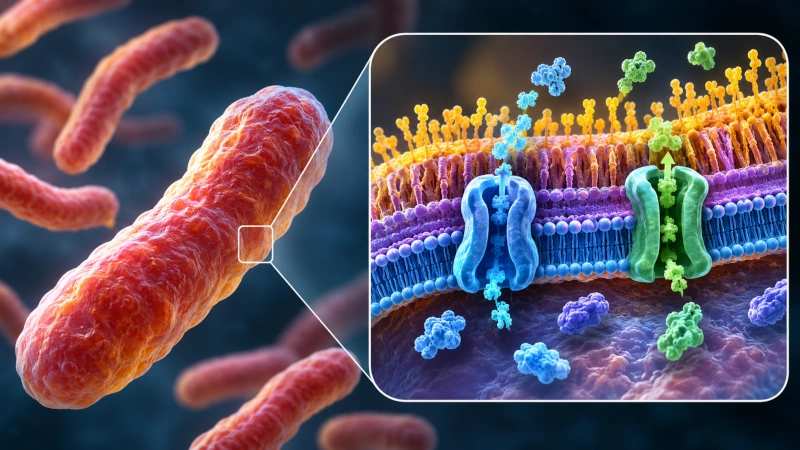
Scientists at the CSIR–Centre for Cellular and Molecular Biology (CCMB), Hyderabad, have identified critical vulnerabilities in the cellular machinery of Mycobacterium tuberculosis, the bacterium responsible for tuberculosis. The findings could provide new molecular targets for developing future treatments against tuberculosis, including infections caused by drug-resistant strains.
The research, published in the international peer-reviewed journal Molecular & Cellular Proteomics, reveals how specialised protein secretion pathways help maintain the structural integrity and survival of the tuberculosis bacterium. By experimentally suppressing two important protein transport systems, researchers demonstrated that bacterial growth and survival could be substantially impaired, while the protective bacterial cell envelope became increasingly unstable.
The investigation was led by scientists associated with CSIR-CCMB, in collaboration with researchers from the Institute of Mathematical Sciences in Chennai, the National Institute of Immunology in New Delhi and the Translational Health Science and Technology Institute in Faridabad. The findings highlight the importance of understanding fundamental bacterial processes when identifying new therapeutic strategies against infectious diseases.
Understanding the Protein Transport Machinery of Tuberculosis Bacteria
Tuberculosis is caused by Mycobacterium tuberculosis, a bacterial pathogen capable of surviving within human immune cells and establishing persistent infections. Its survival depends on several specialised cellular mechanisms, including the transportation of proteins to different locations within and outside the bacterial cell.
These proteins perform essential functions in bacterial growth, cell envelope maintenance, metabolism and interactions with infected host cells. Some also contribute to the bacterium’s ability to evade immune responses and sustain infection.
The movement of proteins across bacterial membranes is controlled by specialised molecular transport systems known as protein secretion pathways. These pathways allow proteins manufactured inside the bacterial cell to reach the locations where they are required.
Researchers have long recognised that protein secretion plays an important role in tuberculosis bacterial biology. However, understanding how the different secretion systems operate together, and how their disruption affects bacterial survival, has remained an important area of scientific investigation.
The CSIR-CCMB study examined these interconnected mechanisms to identify vulnerabilities that could eventually be exploited in the development of new antibacterial treatments.
Researchers Map 92 Components and 198 Molecular Reactions
The research team developed a comprehensive representation of the protein secretion machinery of Mycobacterium tuberculosis by combining existing scientific knowledge, computational analysis and experimental observations.
The investigation identified 92 components and 198 molecular reactions associated with the bacterium’s major protein transport pathways.
These included the general Sec secretion pathway, the Twin-Arginine Translocation system, commonly known as Tat, and specialised ESX secretion systems found in mycobacteria.
Each of these systems performs specific functions in transporting proteins across bacterial membranes.
The Sec pathway primarily transports proteins that have not yet attained their final folded structure, while the Tat pathway transports certain proteins that have already folded into their functional configurations.
The ESX secretion systems perform additional specialised transport functions and are associated with processes involved in bacterial physiology and interactions with host cells.
By mapping these components and reactions, researchers established a framework for investigating how individual secretion pathways contribute to the stability and survival of the tuberculosis bacterium.
The integrated analysis also helped identify molecular processes whose disruption could produce significant consequences for bacterial growth.
SecA1 and Tat Pathways Emerge as Potential Therapeutic Targets
The researchers focused particularly on two important components of the bacterial protein secretion machinery: SecA1 and TatAC.
SecA1 is a crucial component of the general Sec secretion pathway, which transports proteins across the bacterial membrane. The TatAC system is associated with the transport of folded proteins through the Twin-Arginine Translocation pathway.
Both systems are involved in maintaining essential cellular functions.
To understand their biological importance, the research team used CRISPR interference, a genetic technique that allows scientists to reduce the expression of selected genes without necessarily deleting them from the bacterial genome.
The researchers selectively suppressed the activity of genes associated with SecA1 and TatAC and examined the resulting effects on bacterial behaviour.
The experiments demonstrated that reducing the activity of either secretion system impaired bacterial growth under laboratory conditions.
The researchers also observed reduced bacterial survival in experiments involving infected immune cells, indicating that these pathways contribute to the pathogen’s ability to persist within host cells.
These findings suggest that interfering with essential protein secretion processes could weaken the tuberculosis bacterium and potentially provide new approaches for antibacterial drug development.
Disrupting Protein Transport Damages the Bacterial Cell Envelope
One of the most significant findings was that suppressing the protein secretion pathways affected more than the transportation of proteins.
The researchers found that interference with SecA1 and TatAC also disrupted the structural integrity of the bacterial cell envelope.
The cell envelope of Mycobacterium tuberculosis contains specialised lipid-rich structures that help protect the organism against environmental stress and contribute to its resistance to many antibacterial compounds.
Maintaining this protective barrier is essential for bacterial survival.
When the researchers reduced the activity of the SecA1 and TatAC pathways, the bacterial membrane became more permeable, indicating that its normal protective properties had been weakened.
The effects were particularly pronounced following suppression of the TatAC system.
Electron microscopy also revealed structural abnormalities in the bacterial cells, providing physical evidence that the disruption of protein secretion affected cell envelope integrity.
These observations established an important connection between protein transport and the maintenance of the bacterial membrane.
The findings suggest that essential secretion pathways perform broader functions in bacterial survival than simply transporting proteins from one location to another.
Advanced Proteomics Reveals Changes in Protein Distribution
The research team used quantitative proteomics to examine how suppression of the secretion pathways affected the distribution of bacterial proteins.
Proteomics is the large-scale study of proteins, including their abundance, structure, interactions and biological functions.
By analysing proteins released into the surrounding culture medium, researchers were able to examine changes associated with reduced SecA1 and TatAC activity.
The investigation identified substantial disruption in the secretion of proteins normally transported through these pathways.
The researchers also detected increased quantities of proteins that would ordinarily remain within the bacterial cytoplasm.
Their appearance outside the cell indicated that suppression of the secretion machinery had affected membrane integrity, allowing intracellular proteins to escape into the surrounding environment.
Additional analysis of membrane-associated proteins revealed changes in the abundance of proteins involved in lipid metabolism, intermediary metabolism, cell wall maintenance and other essential cellular processes.
Taken together, these findings demonstrated that disruption of the secretion systems produces widespread changes in bacterial physiology.
The results also suggest that protein secretion and membrane stability are closely interconnected processes in Mycobacterium tuberculosis.
Implications for Drug-Resistant Tuberculosis
The discovery is particularly relevant because drug-resistant tuberculosis remains a major challenge for infectious disease treatment.
Tuberculosis treatment typically requires combinations of antibiotics administered over several months. Infections caused by bacteria resistant to important first-line medicines can require more complex treatment regimens.
The emergence and transmission of drug-resistant strains have increased the importance of identifying antibacterial targets that differ from those exploited by existing medicines.
The CSIR-CCMB study offers a possible direction for future research by identifying essential bacterial transport systems whose suppression produces significant biological damage.
Instead of directly targeting pathways already exploited by conventional tuberculosis medicines, future research could investigate whether compounds that interfere with SecA1 or TatAC can selectively weaken or kill the pathogen.
The observed disruption of bacterial membrane stability is particularly interesting because the cell envelope is an important protective structure in tuberculosis bacteria.
However, the study does not establish that suppression of these pathways would automatically overcome existing antibiotic resistance mechanisms.
Further research will be required to determine whether the identified molecular targets can be inhibited safely and effectively by suitable chemical compounds.
Combining Computational Biology with Experimental Research
The study demonstrates the value of integrating computational modelling, molecular genetics and advanced laboratory analysis.
Researchers from CSIR-CCMB worked with scientists from the Institute of Mathematical Sciences, Chennai, including Areejit Samal, to investigate the organisation of bacterial secretion networks.
The research combined computational analysis of interconnected molecular processes with experimental techniques used to examine bacterial growth, protein secretion and membrane integrity.
CRISPR-based gene suppression enabled the researchers to investigate the consequences of reducing specific cellular functions.
Proteomic analysis provided detailed information about changes in protein distribution, while electron microscopy helped identify structural damage to bacterial cells.
This combination of methods allowed researchers to investigate the biological consequences of disrupting protein secretion at several levels, from molecular interactions to changes in cellular structure and survival.
The investigation illustrates how interdisciplinary research can improve understanding of complex biological systems and help identify potential therapeutic targets.
Indian Research Institutions Collaborate on Tuberculosis Drug Discovery
The scientific investigation involved researchers from several Indian research institutions, reflecting the country’s expanding capabilities in molecular biology, systems biology and infectious disease research.
The study was led by researchers including Priyadarshini Sanyal, Jagadeeshwari Uppada and Vinay Kumar Nandicoori, with contributions from scientists working in computational biology, proteomics and related disciplines.
CSIR-CCMB has an established research programme examining the molecular mechanisms underlying infectious diseases, including the interactions between tuberculosis bacteria and host cells.
The collaborative investigation brought together expertise in bacterial genetics, mathematical modelling, protein analysis and molecular microbiology.
Such interdisciplinary approaches are increasingly important in drug discovery because identifying a promising molecular target requires understanding not only its biological function but also the wider cellular consequences of interfering with it.
The research contributes to India’s scientific efforts to investigate tuberculosis at the molecular level and develop knowledge that could support future therapeutic innovation.
From Molecular Discovery to Future Tuberculosis Medicines
Although the findings identify potential targets for antibacterial intervention, translating them into effective medicines will require substantial additional research.
Scientists will need to identify compounds capable of interfering with the SecA1 or TatAC pathways and determine whether these compounds can selectively act against tuberculosis bacteria without causing unacceptable effects in human cells.
Candidate compounds would then require further laboratory evaluation, testing in appropriate infection models, toxicological assessment and clinical trials before any therapeutic application could be considered.
The present study establishes the biological importance of the identified secretion pathways and demonstrates the consequences of experimentally reducing their activity.
It does not report the discovery of a new antibacterial drug or establish the clinical effectiveness of any treatment directed against these systems.
Nevertheless, identifying essential molecular processes represents an important early stage in the development of new therapeutic strategies.
Advancing India’s Scientific Capabilities Against Tuberculosis
The CSIR-CCMB investigation contributes to the understanding of how tuberculosis bacteria maintain their cellular integrity and survive under different biological conditions.
By mapping protein secretion networks and demonstrating the consequences of disrupting essential transport pathways, researchers have identified vulnerabilities that could guide future investigations into antibacterial compounds.
The study also establishes a connection between protein secretion and the stability of the bacterial cell envelope, expanding scientific understanding of the biological processes required for the pathogen’s survival.
For India, where tuberculosis continues to represent a substantial public health burden, research into new molecular targets is particularly relevant to long-term efforts to improve treatment options.
The findings demonstrate how fundamental research in microbiology, computational biology and molecular genetics can provide the scientific foundation for future pharmaceutical innovation.
The identification of SecA1 and TatAC as potential therapeutic targets represents a promising direction for further investigation into the development of treatments against Mycobacterium tuberculosis, including drug-resistant infections.
You may also like
-
Ayurveda for Healthy Metabolism: Balancing Agni, Nutrition and Daily Living
-
India Records 38% Decline in TB Mortality, Achieves 94% Treatment Success Rate
-
Indian HealthTech Startup EkaCare Selected to Build Multilingual AI Medical Documentation System for NHA
-
Ayurveda and Obesity: The Role of Food, Activity and Routine
-
Ayurveda and Weight Management: Beyond Calorie Counting
