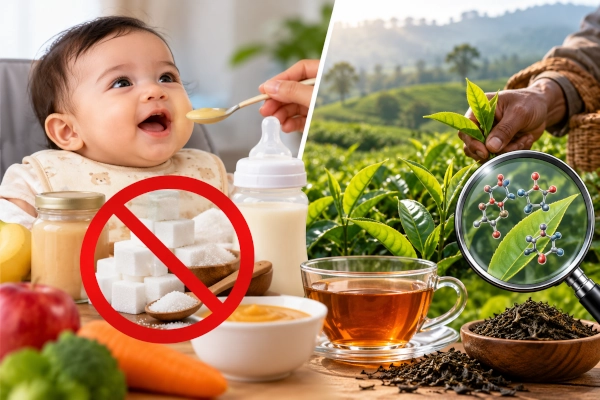
The Food Safety and Standards Authority of India (FSSAI) has proposed two important amendments to India’s food safety regulations, seeking to prohibit added sucrose and fructose in foods intended for infants up to six months of age and establish new pesticide residue limits for tea.
The proposals, reported on October 17 and 18, 2026, address two distinct areas of public health: nutritional safety during early childhood and the regulation of chemical residues in agricultural food products. Both initiatives aim to strengthen food quality standards, improve regulatory oversight and promote greater consumer protection.
The proposed amendment concerning infant nutrition seeks to prevent the unnecessary addition of sugars during a critical stage of childhood development. Meanwhile, the proposed tea regulations establish Maximum Residue Limits (MRLs) for the insecticides acetamiprid and imidacloprid, providing defined standards for residue monitoring and regulatory compliance.
Both proposals are undergoing the prescribed regulatory process, including stakeholder consultation, before the final requirements are established.
FSSAI Proposes Ban on Added Sucrose and Fructose in Infant Foods
FSSAI has proposed an amendment to the Food Safety and Standards (Foods for Infant Nutrition) Regulations, 2020, prohibiting the addition of sucrose and fructose to food products intended for infants up to six months of age.
The proposal seeks to ensure that infant nutrition products provide appropriate nourishment without introducing unnecessary added sugars during the earliest stage of life. Nutritional requirements during infancy differ substantially from those of older children and adults because of rapid physical growth, organ development and changing metabolic needs.
Sucrose, commonly known as table sugar, and fructose, a sugar naturally present in fruits and certain other foods, can also be added to manufactured food products. The proposed restriction concerns their deliberate addition to specified infant nutrition products rather than naturally occurring carbohydrates required for normal growth and development.
The amendment represents a move towards stricter nutritional composition standards for foods intended for very young infants. It also reflects increasing regulatory attention to the relationship between early dietary practices and long-term health.
Why Added Sugars Are a Concern During Early Infancy
The first six months of life represent a critical period of growth and development, during which infants require carefully balanced nutrition containing adequate energy, proteins, essential fats, vitamins and minerals.
The World Health Organization recommends exclusive breastfeeding during the first six months, followed by the gradual introduction of appropriate complementary foods while breastfeeding continues. When breastfeeding is not possible or sufficient, infant feeding arrangements should follow suitable medical and nutritional guidance.
Unnecessary addition of sugars to infant nutrition products can increase exposure to sweetened foods without providing corresponding nutritional benefits. Excessive intake of added sugars is also associated with broader dietary concerns, including unhealthy weight gain and dental problems as children grow older.
FSSAI’s proposed amendment seeks to strengthen nutritional safeguards by ensuring that infant food formulations prioritise essential nutrients rather than unnecessary sweetening ingredients.
The measure supports a broader public health approach that encourages appropriate feeding practices from the earliest stages of childhood.
Existing Infant Nutrition Standards to Be Strengthened
India regulates infant nutrition products through the Food Safety and Standards (Foods for Infant Nutrition) Regulations, 2020, which establish requirements concerning nutritional composition, permitted ingredients, hygiene, manufacturing practices, packaging and labelling.
The existing framework identifies lactose and glucose polymers as preferred carbohydrate sources in relevant infant nutrition formulations. It also regulates the circumstances under which other sugars may be incorporated into certain products.
The proposed amendment introduces a stricter approach by seeking to prohibit the addition of sucrose and fructose to foods intended for infants up to six months of age.
FSSAI has invited objections and suggestions from stakeholders within 60 days of the draft notification. Manufacturers, healthcare professionals, nutrition researchers, consumer organisations and other interested parties can submit their observations during this period.
The regulatory authority will examine the submissions received before finalising the proposed amendment and establishing the applicable implementation requirements.
FSSAI Proposes New Pesticide Residue Limits for Tea
In a separate regulatory development, FSSAI has proposed amendments to the Food Safety and Standards (Contaminants, Toxins and Residues) Regulations, 2011, introducing Maximum Residue Limits for two insecticides associated with tea cultivation.
The proposed standards establish an MRL of 20 milligrams per kilogram for acetamiprid and 50 milligrams per kilogram for imidacloprid in tea.
Both substances belong to the neonicotinoid group of insecticides, which are used in agriculture to manage certain insect pests that can damage crops and reduce productivity.
The proposed limits provide specific regulatory benchmarks for assessing pesticide residues in tea and determining whether products comply with applicable food safety requirements.
FSSAI’s initiative reflects the importance of establishing science-based residue standards that consider agricultural practices, analytical testing requirements and consumer safety.
Understanding Maximum Residue Limits in Food Products
A Maximum Residue Limit represents the highest concentration of a pesticide residue legally permitted in a particular food commodity under the relevant regulatory framework.
These limits are generally expressed in milligrams of residue per kilogram of food and are established using information concerning approved pesticide applications, residue studies, dietary exposure and toxicological assessments.
An MRL serves as a regulatory compliance benchmark rather than a direct measure of immediate health risk. A sample exceeding the prescribed limit indicates non-compliance and may require regulatory action, but such an exceedance does not automatically establish that consuming the product will cause immediate harm.
Similarly, compliance with an MRL does not mean that a food product contains no pesticide residue. It establishes that the measured concentration falls within the applicable regulatory limit.
For agricultural commodities such as tea, residue standards help authorities monitor pesticide use and ensure that marketed products comply with established food safety requirements.
The proposed limits for acetamiprid and imidacloprid will provide clearer reference values for testing laboratories, food safety authorities, tea processors and other businesses operating within the tea supply chain.
Acetamiprid and Imidacloprid in Tea Cultivation
Acetamiprid and imidacloprid are neonicotinoid insecticides that act on the nervous systems of susceptible insects. These substances are used in agriculture to control certain pests that affect crop growth and productivity.
Tea plantations can experience damage from insects that feed on leaves and other plant tissues, affecting both crop yield and quality. Effective pest management therefore remains an important aspect of tea cultivation.
However, pesticide application must follow approved agricultural practices and applicable regulatory requirements to prevent excessive residues in harvested produce.
The proposed standards recognise the need for clearly defined residue limits while maintaining oversight of pesticide use in tea production.
FSSAI has proposed separate limits for acetamiprid and imidacloprid because the two substances differ in their chemical properties, residue characteristics and scientific assessments.
The proposed values represent maximum permissible concentrations in tea. They should not be interpreted as recommended pesticide application quantities or as measurements of residues currently present in Indian tea products.
India Maintains Comparatively Low Average Pesticide Consumption
The Ministry of Health and Family Welfare highlighted India’s comparatively low average pesticide consumption while discussing the proposed standards for tea.
According to the figures cited in the official communication, India’s average pesticide use remains below 0.5 kilograms per hectare, compared with a global average of approximately 2.38 kilograms per hectare.
The Ministry also noted that India’s average pesticide consumption is lower than the levels reported in several major agricultural economies, including Brazil, Colombia and the United States.
These figures provide a broad picture of national pesticide consumption, although actual usage varies considerably across crops, regions, growing conditions and pest-management practices.
Average national consumption does not independently establish pesticide residue concentrations in individual agricultural commodities. Effective food safety oversight therefore continues to require appropriate agricultural controls, laboratory testing and compliance monitoring.
The proposed tea residue limits provide a regulatory framework for addressing these requirements within an important sector of India’s agricultural economy.
New Standards to Support India’s Tea Industry
India is among the world’s major tea producers, with extensive cultivation and processing activities supporting employment and economic development across several states.
Tea production is particularly important in Assam, West Bengal, Tamil Nadu and Kerala, where the industry supports plantations, processing facilities, distribution networks and export-oriented businesses.
Clearly defined pesticide residue standards are important for maintaining product quality and supporting compliance across domestic and international markets.
For growers, the proposed limits provide a regulatory reference for pesticide management practices. For processors and exporters, the standards can help guide quality-control systems and residue testing requirements.
Accredited laboratories can use the prescribed limits to assess pesticide concentrations and determine whether samples comply with the relevant regulations.
The proposed amendments therefore have implications for agricultural production, food processing, laboratory services and the wider tea supply chain.
By establishing specific standards for acetamiprid and imidacloprid, FSSAI aims to strengthen regulatory clarity while supporting consistent food safety monitoring.
Science-Based Food Regulation Strengthens Consumer Protection
Although the two proposals concern different food categories, both reflect the importance of scientific assessment and regulatory oversight in protecting public health.
The infant nutrition amendment focuses on the composition of manufactured products intended for a particularly vulnerable age group. It seeks to ensure that food formulations meet appropriate nutritional requirements without unnecessary added sugars.
The tea amendment addresses pesticide residues that may remain in agricultural products following pest-control activities. It establishes proposed concentration limits that can be used for regulatory monitoring and compliance assessment.
FSSAI develops and revises food standards under the Food Safety and Standards Act, 2006, with responsibility for establishing scientific requirements governing food safety and quality.
The authority’s regulatory framework covers food composition, contaminants, residues, additives, packaging, labelling and several other aspects of food production and distribution.
Periodic amendments allow these standards to incorporate developments in nutritional science, agricultural practices, food manufacturing and analytical testing technologies.
The latest proposals demonstrate how food safety regulation extends from the nutritional composition of specialised products to the monitoring of chemical residues in widely consumed agricultural commodities.
Public Consultation to Shape Final Food Safety Regulations
FSSAI’s draft notification process allows interested stakeholders to examine proposed amendments and submit comments before the regulations are finalised.
For the infant nutrition proposal, the authority has provided a 60-day consultation period during which manufacturers, researchers, healthcare professionals and consumer organisations can submit objections and suggestions.
The pesticide residue proposals must also complete the applicable regulatory review process before the new limits become enforceable.
Such consultations allow the authority to consider scientific evidence, public health requirements, agricultural conditions, manufacturing practices and practical enforcement considerations.
The process also enables businesses and industry organisations to prepare for changes in regulatory requirements once the final standards are notified.
Public participation and technical evaluation contribute to the development of food safety rules that are scientifically grounded and appropriate for implementation.
FSSAI Advances Food Safety Standards for Infants and Tea Consumers
The proposed restrictions on added sucrose and fructose in infant foods and the introduction of pesticide residue limits for tea represent important developments in India’s food safety framework.
The infant food amendment seeks to strengthen nutritional safeguards during the first six months of life, while the tea proposal aims to establish clearer standards for pesticide residue monitoring and compliance.
Together, the initiatives reflect FSSAI’s continuing efforts to improve food quality, promote appropriate nutritional practices and strengthen science-based regulation across India’s food industry.
As the consultation and regulatory review processes advance, these proposals will contribute to the development of stronger food safety standards, supporting consumer confidence, responsible food production and improved public health protection.
References
- Akashvani News (News on AIR), October 17, 2026: FSSAI Draft Amendment Proposes Ban on Sucrose and Fructose in Food Products for Babies Up to Six Months
- Akashvani News (News on AIR), October 17, 2026: FSSAI Notifies Draft Amendments Proposing Pesticide Maximum Residue Limits in Tea
- Akashvani News (News on AIR), October 18, 2026: FSSAI Proposes New Pesticide Residue Limits for Acetamiprid and Imidacloprid in Tea
- Food Safety and Standards Authority of India (FSSAI): Official Food Safety Regulations and Notifications
- FSSAI — Foods for Infant Nutrition Regulations, 2020: Official Compendium of Infant Nutrition Regulations
You may also like
-
Government Caps Trade Margins on 137 Anti-Cancer Medicines, Prices to Fall by Up to 70% from November 9
-
World Menopause Day 2026: Ayurveda Offers Holistic Approach to Women’s Health
-
Mankind Pharma to Acquire 70% Stake in Belgian CAR-T Cancer Therapy Developer for €48 Million
-
Agni and Lifestyle: Protecting the Digestive Fire Every Day Through Ayurveda
-
Ayurveda and Anxiety: Lifestyle Principles for a Calmer Mind
