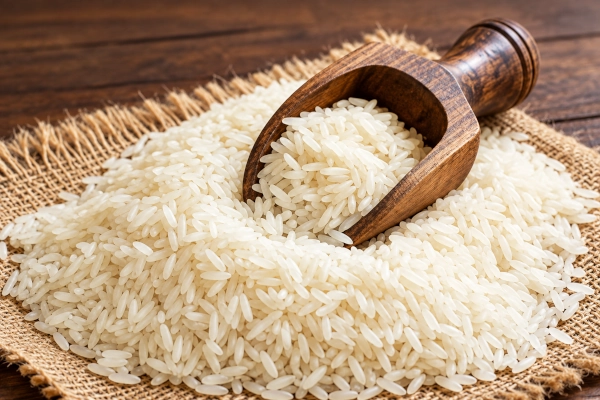
In the fertile plains of Bihar’s West Champaran district, farmers have preserved a distinctive indigenous rice variety known as Marcha Rice (मर्चा चावल) for generations. Celebrated for its rich fragrance, unusual grain shape and exceptional suitability for making traditional flattened rice, Marcha represents an important part of Champaran’s agricultural and culinary heritage.
Unlike the long-grained Basmati varieties that dominate India’s premium aromatic rice market, Marcha Rice has small, rounded grains resembling black pepper. Its distinctive appearance gives the variety its local name, while its natural aroma and delicate taste distinguish it from ordinary rice. The crop is particularly associated with the preparation of chura, or flattened rice, an integral part of Bihar’s traditional food culture.
Marcha Rice received recognition under India’s Geographical Indications (GI) system, with its registration certificate issued on 31 July 2023. The recognition formally established the association between this indigenous agricultural product and its geographical origin in Bihar, strengthening efforts to preserve a traditional rice variety cultivated by generations of farmers.
Historical Origins and Traditional Heritage of Marcha Rice
Marcha Rice belongs to the rich agricultural heritage of the Champaran region, where indigenous aromatic rice varieties have long formed part of local farming traditions. West Champaran historically supported several distinctive rice varieties, including traditional forms of Champaran Basmati, Kanakjeera, Kamod, Baharni and Marcha. Farmers cultivated these varieties for their fragrance, culinary qualities and adaptation to regional growing conditions.
The precise period when Marcha Rice first emerged as a distinct variety has not been conclusively documented. However, its continued cultivation and preservation through traditional farming practices demonstrate its longstanding connection with the region. Farming families maintained the variety by selecting and saving seeds, passing planting knowledge from one generation to the next.
The name Marcha reflects the grain’s distinctive appearance. Locally, the variety is also known as Mircha, Marchaiya and Maricha, names associated with its resemblance to black pepper. Although its name suggests a connection with pepper, Marcha Rice is valued for its fragrance and flavour rather than any spicy quality.
The rice also occupies a place in Champaran’s traditional food culture. Its suitability for producing aromatic, soft flattened rice has helped maintain demand for the variety. This relationship between local agriculture, traditional processing and everyday food practices has contributed to Marcha Rice’s survival despite the expansion of commercially cultivated rice varieties.
Geographical Origin and Cultivation Areas
Marcha Rice is closely associated with West Champaran district in northwestern Bihar, a region situated within the fertile plains near the Himalayan foothills and the India–Nepal border. Agriculture forms an important part of the district’s economy, supported by an extensive network of rivers, fertile alluvial soils and seasonal monsoon rainfall.
The recognised production areas include Mainatand, Gaunaha, Narkatiaganj, Ramnagar, Chanpatia and Lauria blocks. These areas have traditionally supported paddy cultivation, including indigenous aromatic varieties that form part of the region’s agricultural biodiversity.
West Champaran’s environmental conditions provide a geographical setting for Marcha cultivation. Its alluvial agricultural soils, monsoon-dependent growing season and established paddy-farming traditions have supported the continued production of the variety. Farmers also rely on locally preserved seed material and accumulated cultivation knowledge to maintain the crop’s characteristic qualities.
Marcha Rice is therefore more than a regional agricultural commodity. Its identity reflects the relationship between local farming communities, traditional seed conservation and the agricultural landscape of Champaran.
Unique Characteristics of Marcha Rice
Marcha Rice belongs to the species Oryza sativa L. and is distinguished by its short, bold, oval-shaped grains. According to the Government of India’s National Agriculture Market (e-NAM) specifications, the milled grains are approximately 4–4.5 mm long and 2.3–2.5 mm wide. Their compact, rounded appearance differs considerably from the slender grains of Basmati and many other commercially popular rice varieties.
The mature paddy has a dark brown husk, while the processed rice is white. Its most celebrated characteristic is its natural fragrance, which is evident in the grains and the flattened rice prepared from them. This aromatic quality contributes to Marcha Rice’s distinctive culinary identity and its reputation as a premium traditional variety.
Marcha Rice is especially valued for producing soft, fragrant and mildly sweet flattened rice. Unlike ordinary flattened rice, which is often selected primarily for its processing characteristics, Marcha combines desirable texture with a naturally appealing aroma. These qualities make it particularly suitable for traditional preparations where the flavour of the rice remains central to the dish.
The combination of grain appearance, fragrance and processing suitability gives Marcha Rice a recognisable identity. Its geographical association and traditional cultivation practices distinguish it within India’s diverse collection of indigenous aromatic rice varieties.
Traditional Cultivation and Agricultural Practices
Farmers cultivate Marcha Rice primarily during the kharif season, using traditional paddy-growing methods suited to West Champaran’s agricultural conditions. Sowing generally begins with the arrival of the southwest monsoon, while harvesting takes place towards the end of the year.
The Indian Council of Agricultural Research (ICAR), in its 2025 publication on farmer-led innovations, documented the cultivation and conservation of Marcha Dhan by farmer Anand Singh of Samhauta village in West Champaran. According to the publication, the variety takes approximately 140–150 days to mature, with an average yield of 20–25 quintals per hectare under the documented cultivation conditions.
The report also recorded cultivation over approximately 150–200 hectares. These figures provide an indication of the variety’s cultivation characteristics and the scale of conservation efforts described in the publication, rather than a comprehensive assessment of all Marcha Rice production across the district.
Traditional seed preservation plays an essential role in maintaining Marcha’s identity. Farmers select grains from suitable crops for subsequent planting seasons, helping conserve the variety’s distinctive characteristics. Continued cultivation also preserves agricultural knowledge associated with crop management, harvesting and grain processing.
ICAR has identified opportunities to improve the variety’s productivity and resistance to lodging, a condition in which mature plants bend or fall before harvesting. Scientific evaluation and appropriate crop-management practices can help address these limitations while conserving the aromatic and processing characteristics that make Marcha valuable.
Marcha Chura and the Culinary Traditions of Bihar
One of the most important traditional uses of Marcha Rice is the preparation of chura, the flattened rice widely consumed across Bihar. Chura occupies a distinctive place in the state’s food culture and is commonly eaten with curd, jaggery, milk and other accompaniments.
Marcha Chura is especially appreciated for its soft texture, characteristic fragrance and naturally pleasant taste. These qualities allow the flattened rice to be enjoyed in simple preparations without requiring elaborate seasoning or cooking.
Traditional consumption of chura reflects the agricultural lifestyle of Bihar, where rice processing has long provided a convenient way to prepare and preserve harvested grain. Flattened rice can be stored, transported and prepared quickly, making it a practical food for households engaged in agricultural activities.
Marcha’s processing qualities distinguish it from varieties cultivated mainly for ordinary cooked rice. ICAR has specifically recognised the variety’s suitability for producing premium aromatic rice flakes, identifying this characteristic as an important opportunity for value addition and improved farmer earnings.
The continued demand for Marcha Chura demonstrates how traditional food preferences can support the conservation of indigenous crops. Its culinary reputation encourages farmers to maintain a variety that might otherwise face increasing competition from higher-yielding commercial rice.
Geographical Indication Recognition in 2023
Marcha Rice received formal GI registration from the Geographical Indications Registry under India’s Geographical Indications of Goods (Registration and Protection) Act, 1999.
The application was submitted by Marcha Dhan Utpadak Pragatisheel Samuh, an organisation representing Marcha paddy producers in West Champaran. The application, numbered 801, was filed on 29 November 2021.
The product appeared in Geographical Indications Journal No. 172, dated 30 March 2023. Following the registration process, the GI Registry issued Certificate No. 495 on 31 July 2023.
The registration falls under Class 30 and remains valid until 28 November 2031, subject to the applicable renewal provisions.
The GI recognition establishes Marcha Rice as a geographically associated agricultural product with identifiable characteristics and a recognised regional reputation. It also provides a legal framework for protecting the registered name against unauthorised commercial use.
For farmers, GI recognition creates opportunities to establish a distinct market identity for their produce. However, the registration itself does not automatically guarantee higher prices or increased sales. Achieving these benefits requires effective quality management, traceability, producer organisation and access to suitable markets.
Preserving an Indigenous Rice Variety
The conservation of Marcha Rice has significance beyond its commercial value. India possesses considerable diversity in traditional rice varieties, many of which developed distinctive characteristics through generations of farmer selection and adaptation to local agricultural environments.
As agricultural production increasingly favours varieties offering higher yields and predictable market returns, some traditional rice varieties face declining cultivation. Maintaining Marcha Rice helps conserve indigenous crop diversity while preserving characteristics valued by local consumers.
Farmer-led conservation remains particularly important. Unlike varieties maintained exclusively within formal agricultural research programmes, Marcha continues to survive through cultivation by farmers who understand its agricultural requirements and culinary qualities.
ICAR’s documentation of farmer-led conservation highlights the importance of combining traditional knowledge with scientific support. Research into improved crop management, seed quality and lodging resistance can strengthen cultivation while maintaining the variety’s defining characteristics.
Preserving Marcha also supports the broader objective of maintaining agricultural biodiversity. Traditional varieties contribute to India’s crop genetic resources and provide valuable material for agricultural research, conservation and future crop improvement.
Economic Importance and Opportunities for Farmers
Marcha Rice presents opportunities for farmers seeking to participate in specialised markets for indigenous agricultural products. Its natural fragrance, distinctive appearance and suitability for premium flattened rice provide a basis for product differentiation.
The commercial prospects are particularly relevant for West Champaran, where agricultural livelihoods remain important to the rural economy. GI recognition can help local producers develop stronger connections with consumers who value traditional food products and verified geographical origins.
ICAR’s 2025 documentation recorded premium local-market prices for Marcha rice flakes, reflecting consumer interest in their distinctive quality. Such prices vary with product quality, processing, availability and market conditions and should not be interpreted as guaranteed returns to every cultivator.
Processing offers another opportunity for local value addition. Instead of marketing the harvest exclusively as paddy, farmers and producer groups can develop cleaned, graded and packaged rice alongside traditional Marcha Chura.
Improved packaging, accurate geographical identification and consistent quality standards can help Marcha products reach consumers beyond their traditional markets. Farmer producer organisations and cooperatives can also strengthen collective marketing and reduce dependence on intermediaries.
The Government of India’s e-NAM platform has published quality parameters specifically for GI-registered Marcha Rice. These include grain dimensions, moisture limits, acceptable levels of foreign matter and other physical characteristics. Such standards provide a useful basis for more transparent agricultural trading and quality assessment.
Marcha Rice and Bihar’s GI Agricultural Heritage
Marcha Rice forms part of Bihar’s growing collection of agricultural products recognised for their geographical identity. The state is already known for several GI-registered products, including Bhagalpuri Katarni Rice, Jardalu Mango, Shahi Litchi, Magahi Paan and Mithila Makhana.
Each of these products reflects a different aspect of Bihar’s agricultural heritage. While Shahi Litchi represents Muzaffarpur’s horticultural reputation and Mithila Makhana reflects the traditional aquatic agriculture of northern Bihar, Marcha Rice highlights the indigenous rice-growing traditions of Champaran.
The GI recognition of Marcha also draws attention to the diversity within India’s aromatic rice heritage. Premium rice production is not limited to long-grained Basmati. Regional varieties such as Marcha demonstrate that distinctive fragrance, culinary qualities and traditional processing characteristics can also establish valuable market identities.
For Bihar, protecting these agricultural products supports both heritage conservation and rural economic development. Recognition of traditional crops creates opportunities for local branding, specialised food processing and stronger connections between farming communities and consumers.
GI Details at a Glance
- Geographical Indication: Marcha Rice
- State: Bihar
- Product: Agricultural
- Class: 30
- Application Number: 801
- Date of Filing: 29 November 2021
- GI Journal: No. 172
- Journal Availability Date: 30 March 2023
- Certificate Number: 495
- GI Certificate Date: 31 July 2023
- Registered Proprietor: Marcha Dhan Utpadak Pragatisheel Samuh, West Champaran, Bihar
- Geographical Area: West Champaran district, Bihar
- Registration Valid Until: 28 November 2031
Future Prospects for Marcha Rice
The future of Marcha Rice rests on the continued cultivation of its indigenous variety, protection of its geographical identity and development of sustainable markets for its products.
Strengthening seed conservation, improving agricultural practices and expanding access to scientific support can help farmers maintain the crop’s distinctive qualities while addressing productivity challenges. Better post-harvest handling and processing infrastructure can further improve product consistency and commercial value.
Marcha Chura offers a particularly promising opportunity for regional food enterprises. Its traditional reputation and distinctive aromatic characteristics provide a foundation for developing premium packaged products that retain their association with West Champaran.
The GI registration also creates opportunities to promote Marcha Rice as part of Bihar’s agricultural heritage. Greater consumer awareness, organised producer participation and reliable product identification can strengthen its presence in India’s expanding market for traditional regional foods.
Marcha Rice represents a living connection between the fertile agricultural landscape of Champaran, generations of farming knowledge and Bihar’s distinctive food traditions. Its preservation demonstrates the continuing relevance of India’s indigenous crop diversity. With GI protection, farmer-led conservation and growing recognition of regional agricultural products, Marcha Rice can carry the fragrance and heritage of West Champaran to a wider national market.
References
- Geographical Indications Registry, Government of India — Marcha Rice, Application No. 801, Certificate No. 495, dated 31 July 2023.
https://search.ipindia.gov.in/GIRPublicSearch/Application/Details/801 - Agricultural and Processed Food Products Export Development Authority (APEDA) — Registered Geographical Indications of Bihar, including Marcha Rice.
https://apeda.gov.in/node/5093 - Indian Council of Agricultural Research (ICAR) — VKSA: Impactful Farmer-led Innovations, 2025. Case study: “Marcha Dhan: Preserving the Aromatic Heritage of West Champaran’s GI-Tagged Rice,” pages 80–81.
https://icar.gov.in/sites/default/files/2025-10/Farmers%20Innovations_2025___English.pdf - National Agriculture Market (e-NAM), Ministry of Agriculture and Farmers Welfare — Commodity Quality Parameters: Marcha Rice, including recognised production areas, grain specifications and quality standards.
https://enam.gov.in/web/assest/download/sul/247_commodity_parameters.pdf - Indian Council of Agricultural Research — Journal of Cereal Research, Volume 17, Issue 2, 2025. Research on GI-registered rice varieties in India, including Marcha Rice and its suitability for flattened rice production.
https://epubs.icar.org.in/index.php/JWR/article/download/169734/63089/496621
You may also like
-
India Hosts Agrivoltaics World Conference 2026, Unveils Plans for Major Solar Farming Expansion Under PM-KUSUM
-
Piyush Goyal to Visit Germany and Netherlands with 100 Indian Businesses and Startups to Strengthen Trade and Investment
-
Gobindabhog Rice: West Bengal’s Fragrant Heritage Grain of Bhog, Payesh and Festive Cuisine
-
UDAN Completes 10 Years with 687 Air Routes as India Plans 100 New Regional Airports and 200 Helipads
-
Ashok Leyland Developing Hydrogen-Powered Stallion Military Truck, Exploring Autonomous Vehicles and Drones
