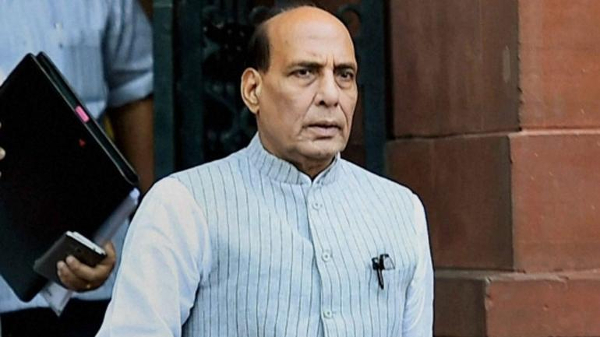
India’s Defence Accounts Department has launched a new set of digital financial-management initiatives aimed at making defence expenditure tracking, payments and budget monitoring more integrated, paperless and transparent.
The initiatives were unveiled by Defence Minister Rajnath Singh during the Defence Accounts Department’s 279th Annual Day celebrations at DRDO Bhawan in New Delhi on October 1, 2026. They include the integration of the SAKSHAM payment system with the Indian Army Financial Information System, operationalisation of the Treasury Single Account mechanism through the PRISM platform and a revamped National Compilation System for defence expenditure.
The measures form part of a wider effort to strengthen real-time financial management across the Ministry of Defence and improve coordination between the Defence Accounts Department and the armed forces.
SAKSHAM Integrated With Indian Army Financial Information System
The Defence Accounts Department has successfully integrated its SAKSHAM bill audit and payment platform with the Indian Army Financial Information System.
The integration allows digital transmission of budget, sanction and bill information between the two systems. It also enables real-time sharing of bill status and budget balances while supporting completely paperless processing.
SAKSHAM is hosted on a secure dedicated data centre and operates through the Defence Accounts Department’s wide area network. The system uses role-based access, automated validations and scalable architecture to support the department’s move towards a unified digital financial ecosystem.
The latest integration is an important step towards connecting defence accounting and payment processes with service-specific financial systems.
PRISM Brings Treasury Single Account to the Ministry of Defence
The Defence Minister also inaugurated the Treasury Single Account system for the Ministry of Defence.
The new arrangement is designed to enable Just-In-Time release of funds to autonomous bodies under the Government of India and is being operationalised through the Payment Routing and Integrated System Management, or PRISM, platform.
PRISM has been integrated with the Reserve Bank of India’s e-Kuber system. The new mechanism is intended to improve grant management, increase visibility over fund utilisation and strengthen expenditure monitoring across autonomous bodies under the Defence Ministry.
By reducing idle fund balances and improving the timing of releases, the Treasury Single Account system can make defence financial administration more efficient and responsive.
Revamped National Compilation System to Improve Expenditure Tracking
A redesigned National Compilation System was also launched during the event.
The NCS serves as the central accounting and compilation platform for defence expenditure across India. Because the Ministry of Defence operates through a complex financial delegation structure, budget allocation and spending must be tracked across multiple Controllers of Defence Accounts.
The revamped system has been rebuilt on a new technical architecture to provide more accurate budget reporting and expenditure monitoring.
It will support granular reporting to the Ministry of Finance, Ministry of Defence, Service Headquarters and field controllers, giving decision-makers a clearer view of spending patterns and available balances.
Shift From Annual Review to Real-Time Financial Monitoring
Rajnath Singh called for defence financial management to move beyond periodic annual reviews towards continuous monitoring supported by real-time data.
He urged the Defence Accounts Department to transition from the traditional Annual Review of Balances to an “Any Time Review of Balances” model.
The emphasis on live data reflects the growing complexity of defence budgeting, where procurement, maintenance, infrastructure, salaries, pensions and operational expenditure must be monitored across multiple services and organisations.
The Defence Minister also called for greater integration of the financial systems of the Army, Navy and Air Force and stressed digitisation, automation and transparency as central objectives.
SAMPURNA to Bring AI and Automation Into Revenue Procurement
The Defence Minister also called for early implementation of SAMPURNA, a fully automated end-to-end revenue procurement system.
The proposed platform is intended to use data analytics, artificial intelligence and machine learning to improve decision support and streamline procurement-related financial processes.
Its development reflects the wider shift within the Defence Accounts Department towards predictive, data-driven financial management rather than manual or fragmented processing.
SPARSH Grievance System May Get Conversational AI Support
The event also highlighted the progress of SPARSH, the System for Pension Administration Raksha, which has become a major platform for defence pension management.
Following improvements in SPARSH data cleaning, Rajnath Singh suggested expanding grievance redressal through a Conversational AI ecosystem covering chat, SMS, WhatsApp, email and phone calls.
The proposal is aimed at making grievance resolution faster and more accessible for pensioners and defence personnel while reducing dependence on manual intervention.
The Defence Minister also stressed the need for quality audit, accurate digital data and timely resolution of grievances and court cases involving legitimate service dues and rights.
SAMAR-SETU Manages Pay of More Than 2.3 Lakh Agniveers
The Defence Accounts Department also highlighted SAMAR-SETU, its centralised application for managing the pay and allowances of Agniveers in the Indian Army.
The system operates through the Central Agniveer Pay and Accounts Office and currently manages pay accounts for more than 2.3 lakh Agniveers through automated, system-driven processes.
Its use demonstrates the growing role of centralised digital platforms in handling large-scale personnel and financial administration within the armed forces.
Defence Financial Management Moves Towards a Unified Digital Architecture
The initiatives launched on October 1 show a clear move towards integrating defence payments, expenditure tracking, budget control and financial reporting within a connected digital architecture.
SAKSHAM-IAFIS integration improves coordination between the Army and the Defence Accounts Department, PRISM introduces a modern fund-release mechanism, and the revamped National Compilation System strengthens expenditure visibility across the Ministry of Defence.
Together with SAMPURNA, SPARSH and SAMAR-SETU, these systems are gradually replacing fragmented financial processes with automated platforms capable of supporting real-time decision-making.
The transformation gives the Defence Ministry a stronger financial-management framework as defence expenditure, procurement and personnel systems continue to expand in scale and complexity.
References
Press Information Bureau, Ministry of Defence — Raksha Mantri Launches Key Digital and Financial Management Initiatives at Defence Accounts Department’s 279th Annual Day Celebration in New Delhi, October 1, 2026.
You may also like
-
IAF Awards ₹135-Crore Mirage 2000 Simulator Contract to Threye Interactive
-
EON Space Labs Builds Indigenous EO/IR Imaging Systems for Space, Drones and Defence
-
Indian Army Moves to Install Multi-Layer Anti-Drone Steel Mesh Screens in Forward Areas
-
Apollyon Dynamics Conducts Initial Vehicle-Mounted Tests of Nightshade ADX-1 High-Speed Strike UAV
-
India Advances Project-75(I) and Submarine Modernisation Plans to Strengthen Underwater Warfare Capability
