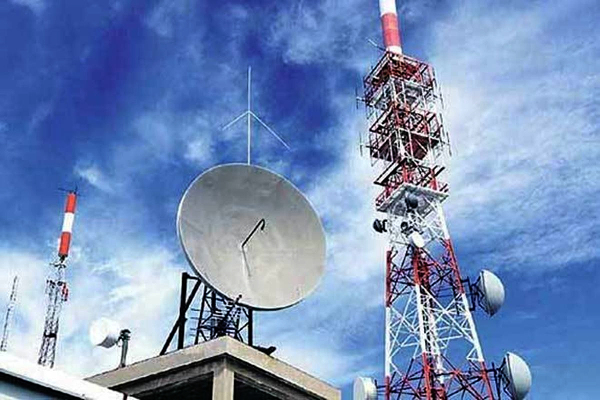
India is moving ahead with the establishment of what the government describes as Asia’s first Telecom Manufacturing Zone in Gwalior, Madhya Pradesh, creating a dedicated industrial ecosystem for manufacturing telecom equipment, electronics and next-generation communication technologies.
The project has gathered momentum following investor outreach in Delhi, Mumbai and Bengaluru. Twenty-four companies have already initiated the application process for setting up manufacturing units, while investment proposals announced through the initial rounds have reached about ₹5,500 crore. A subsequent investor roundtable in Bengaluru on 22 September 2026 brought approximately ₹700 crore in additional commitments.
The development places Gwalior at the centre of India’s effort to expand domestic telecom manufacturing beyond individual factories towards a geographically concentrated industrial ecosystem incorporating production, testing, research, supply chains and skilled manpower.
₹493 Crore Central Funding for First Phase
The Department of Telecommunications and the Government of Madhya Pradesh signed a Memorandum of Understanding on 30 July 2026 to establish the Telecom Manufacturing Zone.
Under the implementation framework, approximately 170 acres are being provided free of cost by the Madhya Pradesh government for the first phase. The Central Government will provide ₹493 crore in 100% funding for developing infrastructure required by the manufacturing cluster.
The larger project has been envisaged across approximately 350 acres. Its first phase will utilise land around the Shrimant Madhavrao Scindia Counter Magnet City, commonly known as SADA, together with land associated with the IT Park in Gwalior.
The project is being structured through a Special Purpose Vehicle in which the Madhya Pradesh government will hold a 51% equity stake and the Department of Telecommunications will hold the remaining 49%.
24 Companies Begin Process to Enter the Zone
Investor interest has grown rapidly since the project was announced. Roadshows conducted in Delhi and Mumbai during August generated investment proposals of approximately ₹3,500 crore and ₹2,000 crore respectively.
Together, these initial proposals represented around ₹5,500 crore in prospective investment. According to the Department of Telecommunications, 24 companies have subsequently initiated the application process for establishing manufacturing facilities in the Gwalior zone.
A third investor roundtable held in Bengaluru on 22 September added approximately ₹700 crore in fresh commitments, further expanding the investment pipeline surrounding the project.
The government expects the investments already proposed for the zone to create more than 18,000 direct and indirect employment opportunities as manufacturing operations are progressively established.
24–25 Manufacturing Units Planned
Unlike a conventional industrial estate, the Telecom Manufacturing Zone is being planned as a specialised ecosystem centred on communications technology.
Around 24 to 25 manufacturing units are envisaged within the cluster. Companies operating there are expected to manufacture products and components spanning telecom networks, mobile and communications equipment, optical-fibre technologies, electronics and technologies associated with advanced communication networks.HAL’s Indigenous Utility Helicopter-Maritime Prototype Set for Maiden Flight in November 2026
The zone is also intended to support emerging 5G and 6G technologies, semiconductor-linked applications, research and development and other parts of India’s telecommunications value chain.
Concentrating these activities within a common industrial cluster could allow manufacturers, component suppliers, testing facilities, technology companies and research institutions to operate within the same ecosystem.
₹500 Crore Common Testing Laboratory Proposed
One of the most important components under consideration is a Common Testing Laboratory.
The Department of Telecommunications has proposed a package of approximately ₹500 crore for establishing shared testing infrastructure associated with the Gwalior ecosystem.
Testing and certification are essential parts of telecom manufacturing because network equipment and communications hardware must meet technical, interoperability, safety and performance requirements before deployment.
A shared facility could provide manufacturers with access to sophisticated testing infrastructure without requiring each company to duplicate the entire investment independently. It could be particularly valuable for smaller manufacturers and emerging Indian technology companies entering advanced telecom hardware production.
Dedicated Incentives for Telecom Manufacturers
The Madhya Pradesh government has prepared a dedicated incentive framework to attract manufacturers into the zone. Support measures cover areas including land leasing, electricity, employment generation and production.
The objective is to lower the initial cost of establishing manufacturing operations while creating conditions for companies to build production capacity within a common telecom-focused industrial environment.
Environmental sustainability measures are also being incorporated into the development framework as the site progresses towards industrialisation.
Gwalior’s Connectivity Adds to Manufacturing Potential
Gwalior’s location provides the proposed zone with access to multiple transport networks.
The city is connected by rail, road and air, while the developing Agra–Gwalior high-speed road corridor is expected to further improve freight and passenger connectivity with northern India’s major industrial and consumption centres.
This becomes particularly important for telecom manufacturing, where production depends on the efficient movement of electronic components, specialised materials and finished equipment between suppliers, factories and markets.
Gwalior also sits within reach of the wider Delhi-NCR industrial ecosystem, providing another potential advantage for companies developing supply chains around the new cluster.
Skilled Workforce to Support the Cluster
Availability of technical manpower is another part of the project’s industrial strategy. Around 25,000 engineering students graduate annually from institutions in and around the region, providing a potential workforce for manufacturing, electronics, telecommunications, software, testing and research activities.
As telecom equipment becomes increasingly software-defined and electronics-intensive, manufacturing facilities require engineers and technicians across several disciplines rather than conventional factory labour alone.
The concentration of manufacturing and R&D activities could therefore create opportunities not only on production lines but also in product engineering, network technologies, electronics design, testing, quality assurance and advanced manufacturing.
Building an Indian Telecom Manufacturing Ecosystem
India has already expanded domestic production of mobile phones and telecom equipment considerably over the past decade. The Gwalior project represents a different stage of that development by attempting to concentrate multiple parts of the telecom value chain within one dedicated industrial zone.
The concept brings together manufacturing units, shared testing infrastructure, research and development, government incentives, logistics connectivity and skilled manpower within a single ecosystem.
Such clustering can also encourage supplier networks to develop around anchor manufacturers. Component producers, specialised engineering companies, testing services and technology startups can locate closer to larger manufacturing facilities, progressively increasing domestic value addition.
From Telecom Market to Telecom Manufacturing Base
India is one of the world’s largest telecommunications markets, and the growth of 5G, fibre networks, data infrastructure and future 6G technologies will continue to create demand for increasingly sophisticated communications hardware.
The Gwalior Telecom Manufacturing Zone is intended to convert part of that domestic demand into an opportunity for indigenous production and technology development.
With Central infrastructure funding, land support from Madhya Pradesh, a proposed common testing facility and growing private-sector investment interest, the project is beginning to move from planning towards the creation of an identifiable industrial cluster.
References
Press Information Bureau, Government of India — Department of Telecommunications, “Union Minister Jyotiraditya M. Scindia Reviews Progress of Asia’s First Telecom Manufacturing Zone in Gwalior,” 20 September 2026.
Press Information Bureau, Government of India — Department of Telecommunications, Bengaluru Investor Roundtable for Gwalior Telecom Manufacturing Zone, 22 September 2026.
Press Information Bureau, Government of India — Department of Telecommunications, MoU Between DoT and Government of Madhya Pradesh for Establishment of Telecom Manufacturing Zone in Gwalior, 30 July 2026.
Department of Telecommunications, Government of India — Telecom Manufacturing Zone, Gwalior investor and infrastructure information.
You may also like
-
Tripathi Aerotech Secures Multi-Billion-Dollar 155mm ERFB-BB Ammunition Contract From Western Nation
-
RFLY Innovations Delivers Indigenous RFLY-PRO High-Altitude Surveillance UAVs to Indian Army
-
HAL’s Indigenous Utility Helicopter-Maritime Prototype Set for Maiden Flight in November 2026
-
India to Test Fully Loaded Shipping Container on Indigenous Hyperloop Cargo System in Mumbai
-
Malda Laxman Bhog Mango — Bengal’s Golden Orchard Fruit and the Mango Heritage of Malda
