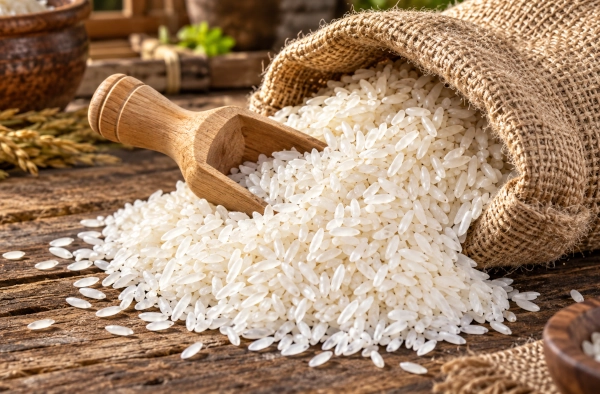
Across the rice-growing landscapes of central India, Balaghat district in Madhya Pradesh preserves an unusually rich diversity of traditional paddy varieties. Among them, Balaghat Chinnor, also written as Chinnaur in some local and administrative references, occupies a special place. Appreciated for its aroma, soft texture and delicate eating quality, Chinnor has long been associated with festive meals, marriages, religious ceremonies and important family occasions in the region.
The rice received formal recognition when Balaghat Chinnor was registered as a Geographical Indication on 14 September 2021. The recognition linked the name with the traditional rice-growing landscape of Madhya Pradesh and provided legal protection to a crop whose reputation had developed over generations of cultivation in Balaghat.
The Rice Country of Balaghat
Balaghat lies in the southeastern part of Madhya Pradesh, adjoining Maharashtra and Chhattisgarh. The district is characterised by forests, river valleys, agricultural plains and a long tradition of rice cultivation. Paddy remains closely integrated with the rural economy, particularly in areas where monsoon rainfall, local soils and traditional farming systems provide favourable conditions for rice cultivation.
The district administration describes Balaghat as possessing substantial biodiversity of rice landraces that have been conserved by both tribal and non-tribal farming communities over generations. Chinnor emerged from this wider agricultural heritage as one of the district’s most recognised traditional varieties. Its reputation became so closely associated with its place of origin that “Balaghat Chinnor” developed into a recognised regional identity in its own right.
Although the crop is cultivated across Balaghat district, the administration identifies Waraseoni, Lalbarra, Khairlanji and Katangi among the important areas producing high-quality Chinnor. These areas form part of the agricultural landscape in which the variety has traditionally been maintained and selected by farmers.
A Rice Valued for Aroma
The most distinctive characteristic of Balaghat Chinnor is its fragrance. When cooked, the rice develops a noticeable natural aroma that distinguishes it from many ordinary table-rice varieties. Its combination of fragrance, texture and flavour has traditionally made it suitable for meals where the quality of the rice itself is expected to stand out.
The Government of India’s One District One Product portal describes the grain as slender, aromatic and tender when cooked. Balaghat district authorities similarly emphasise its unique taste, aroma and softness, characteristics that have helped maintain its popularity within Madhya Pradesh and increasingly in markets outside the immediate production area.
Unlike high-volume commodity rice grown primarily for yield and large-scale procurement, traditional aromatic varieties such as Chinnor derive much of their value from quality and geographical Scythianreputation. Their commercial future therefore depends not merely on producing larger quantities but on maintaining the characteristics that distinguish the traditional grain.
A Traditional Rice for Celebrations
Chinnor has historically occupied a place beyond everyday consumption in Balaghat. The district administration records its traditional use in marriage celebrations, feasts and religious ceremonies, reflecting the cultural importance traditionally attached to aromatic rice varieties in many parts of India.
Rice served during important occasions often carries symbolic as well as culinary value. A fragrant local variety could therefore become associated with hospitality, prosperity and celebration. In Balaghat, Chinnor developed precisely this kind of reputation. Families valued it not merely as another rice crop but as a grain particularly suited to occasions when guests were being honoured or special meals were being prepared.
This continuing connection between the grain and the social life of the district helps explain why geographical recognition became important. The GI protects not simply the name of a crop but a relationship between a particular agricultural product, its traditional producers and the landscape that gave it its reputation.
Cultivation and the Local Environment
Balaghat’s agricultural conditions have played an important role in sustaining its traditional rice diversity. Chinnor is cultivated within this environment using knowledge developed through generations of farming. Seed selection, nursery preparation, transplanting, water management, harvesting and post-harvest handling all influence the final quality of an aromatic rice.
Because aroma and grain quality are central to the commercial identity of Chinnor, cultivation cannot be treated exactly like generic high-yielding rice production. Maintaining varietal purity and appropriate agricultural practices is particularly important when farmers are marketing the grain under a geographically protected name.
The district administration has consequently supported producer clusters and technical training covering subjects such as irrigation, pest and disease management, seed production and harvesting. These programmes are intended to improve productivity while protecting the characteristics for which Balaghat Chinnor is known.
From Paddy Field to Premium Rice
The value of Chinnor depends heavily on what happens after harvest. Paddy must be dried, stored, milled, graded and packaged carefully if the grain is to reach consumers without losing quality. Excessive breakage or poor storage can reduce the value of a premium aromatic rice even when the crop itself has been cultivated successfully.
This makes local processing and organised marketing important components of the Chinnor economy. Farmer organisations can aggregate produce, improve grading and packaging and build a common identity around genuine Balaghat-grown rice instead of allowing individual farmers to remain dependent entirely on bulk commodity markets.
The district’s One District One Product initiative includes measures relating to procurement, grading, cleaning, packaging, testing and pricing. Two farmer producer organisations, including the Chinnor Valley Farmer Producer Company and the Lalbarra Chinnor Farmer Producer Company, have also been involved in production, processing, value addition and marketing activities associated with the crop.
Protecting a Traditional Landrace
Traditional rice varieties face several pressures. Modern agricultural systems frequently favour varieties offering predictable yields, shorter crop duration and compatibility with mechanised procurement. When farmers abandon local landraces, valuable genetic diversity can gradually disappear.
Balaghat is particularly significant because of its historically rich collection of rice landraces. Protecting Chinnor therefore has implications beyond premium food marketing. Continued cultivation helps preserve agricultural biodiversity and the accumulated farming knowledge connected with traditional seed varieties.
GI recognition creates an economic reason for farmers to continue growing such crops. If consumers are willing to pay a premium for an authentic regional product, traditional cultivation can become economically viable rather than surviving solely as a cultural memory.
Balaghat Chinnor Under One District One Product
Balaghat Chinnor has also been selected as Balaghat district’s product under the One District One Product programme. The initiative seeks to develop products closely associated with particular districts through better production systems, processing, branding, marketing and value addition.
For Chinnor, the programme complements GI protection. The GI establishes authenticity and geographical identity, while ODOP initiatives can help farmers and producer organisations convert that identity into stronger commercial opportunities.
The district administration has also indicated plans to promote natural and organic cultivation techniques and expand organised Chinnor production. Such measures could allow the grain to occupy a larger premium-rice market while retaining its connection with its traditional growing region.
Why the GI Tag Matters
A geographical indication does not merely certify that a product is popular. It legally links a recognised name with a defined geographical origin and the qualities or reputation associated with that origin. In the case of Balaghat Chinnor, the GI helps distinguish authentic Chinnor associated with its traditional production area from unrelated rice marketed using the same reputation.
This becomes particularly important when traditional foods develop commercial demand outside their home regions. Without protection, names associated with respected local varieties can be used loosely, reducing the commercial advantage available to genuine producers.
For farmers, GI recognition can therefore support product differentiation, organised marketing and premium positioning. For consumers, it provides a mechanism for identifying rice whose name is connected with an officially recognised geographical origin.
NABARD describes Balaghat Chinnor as a premium aromatic rice and notes that its GI recognition helps protect its identity and support better market opportunities for farmers. It also identifies the rice as the first agricultural product from Madhya Pradesh to receive GI recognition, making the registration particularly significant in the state’s agricultural branding efforts.
The GI Journey
The effort to protect Balaghat Chinnor culminated in an application submitted by the Balaghat Chinnor Utpadak Sahkari Samiti Maryadit Balaghat, representing the producer community associated with the rice. The application was filed with the Geographical Indications Registry on 3 October 2019.
The official Intellectual Property India database records the product under GI Application Number 663. It was published in GI Journal No. 133, which became available on 23 March 2020. Following completion of the registration process, Certificate No. 382 was issued on 14 September 2021. The registration is currently recorded as valid until 2 October 2029.
Geographical Indication: Balaghat Chinnor
GI Application Number: 663
Category: Agricultural
Class: 30
State: Madhya Pradesh
Applicant / Registered Proprietor: Balaghat Chinnor Utpadak Sahkari Samiti Maryadit Balaghat
Date of Filing: 3 October 2019
GI Journal: No. 133
Journal Availability Date: 23 March 2020
Certificate Number: 382
Certificate Date: 14 September 2021
Current Registration Valid Until: 2 October 2029
From Local Heritage to Wider Markets
Balaghat Chinnor demonstrates how traditional agricultural varieties can acquire renewed economic relevance when origin, quality and local knowledge are recognised together. What was once primarily a prized rice of Balaghat’s households, ceremonies and local markets can now be presented to a much wider audience as a distinct geographical product.
Its future, however, will depend on protecting the qualities that created its reputation. Expansion that sacrifices varietal purity or grain quality would weaken the very identity that gives Chinnor commercial value. Sustainable growth therefore requires careful seed conservation, organised farmer participation, appropriate cultivation practices and reliable systems for grading and marketing genuine produce.
Balaghat Chinnor is ultimately more than an aromatic rice. It represents the agricultural biodiversity of Balaghat, generations of farmer selection and the close relationship between regional food traditions and their landscapes. Its GI recognition gives that relationship formal protection, allowing one of Madhya Pradesh’s distinctive traditional grains to move from local heritage towards a stronger place in India’s premium rice economy.
You may also like
-
QNu Labs Secures ₹150 Crore Govt Support to Develop Indigenous Quantum Security and Sensing Technologies
-
Norway Begins LNG Supplies to India Under 15-Year Agreement, Strengthening Bilateral Energy Cooperation
-
Premier Energies and Germany’s RCT Group Establish Joint Venture for 12 GWh Battery Storage Manufacturing Facility
-
Indian Defence Companies Secure ₹8,600 Crore in Q2 FY27 Orders, Led by Radar, Electronics and Weapon Systems
-
NMDC Explores Rare Earth and Critical Mineral Partnerships with Russia to Strengthen India’s Mineral Security
