India has widened the participation of domestic industry in defence production with the Defence Research and Development Organisation handing over nine Licensing Agreements for Transfer of Technology to 13 manufacturing partners during the DRDO-Industry Synergy Meet, VIMARSH 2026, in New Delhi.
Defence Minister Rajnath Singh presided over the event on September 15 as DRDO unveiled a wider set of measures aimed at bringing Indian manufacturers, MSMEs and deep-technology start-ups more deeply into the country’s defence research and production ecosystem.
The nine Licensing Agreements for Transfer of Technology, or LAToTs, are intended to enable commercial production of technologies developed by DRDO. The move forms part of a larger effort to shorten the transition from indigenous research and development to industrial production and eventual deployment by the armed forces.
DRDO Technology Transfers Cross 2,300
The scale of DRDO’s engagement with domestic industry has expanded considerably in recent years.
Defence Secretary and Secretary, Department of Defence R&D, Rajesh Kumar Singh, who is also Chairman of DRDO, said that more than 2,300 technology transfers have so far been handed over to over 1,100 industries.
The expansion of technology transfer has allowed a larger industrial base to participate in defence manufacturing and has supported the creation of parallel production capabilities for systems required by the armed forces.
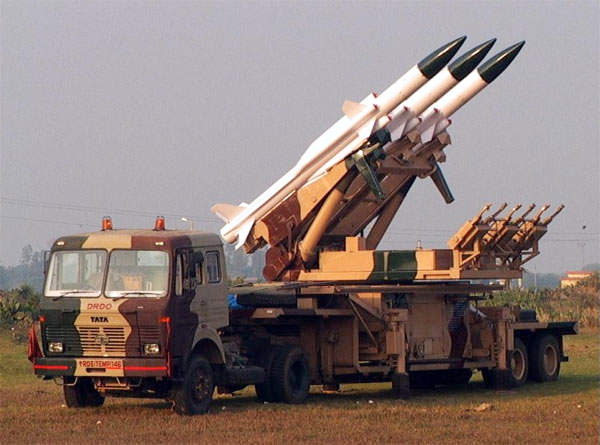
Singh also disclosed that technologies related to approximately 50 missiles developed by DRDO have now been made available to industry to encourage wider participation.
This distinction is important. The announcement does not mean that 50 complete missile systems have simply been handed over to private companies. Rather, technologies associated with around 50 DRDO-developed missile systems have been opened to Indian industry under the organisation’s technology-transfer framework.
Conventional Missile Technologies Opened to Indian Industry
The September announcement follows a major policy decision taken in August 2026, when Defence Minister Rajnath Singh approved the transfer of DRDO-developed technologies associated with all conventional missile systems to Indian defence industry for production within the country.
Under that policy, qualified Indian companies can participate in indigenous production subject to the required certification, qualification and regulatory processes.
DRDO said the objective is to move successfully developed missile technologies into industrial production, expand domestic manufacturing capability and create greater opportunities for MSMEs and other Indian technology partners to participate in defence supply chains.
The policy is also intended to reduce import dependence and increase domestic value addition by ensuring that technologies developed through India’s defence research establishment can be manufactured at industrial scale within the country.
New Framework for Sharing DRDO Software Source Code
VIMARSH 2026 also marked an important change in the way DRDO intends to work with manufacturers developing software-intensive defence equipment.
A standardised and secure framework for sharing DRDO-developed software source code with licensed industries was launched during the event. The mechanism is intended to support the production and maintenance of increasingly software-defined military systems while helping manufacturers deal with technology obsolescence over the operational life of equipment.
Modern defence platforms depend extensively on software for functions ranging from sensors and communications to electronic warfare, fire control and autonomous operation. Providing authorised manufacturers with controlled access to relevant source code can therefore reduce dependence on DRDO laboratories for every subsequent software modification and allow industry to assume greater responsibility during the production and support phases.
The measure complements DRDO’s existing approach of transferring manufacturing technologies and opening its intellectual property and testing infrastructure to domestic industry.
MSMEs and Deep-Tech Start-ups Get Wider Access
Another major element of VIMARSH 2026 was the introduction of measures intended to lower the technical and financial barriers facing smaller defence companies.
The framework announced by the government includes direct funding, incubation support and dedicated access to DRDO testing facilities for eligible MSMEs and deep-tech start-ups.
These measures are aimed at addressing one of the principal difficulties faced by smaller defence companies. Developing a prototype is only the first stage of creating a military system; companies must subsequently test, validate and certify their technology before it can enter production.
Access to specialised test infrastructure can be particularly difficult for smaller companies because facilities required for environmental testing, weapons evaluation, electronics qualification and other defence applications are expensive to establish independently.
Opening DRDO facilities and providing structured support can therefore allow smaller manufacturers to move technologies through the development cycle without having to duplicate infrastructure already available within the national defence research establishment.
DRDO-Industry Partnership to Extend Beyond Manufacturing
Rajnath Singh called for the relationship between DRDO and domestic industry to move beyond the conventional model in which a technology is developed by a government laboratory and transferred to a company only when production begins.
Instead, he said collaboration should cover the entire defence technology chain, including research, design, development, testing, certification and manufacturing.
The approach reflects a broader shift in India’s defence industrial policy towards involving private companies at earlier stages of development.
Development-cum-Production Partners and other industry participation models already allow manufacturers to work alongside DRDO while systems are still being developed. Greater involvement during this stage can make subsequent production easier because the industrial partner acquires familiarity with the technology before large-scale manufacturing begins.
Rajnath Singh said DRDO brings technological knowledge, industry contributes manufacturing scale, start-ups provide innovation and agility, and these capabilities need to be combined to strengthen India’s defence manufacturing base.
SAMAR 2.0 to Assess Manufacturing Capability
DRDO also signed a contract with the Quality Council of India for the System for Advanced Manufacturing Assessment and Rating, or SAMAR, Version 2.0.
The system is intended to assess the manufacturing maturity of domestic defence enterprises and provide a structured method for evaluating industrial capability.
Such assessments are particularly relevant as the number of companies entering defence manufacturing increases. Production of military equipment requires consistent quality control, documentation, traceability and manufacturing processes capable of meeting stringent specifications.
A standardised assessment mechanism can help identify whether a supplier has developed the processes required to move from prototype manufacture to repeatable production.
Strategic Memoranda of Understanding were also exchanged with the Society of Indian Defence Manufacturers and Laghu Udyog Bharati, with the aim of expanding DRDO’s interaction with industry and increasing participation by smaller companies.
From Development to Production at Scale
The technology-transfer programme addresses a challenge that DRDO itself has repeatedly identified: developing a successful weapon or military system is not sufficient unless Indian industry can manufacture it in adequate numbers and within the required timeframe.
Rajnath Singh made the same point during the inauguration of DRDO’s Advanced Weapon System Complex in Hyderabad in June 2026, when he called for DRDO, the armed forces and industry to work as an integrated ecosystem to move technologies rapidly from development into large-scale production.
He stressed that manufacturing considerations should form part of the development process itself, with systems designed for greater indigenous content, simplified production and faster scaling when operational requirements increase.
The nine technology-transfer agreements announced at VIMARSH should be viewed within this larger transition. DRDO is increasingly seeking to retain its central role in advanced defence research while allowing a much larger domestic industrial base to assume responsibility for production.
Private Industry Given Larger Role in Defence R&D
The government has also been attempting to draw industry into defence research rather than restricting companies to manufacturing technologies developed elsewhere.
Twenty-five per cent of the defence R&D budget has been earmarked for industry, academia and start-ups. Rajnath Singh said earlier this year that more than ₹4,500 crore from this allocation had already been utilised by these participants.
DRDO has also removed the earlier 20 per cent technology-transfer fee for Development-cum-Production Partners, Development Partners and Production Agencies, while Indian industries have been given access to DRDO patents and testing facilities under the organisation’s industry engagement policies.
At VIMARSH, the Defence Minister identified artificial intelligence, quantum technologies, hypersonics and directed-energy systems among the areas where greater industry investment and research participation will be required.
Building a Larger Indigenous Defence Industrial Base
The significance of VIMARSH 2026 lies less in the number of agreements signed on a single day than in the industrial framework that is taking shape around DRDO-developed technologies.
More than 2,300 technology transfers involving over 1,100 industries indicate that the relationship between India’s defence laboratories and manufacturers is no longer confined to a small number of public-sector production agencies. MSMEs, start-ups and larger private manufacturers are increasingly becoming part of the same development and production network.
The decision to make technologies associated with approximately 50 DRDO-developed missiles available to industry, coupled with the August policy opening technologies from conventional missile programmes for domestic production, could further broaden that industrial base.
The central challenge will now be converting technology access into reliable production capability. Defence systems must not only be designed and successfully tested in India; they must also be manufactured repeatedly, maintained through their operational life and produced rapidly when the armed forces require larger numbers.
VIMARSH 2026 represents another step in that transition, with DRDO increasingly positioning Indian industry not merely as a supplier at the end of the development process, but as a partner across research, engineering, testing, certification and production.
You may also like
-
India-US Yudh Abhyas 2026 Begins at Auli and Mahajan With Focus on Integrated Battle Groups and Drone Warfare
-
DRDO Opens Indigenous Thermal Tank Target Technology to Indian Defence Industry
-
China Reduced PLA Deployment Along LAC in 2025 as India Maintained Robust Border Posture: Defence Ministry
-
Why Space Is Becoming the Fifth Domain of Modern Warfare
-
CarbonCraft Design Turns Industrial Carbon and Construction Waste Into Building Materials
