India is beginning to move its deep-sea mining programme beyond government laboratories and research vessels, opening discussions with industry on how technologies developed over several decades could eventually support a commercial supply chain for critical minerals.
The Ministry of Earth Sciences and the National Institute of Ocean Technology recently brought together mining companies, technology developers, financial institutions, research organisations and policymakers in New Delhi for an industry workshop on deep-sea mining. EY participated as knowledge partner, with NITI Aayog associated with the exercise.
The discussions covered offshore engineering, marine robotics, mineral processing, shipbuilding and financing, with the government looking at how private companies could participate in a future industry extending from seabed extraction to metal recovery.
That shift in emphasis is important.
India has been studying polymetallic nodules in the Indian Ocean for decades and has already developed machines capable of operating more than five kilometres below the surface. The next challenge is considerably larger: turning an experimental mining system into a reliable industrial operation capable of collecting minerals in the open ocean, lifting them several kilometres to a ship, transporting them ashore and extracting metals at a cost that can compete with conventional mining.
A 75,000-Square-Kilometre Resource Area
India’s main polymetallic nodule exploration area lies in the Central Indian Ocean Basin.
The International Seabed Authority has allocated India approximately 75,000 square kilometres there for exploration. Government surveys have sampled the area on a 12.5-kilometre grid and currently estimate that it contains about 366 million metric tonnes of polymetallic nodules on a dry-weight basis.
These nodules are small mineral concretions lying on or partly embedded in the sediment of the deep seabed. Unlike conventional ore bodies, they do not have to be blasted out of rock. The difficulty comes from their location, typically several kilometres beneath the ocean surface.
The average composition of the nodules in India’s allocated area is estimated at 25.2% manganese, 1.14% nickel, 1.09% copper and 0.14% cobalt.
Those percentages explain the strategic interest.
Nickel and cobalt are important inputs for several battery chemistries. Copper remains indispensable for electrical systems, power grids, motors and industrial equipment. Manganese has applications in steel as well as batteries and other materials.
India is simultaneously investing heavily in electric mobility, renewable generation, grid expansion, electronics and advanced manufacturing. All of them increase demand for mineral supply chains that are often geographically concentrated outside India.
Deep-sea resources would not eliminate the need for conventional mining or mineral imports. They could, however, provide another source if the technology, economics and environmental safeguards eventually make extraction viable.
India Now Holds Three ISA Exploration Contracts
The Central Indian Ocean Basin is only one part of India’s seabed mineral programme.
India also holds two International Seabed Authority contracts for exploration of polymetallic sulphides along Indian Ocean ridges.
One covers the Central Indian Ridge and Southwest Indian Ridge. A second 15-year contract, signed in September 2025, gives India exploration rights over another 10,000 square kilometres in parts of the Carlsberg Ridge. India consequently became the first country to hold two ISA contracts for polymetallic sulphide exploration.
Polymetallic sulphides are different from nodules. They form around hydrothermal systems on the seabed and can contain copper, zinc, iron, silver, gold, lead and platinum-group metals.
Taken together, India now holds three exploration contracts with the ISA: one for nodules and two for sulphides.
These are exploration rights, not mining licences.
That distinction is central to understanding where the programme stands.
The Machine India Has Already Taken to 5,270 Metres
The most tangible achievement in India’s deep-sea mining programme has come from the National Institute of Ocean Technology in Chennai.
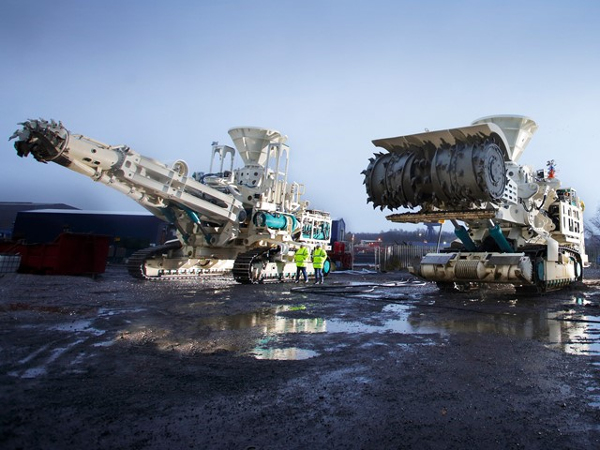
NIOT has developed a crawler-based seabed mining system intended eventually to collect polymetallic nodules at depths of around 5,000 to 5,500 metres.
Mobility and system-powering trials were successfully conducted at 5,270 metres in the Central Indian Ocean Basin, an achievement that the Ministry of Earth Sciences reconfirmed in Parliament in August 2026. NIOT has also been developing the collection and crushing systems required to handle nodules on the seabed.
Operating machinery at that depth is not comparable to deploying ordinary underwater equipment.
At more than five kilometres beneath the surface, the machine must withstand extreme hydrostatic pressure while operating on very soft sediment. Electricity, controls and communications have to function reliably over kilometres of water. The collector must move without becoming trapped in the seabed and gather nodules without ingesting unmanageable quantities of sediment.
Then comes the larger engineering problem: getting the material to the surface.
NIOT’s proposed integrated system uses a crawler to collect and crush nodules before pumping the resulting slurry towards a support vessel through a flexible riser. The institute has separately conducted pumping studies and developed elements of the riser system required to move material vertically through the water column.
This is why the 5,270-metre trial is significant. It demonstrates that Indian engineers have taken key parts of a mining machine into the environment for which they were designed.
It does not yet amount to a commercial mining operation.
What a Working Deep-Sea Mine Would Actually Require
Collecting nodules from the seabed is only the first step in a much larger system.
A commercial operation would require detailed mapping to identify sections of seabed with sufficiently high nodule density and metal content. Mining machines would then need to work continuously over large areas rather than perform relatively short experimental trials.
The collected material would have to be crushed or conditioned underwater and transferred into a lift system capable of moving tonnes of solid material through roughly five kilometres of water.
At the surface, a purpose-built vessel would need equipment for separating water and sediment from the nodules, handling the mineral cargo and operating the subsea equipment. Support ships, spares, remotely operated vehicles and specialist crews would be required to keep the system functioning far from shore.
The nodules would then have to be brought to land and processed.
That last stage is easy to overlook. Deep-sea mining has little strategic value if a country can retrieve nodules but must export them elsewhere for metal separation.
India has therefore worked on extractive metallurgy alongside seabed collection. Government research has examined processes for recovering copper, nickel, cobalt and manganese, including pilot-scale processing of nodules.
The industry’s eventual shape would therefore extend well beyond oceanography.
It could involve offshore vessel operators, shipyards, pumps and hydraulic equipment manufacturers, subsea cable companies, robotics firms, positioning and navigation specialists, metallurgical companies, battery-material producers and engineering contractors.
That is the reasoning behind the government’s current emphasis on a mine-to-metal ecosystem.
Why Private Industry Is Being Brought In
The Deep Ocean Mission was approved in 2021 with an outlay of ₹4,077 crore. Its remit extends beyond mining and includes the development of a 6,000-metre crewed submersible, deep-ocean surveys, marine biodiversity research, ocean-climate services and related scientific infrastructure.
Private-sector involvement was contemplated from the early stages of the mission. The government stated in 2021 that private institutions could participate in technology development connected with mining and other deep-ocean activities.
The difference now is that the conversation is moving closer to industrialisation.
Government laboratories are suited to solving scientific and engineering problems and building prototypes. Commercial mining requires a different set of capabilities: serial production, vessel construction, project finance, supply-chain management, maintenance, insurance, processing capacity and the ability to operate equipment for extended periods.
Private participation becomes particularly important at that stage.
A seabed crawler may be developed by NIOT, for example, but a future mining operation could require several machines, replacement modules, pumps, kilometres of riser equipment and specialised surface vessels. Those requirements create opportunities for companies that may never previously have regarded themselves as participants in ocean mining.
Indian shipbuilders could potentially build or convert support vessels. Heavy-engineering companies could supply lifting and pumping systems. Robotics firms could produce autonomous inspection vehicles. Metallurgical companies could develop processing plants for recovering individual metals.
The New Delhi industry outreach is intended to determine which parts of that chain Indian companies can already undertake and which require further technology development.
The Programme Has Also Faced Delays
There is a less comfortable side to the Deep Ocean Mission’s progress.
A parliamentary committee reviewing the programme in 2026 said that overall implementation had not kept pace with the original objectives and timelines. It noted that important components, including the integrated polymetallic nodule mining system and Samudrayaan programme, remained incomplete.
At the time of the review, approximately ₹1,445 crore of the ₹4,077-crore approved allocation had been utilised, or roughly 35%. The committee called for clearer milestones, timelines and closer monitoring of individual mission components.
That context matters because deep-sea mining is unusually unforgiving of incomplete engineering.
A component failing inside a factory can be repaired relatively easily. A pump or power module failing five kilometres beneath the Indian Ocean may require recovery of the entire system, suitable weather conditions, a specialised vessel and days of ship time.
Reliability therefore matters as much as proof that a prototype can function once.
Before commercial operations can be considered, India would have to demonstrate an integrated system capable of collecting, lifting and handling nodules repeatedly and at useful throughput.
The economics would then have to be proven separately.
The Economics Are Still Unsettled
The presence of hundreds of millions of tonnes of nodules does not mean that all of them constitute an economically recoverable reserve.
Resource quantity is only one variable.
Commercial viability depends on nodule abundance in the exact mining area, metal grades, recovery rates, vessel costs, fuel consumption, equipment availability, financing costs, processing efficiency and future prices of nickel, cobalt, copper and manganese.
A mining ship and its subsea equipment would represent a substantial capital investment. Operating such a vessel thousands of kilometres from shore would also be expensive.
If metal prices fall, terrestrial mines become more productive or battery technologies reduce demand for certain minerals, the economics of deep-sea extraction can change significantly.
For India, this makes the current approach sensible: develop the engineering capability first, maintain access to promising seabed areas and build enough industrial capacity to act if commercial conditions become favourable.
The alternative would be to wait until global deep-sea mining becomes commercially established and then attempt to acquire the technology from foreign suppliers.
The Environmental Question Cannot Be Treated as Secondary
Deep-sea mining also involves environmental effects that remain the subject of international scientific and regulatory debate.
Polymetallic nodules occur on abyssal seabeds that develop over extremely long periods. Collector vehicles would physically disturb the sediment as they travel across the ocean floor.
That disturbance can create sediment plumes, affect benthic organisms and alter habitats in areas that remain comparatively poorly studied.
The vertical transport and discharge of water associated with mining may create additional effects in the water column, depending on system design.
India is already required to conduct environmental baseline studies as part of its ISA exploration contracts. The Ministry of Earth Sciences says these include geological, oceanographic and biological surveys intended to characterise ecosystems and evaluate the potential consequences of seabed activities.
Environmental assessment is therefore not something that can be added after mining technology has been perfected. It is part of determining whether, where and under what conditions commercial operations could proceed.
That issue is also one reason international rules have taken so long to complete.
There Is Still No International Commercial Mining Code
The seabed areas allocated to India lie beyond national jurisdiction and are governed through the International Seabed Authority under the United Nations Convention on the Law of the Sea.
The ISA has issued exploration contracts, but the regulations governing commercial exploitation of minerals in the international seabed remain under negotiation.
During its 31st session in 2026, the ISA Council continued detailed work on the draft exploitation regulations, including outstanding questions covering environmental requirements, compliance, inspections and the wider regulatory framework.
The Council was still considering the draft regulations in July 2026 and agreed on a roadmap for continuing the work rather than bringing a completed Mining Code into force.
India’s Ministry of Earth Sciences has consequently stated clearly that only exploration activities are presently permitted in the international seabed areas covered by its contracts.
No Indian company can therefore begin commercial extraction from the Central Indian Ocean Basin simply because the technology becomes available.
The international regulatory framework has to be completed first.
Why India Is Preparing Before the Rules Are Finished
That does not make the present investment premature.
A country that begins developing mining machinery only after commercial rules are adopted would enter the industry several years behind countries and companies that have already tested collection systems.
India’s strategy is instead to use the exploration period to solve the engineering problems, understand the geology, establish environmental baselines and develop metallurgical processes.
The current industry outreach adds another layer: determining whether the domestic industrial base can manufacture and operate the equipment at scale.
If commercial mining eventually becomes permissible and economically attractive, India would then have more than an exploration contract. It would have the beginnings of a supply chain capable of using it.
There is also value in the technology even if large-scale seabed mining develops slowly.
Machines that can operate reliably at 5,000 or 6,000 metres have applications in scientific exploration, subsea infrastructure inspection, underwater robotics and recovery operations. Pumps, materials, pressure housings, navigation systems and deep-ocean communications developed for mining can find uses elsewhere in the maritime economy.
From Ocean Science to an Industrial Capability
The New Delhi workshop therefore marks a different stage in India’s deep-ocean programme.
For much of its history, the work has been driven by government scientists: surveying the seabed, collecting samples, estimating resources and building experimental machinery.
India now knows far more about its allotted seabed areas than it did when the programme began. It has a current estimate of 366 million tonnes of nodules in the Central Indian Ocean Basin, three ISA exploration contracts, an indigenous mining machine tested at 5,270 metres and decades of work on recovering metals from the material.
What it does not yet have is a complete commercial mining system.
The difficult work ahead lies between those two points.
A viable operation would have to collect nodules continuously, lift them from abyssal depths, operate reliably in the open ocean, process the material efficiently on land and do all of this under environmental and international rules that remain under development.
The government’s attempt to bring private industry into the programme acknowledges that reality.
India’s deep-sea mining effort is no longer only a question of whether NIOT can build a machine capable of moving across the seabed. The larger question is whether the country can assemble the engineering, shipbuilding, metallurgy, finance and regulatory capacity required to turn a scientific programme into an industrial one.
That transition will take time. But the groundwork is already substantial — and with competition over critical-mineral supply chains becoming increasingly important, India has decided it would rather develop the capability before it urgently needs it than begin searching for it afterwards.
You may also like
-
ICAR Scientists Develop Indigenous Protective Gloves for Cotton Farmers, Sign Commercial Manufacturing Agreement
-
BHEL–Coal India Joint Venture Begins Construction of ₹25,016 Crore Indigenous Coal Gasification Project in Odisha
-
PM Modi to Inaugurate RBI’s Tier IV Data Centre and Cybersecurity Training Institute in Bhubaneswar
-
India Creates 11 Crore Digital Farmer IDs Five Months Ahead of Target, Strengthening AgriStack Infrastructure
-
Chak-Hao Black Rice of Manipur and Nagaland: The Aromatic Purple Heritage Grain with GI Recognition
