Breakfast is often described today as the most important meal of the day, but traditional Ayurveda takes a more individualised view. It does not prescribe one compulsory breakfast menu for everyone, nor does it insist that every person must eat a large meal immediately after waking. Instead, Ayurveda places greater importance on Agni, or digestive capacity, genuine hunger, the digestion of the previous meal, constitution, season, activity level and the qualities of the food being eaten.
This makes an Ayurvedic breakfast less about following a rigid menu and more about matching the first meal of the day to the body’s ability to digest it.
The Central Council for Research in Ayurvedic Sciences notes that Ayurvedic dietary principles include Kale Bhojana, eating at an appropriate time; Satmya Bhojana, choosing foods suited to the individual; Ushna Bhojana, eating suitably warm food; and Laghu Bhojana, favouring foods that are reasonably easy to digest. Traditional guidance also says food should ideally be taken when there is sufficient hunger and after the previous meal has been properly digested.
These principles provide a more useful foundation for an Ayurvedic breakfast than searching for one universally correct dish.
Ayurveda Does Not Prescribe the Same Breakfast for Everyone
One of the most important Ayurvedic ideas is that food should be appropriate to the individual.
A person who wakes hungry after an early and easily digested dinner may benefit from a substantial morning meal. Someone who ate a heavy dinner late at night and wakes with no appetite may not benefit from forcing down another heavy meal simply because the clock says it is breakfast time.
CCRAS dietary guidance emphasises eating at regular times while also recognising hunger and completion of digestion from the previous meal as important signals. It also advises avoiding both overeating and chronically inadequate food intake.
This does not mean breakfast should routinely be skipped. Rather, it means that Ayurveda traditionally considers digestive readiness alongside the time of day.
A healthy morning appetite following an appropriate night’s meal is generally a useful sign. Persistent absence of appetite, frequent nausea, bloating or discomfort after eating deserves attention rather than being treated as a reason to live indefinitely on tea or coffee.
Agni Is Central to the Ayurvedic Idea of Breakfast
Ayurveda uses the term Agni to describe digestive and metabolic processes. Classical descriptions particularly associate Jatharagni with the digestion and transformation of food.
From this perspective, even a nutritious food can be unsuitable when eaten in an amount or form that overwhelms digestion.
A very oily breakfast, multiple fried dishes, large quantities of sweets and highly processed foods may leave some people feeling heavy, sleepy or uncomfortable. A simpler meal built around cooked grains, pulses, vegetables and modest amounts of fat is often easier to accommodate.
This is one reason Ayurveda traditionally values food that is freshly prepared, warm and appropriately light.
The concept should not be interpreted as meaning that every breakfast must be extremely small. Someone who performs physically demanding work, exercises heavily or has a strong morning appetite may legitimately need considerably more food than someone who remains sedentary.
The amount should fit the person.
Warm Food Often Fits Ayurvedic Breakfast Principles Well
Traditional Ayurvedic dietary advice commonly favours Ushna Bhojana, or appropriately warm food.
A warm breakfast can be particularly appealing in the morning because cooked foods such as porridge, dal-based dishes or lightly cooked vegetables tend to be easy to combine into balanced meals.
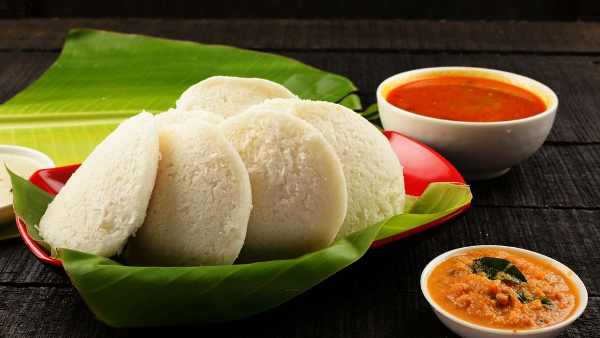
Suitable examples can include warm millet porridge, vegetable poha, lightly prepared upma, idli with sambar, moong dal chilla, soft rice preparations or cooked oats with nuts and suitable spices.
These are best regarded as modern Indian meals that fit broad Ayurvedic principles rather than as dishes universally prescribed in classical Ayurvedic texts.
The principle is more important than the recipe: fresh, digestible and appropriate to the individual’s appetite.
Rice Gruel Is One of Ayurveda’s Classic Light Foods
Traditional Ayurvedic literature includes several preparations based on rice and other grains for situations where easy digestion is desirable.
One example is Manda, a very thin rice preparation in which rice is cooked with a large quantity of water and the liquid portion is used. AYUSH’s Ayusoft database describes Manda as an exceptionally light dietary preparation traditionally used to support gradually recovering digestion.
For a healthy person, there is no need to consume rice gruel every morning. However, the concept illustrates an important Ayurvedic principle: the consistency and preparation of food can be modified according to digestive capacity.
A person recovering from illness or experiencing temporarily poor appetite may tolerate a soft rice preparation better than fried breads and heavy accompaniments.
Moong Dal Makes a Useful Breakfast Base
Mudga, or green gram, has a long place in Indian and Ayurvedic food traditions and is particularly useful because it provides plant protein while fitting easily into cooked meals.
Moong dal chilla with vegetables, lightly seasoned green gram, moong-based khichdi or a vegetable-and-moong preparation can provide a more balanced breakfast than a meal dominated only by refined starch.
Modern nutritional guidance also supports combining cereals and millets with pulses and vegetables.
ICMR-National Institute of Nutrition’s current Dietary Guidelines for Indians includes breakfast examples containing millets, beans or pulses, vegetables, green leafy vegetables and nuts, reflecting the value of combining several food groups rather than relying entirely on refined cereal products.
The overlap is notable. Ayurveda approaches the issue through digestibility and food qualities, while modern nutrition emphasises fibre, protein, micronutrients and dietary diversity.
Millet Breakfasts Can Be Useful, but They Need Not Replace Every Grain
Millets such as ragi, jowar and bajra have regained popularity in India and can be incorporated into breakfast in several ways.
Ragi porridge, millet upma, millet dosa or cooked millet combined with vegetables and pulses can provide variety and fibre.
ICMR-NIN includes millets among the cereal options within balanced meal patterns and specifically includes millet-based foods in suggested breakfast plans.
Ayurveda, however, would not necessarily regard every grain as equally appropriate for every individual or season.
Some people tolerate coarse, dry foods easily, while others may find them heavy or uncomfortable unless they are cooked well and combined with sufficient moisture and suitable fats.
The broader lesson is not that millet must replace rice or wheat. It is that grain variety can be useful when it suits digestion, local food culture and nutritional needs.
Vegetable Poha and Upma Can Become More Complete Meals
Traditional Indian breakfasts such as poha and upma are useful examples of meals that can be improved without fundamentally changing their character.
Plain poha made almost entirely from flattened rice can be relatively carbohydrate-heavy. Adding peas, carrots, beans, peanuts, curry leaves and other vegetables improves its diversity.
Similarly, upma can contain vegetables, nuts or seeds rather than consisting mostly of refined semolina.
This approach fits the Ayurvedic preference for wholesome, freshly prepared food while also aligning better with modern dietary advice that encourages vegetables, pulses, nuts and whole or minimally processed grains.
The goal is not to make breakfast excessively complicated. A few complementary ingredients can turn a simple cereal dish into a more satisfying meal.
Idli and Sambar Provide a Useful Traditional Combination
Idli is often easy to digest for many people because the batter is fermented and the finished product is steamed rather than fried.
Pairing idli with sambar containing dal and vegetables produces a more nutritionally complete breakfast than eating several idlis alone with little else.
Fermented foods form an important part of several Indian regional traditions, although Ayurveda evaluates sour and fermented foods differently depending on constitution, quantity and season.
For someone who tolerates them well, ordinary fermented breakfast foods can form part of a balanced diet. People who experience significant acidity or digestive discomfort after particular foods may need to modify portion size or preparation.
Fruit Can Be Part of Breakfast Without Becoming the Entire Philosophy
Seasonal fruits can make a valuable contribution to breakfast.
Amla, papaya, guava, pomegranate, banana, apples and regional seasonal fruits provide vitamins, minerals, fibre and numerous plant compounds.
Ayurvedic dietary traditions place substantial value on fresh and locally available foods, and CCRAS guidance encourages regional fruits and vegetables as part of everyday eating.
There is no need, however, to turn breakfast into an elaborate fruit-only regimen based on claims of “detoxification.”
For many people, fruit works well alongside a broader meal or as part of a smaller breakfast. Those who need tighter blood-glucose control may benefit from combining fruit with protein, whole grains, pulses, nuts or other foods rather than relying on large quantities of fruit alone.
Nuts and Seeds Can Add Nutritional Density
A small serving of almonds, walnuts, peanuts, sesame, flaxseed or other nuts and seeds can make a breakfast more satisfying and nutritionally diverse.
They provide fats, protein, minerals and other nutrients, but portion size remains important because nuts are energy dense.
ICMR-NIN’s suggested balanced breakfast patterns also include nuts alongside grains, pulses and vegetables.
Ayurvedic traditions frequently use soaked almonds and various seeds, but soaking should not be presented as a requirement for everyone or as a process that transforms the food into a medicine.
The simplest principle is sufficient: use modest quantities as part of an otherwise balanced meal.
Ghee Can Be Used, but More Is Not Necessarily Better
Ayurveda often describes food with some degree of Snigdha, or unctuousness, as desirable.
A small quantity of ghee can therefore fit naturally into porridge, khichdi or other cooked breakfast dishes. Oil can serve a similar culinary purpose depending on the meal.
However, Ayurvedic support for unctuous foods should not be interpreted as permission to consume unlimited amounts of ghee.
CCRAS health guidance also advises avoiding excessive fried foods and controlling total oil and fat intake.
The distinction is between using enough fat to make food palatable and satisfying versus turning breakfast into a heavily fried meal.
What Ayurveda Suggests About Tea and Coffee
Tea and coffee are now deeply embedded in Indian mornings, but they are not foundational foods in classical Ayurvedic breakfast traditions.
For people who tolerate them, moderate tea or coffee can be part of a normal diet. Problems arise when the beverage becomes a substitute for nourishment.
A person who begins every morning with several cups of sweetened tea but consumes no meaningful food until late afternoon may be meeting neither Ayurvedic nor modern ideas of a balanced dietary routine.
Large quantities of sugar added to beverages also contribute calories without providing substantial nutritional value.
Coffee or tea therefore works better as an accompaniment to a healthy routine than as breakfast itself.
Breakfast Should Change With the Seasons
Ayurveda’s Ritucharya, or seasonal regimen, is particularly relevant when deciding how substantial breakfast should be.
CCRAS describes winter and pre-winter as periods where more nourishing foods can generally be accommodated, while spring traditionally calls for lighter eating. Summer guidance emphasises lighter, cooling and more fluid foods, and the rainy season gives greater importance to warm, easily digestible meals.
A winter breakfast might therefore be more substantial, with warm porridge, millet dishes, nuts or a little ghee.
During very hot weather, some people may prefer lighter meals built around easily digested grains, fruits and adequate fluids.
During the monsoon, warm cooked preparations may be more appealing than large quantities of raw or chilled foods.
These are broad traditional principles rather than strict medical rules, and climate varies greatly across India. Local weather and individual tolerance remain more useful than following a calendar mechanically.
Prakriti Can Influence Traditional Food Choices
Ayurveda also evaluates food in relation to Prakriti, or constitutional characteristics.
Traditional advice often gives a person with pronounced Vata characteristics warmer and more moist foods, while someone with stronger Kapha characteristics may be advised to avoid habitually heavy, oily breakfasts. Pitta-oriented advice may place greater emphasis on moderation in very hot, pungent foods.
These classifications belong to traditional Ayurvedic theory and should not be confused with modern biomedical diagnoses.
They can nevertheless provide a useful reminder that people do not all digest the same breakfast equally well.
One person’s perfect bowl of cold yoghurt and fruit may leave another uncomfortable. One person may thrive on a substantial breakfast while another naturally prefers something lighter.
Personal tolerance matters.
Eating Calmly Is Part of the Meal
Ayurveda pays unusual attention not only to what is eaten but also how food is eaten.
CCRAS dietary guidance recommends concentrating on the meal and eating calmly, neither excessively fast nor extremely slowly. It also advises avoiding overeating.
This becomes relevant to modern breakfast because the first meal of the day is often eaten while driving, working, watching a phone or rushing out of the house.
Eating hurriedly makes it harder to notice hunger and fullness.
Even a nutritionally excellent breakfast loses some of its practical advantage when it is routinely swallowed in a few minutes while attention is elsewhere.
A Practical Ayurvedic-Inspired Breakfast Plate
A useful everyday breakfast can therefore be very simple.
One option might be moong dal chilla with vegetables and a small serving of seasonal fruit.
Another could be vegetable poha with peanuts, while someone preferring a South Indian meal could choose idli with vegetable-rich sambar.
A colder morning might suit warm ragi or millet porridge with nuts, while a person wanting something softer could choose a simple rice-and-moong preparation.
The precise dish matters less than the overall pattern: food should be fresh, suitable, reasonably balanced and eaten according to genuine appetite.
Breakfast Should Not Become Another Set of Rigid Rules
Modern wellness culture often turns traditional health systems into strict lists: never eat this, always eat that, breakfast must occur at a particular minute, fruit must never be combined with another food, or everyone should begin the day with the same herbal drink.
Classical Ayurvedic reasoning is more contextual than this.
Food is assessed according to its qualities, preparation, quantity, timing, season and the person eating it.
CCRAS guidance explicitly includes individual suitability, Prakriti, proper timing, hunger and digestive capacity among dietary considerations.
That means the best Ayurvedic breakfast is not necessarily the breakfast recommended by a social-media trend.
It is the meal that provides appropriate nourishment without leaving the person excessively heavy, bloated, hungry again immediately or chronically underfed.
Modern nutrition adds another useful layer. A healthy breakfast should ideally contribute meaningful amounts of protein, fibre, vegetables or fruit, minimally processed grains and healthy fats, rather than being dominated by sugar and refined starch.
In this respect, Indian food traditions already provide many useful choices.
The central Ayurvedic lesson is therefore remarkably practical. Eat when genuine hunger is present, choose freshly prepared and suitable foods, respect digestive capacity, avoid excessive quantities and adjust the meal to season and individual needs.
Breakfast does not have to be elaborate to achieve this.
A warm bowl of millet porridge, vegetable poha, moong dal chilla, idli with sambar or another familiar regional meal can all fit the principle when prepared sensibly and eaten in an appropriate quantity.
Traditional Ayurveda does not give us one perfect breakfast for everyone. Instead, it offers something more useful: a framework for deciding what the first meal of the day should look like for the person actually eating it.
Reference:
Central Council for Research in Ayurvedic Sciences (CCRAS), Ministry of AYUSH — “Ayurveda Based Diet & Life Style Guidelines”
https://ccras.nic.in/wp-content/uploads/2024/06/Ayurveda-Based-diet-lifeStyle-Guidelines-Skin-Diseases.pdf
Central Council for Research in Ayurvedic Sciences (CCRAS), Ministry of AYUSH — “AYUSH Kuposhan Mukt Bharat”
https://ccras.nic.in/wp-content/uploads/2024/06/CCRAS_Pub_Ayush-Kuposhan-Mukt-Bharat.pdf
Ministry of AYUSH — AYUSOFT, “Principles of Ayurveda”
https://ayusoft.ayush.gov.in/principles-of-ayurveda/
Ministry of AYUSH — AYUSOFT, “Manda”
https://ayusoft.ayush.gov.in/manda/
ICMR–National Institute of Nutrition — “Dietary Guidelines for Indians 2024”
https://www.nin.res.in/dietaryguidelines/pdfjs/locale/DGI07052024P.pdf
CCRAS, Ministry of AYUSH — “Ritucharya: Ayurvedic Seasonal Regimen”
https://ccras.nic.in/wp-content/uploads/2024/06/RITU-CHARYA-Title-Changed.pdf
You may also like
-
InnAccel Technologies: Indian MedTech Designed for the Hardest Clinical Environments
-
Bengaluru Startup Luxid Launches AR Glasses for Surgical Counselling and Hospital Workflows
-
Ayurvedic Foods for Healthy Eyes and Vision
-
Bugworks Research: India’s Drug-Discovery Startup Developing a New Antibiotic Class Against Superbugs
-
Achira Labs: India’s Microfluidic ‘Lab-on-a-Chip’ Technology Bringing Complex Diagnostics to the Point of Care
