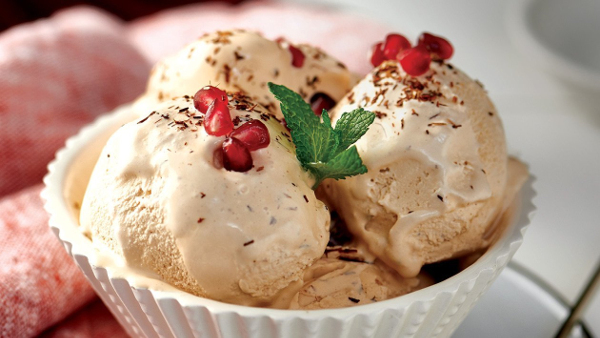
Reliance Consumer Products Limited has entered India’s large and intensely competitive ice-cream market with the launch of Bombay Creamery, extending Reliance Industries’ fast-growing consumer-goods business into another major packaged-food category.
The new brand is being positioned around real dairy cream, affordable pricing and mass-market distribution. Bombay Creamery products start at ₹10 and will initially be available across western India before Reliance expands the brand nationwide. The portfolio includes cones, cups, tubs, bars and sticks, giving the company products across the principal formats sold in India’s organised ice-cream market.
Reliance Brings Its Affordable-Premium Strategy to Ice Cream
Reliance Consumer Products, or RCPL, has described Bombay Creamery as an affordable premium offering built around genuine dairy ingredients. The company says the products are made with real dairy cream, while its wider positioning remains centred on delivering what it calls global-quality products at prices accessible to Indian households.
The ₹10 entry point is particularly significant because it places Bombay Creamery directly into the high-volume impulse-purchase end of the market. Ice creams sold individually through neighbourhood stores, kiosks and small retailers are highly sensitive to price, especially outside India’s largest metropolitan markets.
This strategy resembles the approach Reliance has already adopted in beverages and several other FMCG categories: enter with aggressive pricing, build widespread physical availability and then use scale to develop the brand.
Western India First, Nationwide Rollout to Follow
Rather than attempting an immediate nationwide launch, Reliance has initially introduced Bombay Creamery in western India. The company plans to subsequently expand availability throughout the country.
That phased approach is important because ice cream requires a considerably different supply chain from packaged foods or soft drinks. Manufacturers need refrigerated transportation, reliable cold storage and, crucially, freezer availability at retail outlets.
Reliance nevertheless enters the market with an important structural advantage. Its consumer business already possesses a large distribution network, while the broader Reliance ecosystem has an extensive retail presence. Reuters noted that Reliance has already been deploying branded refrigeration equipment for Campa at retail outlets, experience that could prove useful as it develops the freezer network required for Bombay Creamery.
Taking on Amul, Mother Dairy, Vadilal and Kwality Wall’s
Reliance is entering a category containing some of India’s most established food brands. Its competitors include Amul, Mother Dairy, Vadilal, Kwality Wall’s and Hatsun Agro Product’s Arun Icecreams, alongside numerous strong regional manufacturers.
This means Reliance cannot depend on price alone. Ice cream is a category where flavour, dairy quality, consistency, local availability and freezer visibility can be as important as brand recognition.
Bombay Creamery’s use of real dairy cream is therefore central to its positioning. RCPL appears to be attempting to combine an accessible entry price with a product identity associated with traditional dairy ice cream rather than competing only on low cost.
A New Front in Reliance’s Rapid FMCG Expansion
The launch becomes more significant when viewed against the extraordinary pace at which Reliance has been building its consumer-products operation.
RCPL reported ₹22,000 crore in gross revenue during FY2025-26, roughly double the previous year’s level. Its fourth-quarter gross revenue alone reached approximately ₹7,350 crore. Reliance’s official financial presentation shows that the company’s consumer platform has rapidly developed substantial positions in beverages, staples and packaged water.
Campa has emerged as perhaps the most visible example of that expansion. The revived beverage brand generated more than ₹4,700 crore in gross sales during FY2025-26, and Reliance says it became India’s fourth-largest carbonated soft-drinks brand, with double-digit market share in several key markets.
Reliance’s Independence staples brand also generated approximately ₹2,600 crore in sales, while the company says its packaged-water business has grown sufficiently to make RCPL India’s third-largest branded-water player.
Bombay Creamery therefore represents more than the introduction of another isolated brand. It adds an entirely new temperature-controlled food category to a consumer business that Reliance is rapidly broadening across everyday household spending.
Distribution Could Become Reliance’s Biggest Advantage
The Indian ice-cream industry has traditionally been constrained by cold-chain economics. Unlike biscuits, noodles or packaged staples, ice cream cannot simply be placed on ordinary retail shelves. Every new sales point potentially requires refrigerated storage and uninterrupted electricity.
Large incumbent manufacturers have spent decades building dealer relationships and installing branded freezers across India’s retail network. Replicating that infrastructure is expensive and time-consuming.
Reliance, however, begins with an unusually large distribution platform. Its FY2025-26 disclosures show that RCPL had expanded to more than three million retail outlets supported by over 5,000 distributors. The company was also present in more than 40 countries through exports and franchise sales by the end of the financial year.
If even part of that distribution machinery can be adapted for frozen products, Bombay Creamery could achieve geographical scale much faster than a conventional new ice-cream entrant.
The ₹10 Strategy Could Expand the Addressable Market
The ₹10 starting price is also likely to become one of the most closely watched parts of Reliance’s strategy.
Rather than beginning primarily with premium family tubs, Reliance can use lower-priced sticks, cups and other single-serve products to encourage trials among consumers. Once a customer has tried the brand, the company can potentially move them towards larger and higher-value products.
Reuters reported that industry observers see Reliance’s combination of pricing, distribution, retail reach and consumer data as its main competitive advantage. The challenge will be turning initial trials generated by the low price into repeat purchases based on taste and quality.
That distinction is important. Low prices can secure shelf space and encourage experimentation, but building a sustainable ice-cream brand requires repeat consumption and consumer loyalty.
Reliance Is Building a Wider Consumer Ecosystem
RCPL’s strategy increasingly resembles the construction of a broad consumer-goods platform rather than a collection of unrelated brands.
The company already operates across beverages, staples, packaged foods, snacks, confectionery, packaged water, home care and personal-care products. Bombay Creamery now gives Reliance an entry into frozen dairy foods as well.
The group’s stated ambitions are substantial. Reliance said at its 2026 AGM that RCPL wants to grow revenues dramatically over the remainder of the decade as it seeks to become one of India’s leading diversified consumer-product businesses. Its rapid scaling of Campa illustrates how aggressively it is prepared to invest in distribution and pricing when entering an established market.
A Potentially Important New Battle in India’s FMCG Market
Bombay Creamery therefore opens an interesting new competitive front in Indian FMCG.
Reliance is entering an industry where incumbents possess strong brands and decades of cold-chain infrastructure. At the same time, few new entrants have arrived with Reliance’s combination of capital, retail reach, distribution capability and willingness to use aggressive introductory pricing.
The initial western India launch will provide the first indication of how consumers respond to the brand. The more important stage will come when Bombay Creamery moves nationwide and Reliance begins building freezer penetration across general trade.
You may also like
-
Japan Credit Rating Agency Upgrades India’s Sovereign Rating to ‘A-’ With Stable Outlook
-
BEML Adds ₹180.6-Crore Vande Bharat Sleeper Order to Growing Manufacturing Book
-
India Launches Indigenous iNDiC Underwater Systems for Military and Professional Diving
-
India Revises Fuel Export Levies as Petrol and Diesel Duties Rise, ATF Rate Eases
-
₹23,731-Crore GOBARdhan Scheme Takes Effect to Drive India’s Compressed Biogas Economy
