India has strengthened another critical segment of its space-technology supply chain with Bengaluru-based Hical Technologies commercially launching and completing the first customer delivery of an indigenously developed Coreless Brushless DC motor designed for satellite applications.
Announced on September 1, 2026, the motor has been developed for precision spacecraft attitude-control systems, particularly reaction wheels and momentum wheels that allow satellites to control and maintain their orientation in orbit. Hical says the platform can be adapted across different satellite sizes and mission profiles, ranging from Low Earth Orbit and Geostationary spacecraft to potential deep-space and interplanetary missions.
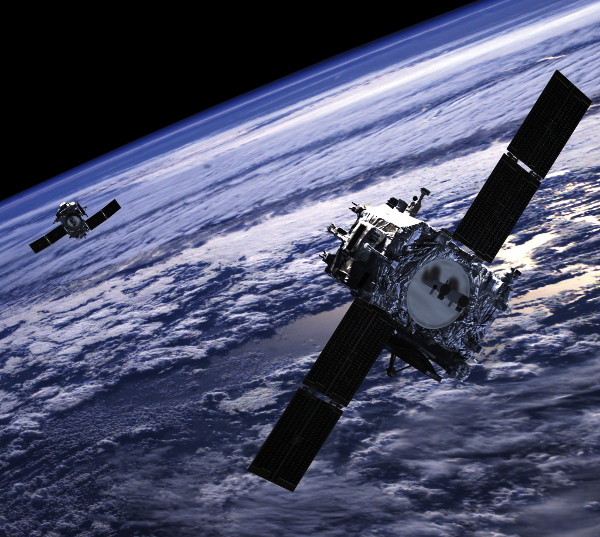
Attitude control is one of the most fundamental functions aboard a satellite. Spacecraft must maintain extremely precise orientation to point communication antennas towards Earth, position cameras and scientific instruments at their targets, orient solar panels towards the Sun and carry out orbital manoeuvres. Reaction wheels achieve this by changing their rotational speed, producing an opposite rotational movement in the spacecraft without consuming conventional propulsion fuel.
At the heart of such a system is a highly precise electric motor. Hical’s new design employs a coreless BLDC architecture, eliminating the iron core normally found in many conventional motors. One of its most important advantages is the elimination of magnetic cogging, the small variations in torque that occur as magnetic components inside a conventional motor interact during rotation.
For spacecraft applications, even very small vibrations or torque disturbances can affect precision pointing. A zero-cogging architecture therefore enables smoother rotational control while reducing torque ripple and vibration. According to Hical, the motor also offers rapid acceleration and deceleration, improved efficiency, quiet operation and greater reliability, characteristics particularly valuable for high-precision satellite motion-control systems.
The development addresses a technology segment in which Indian spacecraft manufacturers have traditionally depended partly on imported components. Bringing such precision electromechanical systems into domestic production could help reduce supply-chain exposure as India’s government and private space sectors expand satellite manufacturing and constellation deployment.
Importantly, the programme has moved beyond research and prototype development. Hical has confirmed the commercial launch and first customer delivery of the motor, demonstrating that the technology has progressed into an operational manufacturing stage.
The company already possesses substantial experience in high-reliability motors and electromechanical systems for aerospace, space and defence applications. Hical designs and manufactures motors, actuators, solenoids, transformers, precision components and integrated systems, while its existing portfolio includes specialised motors for spacecraft and launch vehicles.
Hical has also previously worked with India’s space programme. The company secured a contract from ISRO’s Vikram Sarabhai Space Centre for electromechanical actuators and sensors used in Indian launch vehicles, including PSLV and GSLV programmes. Its aerospace and defence manufacturing activities additionally cover equipment supplied to Indian and international customers.
The new coreless motor is especially important as India’s satellite industry moves towards greater private participation and higher production volumes. Future Earth-observation, communication, navigation and defence-oriented constellations will require growing numbers of domestically manufactured spacecraft subsystems rather than dependence on imported high-value components.
Reaction-wheel assemblies may be small compared with launch vehicles or satellites themselves, but they are mission-critical systems. Failure of an attitude-control motor can seriously degrade or even end a spacecraft mission because the satellite may lose the ability to accurately point its payload, antennas or solar arrays.
Developing such components domestically therefore represents a deeper form of space indigenisation. Instead of concentrating only on launch vehicles and complete satellites, India’s emerging space-manufacturing ecosystem is increasingly developing the precision motors, sensors, actuators, electronics and other specialised subsystems required inside them.
With its indigenous coreless BLDC motor now entering commercial delivery, Hical Technologies has added another locally manufactured building block to India’s expanding space hardware ecosystem, strengthening domestic capability in the precision motion-control technologies required for increasingly sophisticated satellite missions.
You may also like
-
RRP Defense Partners ESC BAZ to Bring Advanced AI-Enabled Diamond Surveillance System to India
-
Technotreon Develops Indigenous Anti-Skid Tracks for T-72, T-90 Bhishma and BMP Armoured Vehicles
-
MIDHANI Secures GE Aerospace S400 Approval, Strengthening India’s Aerospace Materials Ecosystem
-
India Considering Further Liberalisation of Defence FDI Rules to Attract Global Manufacturers
-
From Firefly to Honeybee: Pixxel Prepares Next Leap in Indian Hyperspectral Satellite Technology
