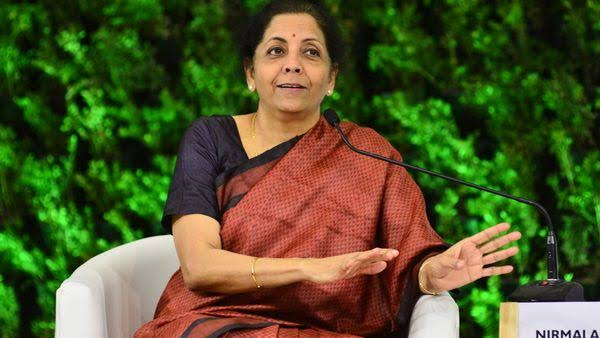
India’s public sector banking system has entered a markedly different phase from the bad-loan crisis that dominated the sector less than a decade ago. Union Finance Minister Nirmala Sitharaman said at the PSB Confluence 2026 that non-performing assets have reached their lowest-ever level, arguing that stronger balance sheets now give banks an opportunity to undertake a new generation of reforms aimed at supporting India’s development ambitions through 2047.
The numbers behind that statement are substantial. At the end of March 2026, the gross NPA ratio of public sector banks had fallen to 1.93 per cent, while net NPAs were down to just 0.39 per cent. The Finance Ministry describes both as historically low levels. At the same time, PSBs recorded an all-time high combined net profit of ₹1.98 lakh crore in FY2025-26.
The improvement is striking when compared with the position in March 2018, when the gross NPA ratio of public sector banks had peaked at 14.58 per cent and net NPAs stood at 7.97 per cent. The balance-sheet clean-up of subsequent years has therefore transformed the immediate policy debate from rescuing stressed banks towards determining how stronger banks can finance the country’s next phase of economic expansion.
PSB Confluence Looks Beyond the Bad-Loan Clean-Up
The PSB Confluence 2026, organised by the Department of Financial Services in New Delhi on August 17 and 18, has brought together around 125 senior officials from public sector banks and public financial institutions. Participants include the leadership of PSBs along with institutions such as NABARD, SIDBI, EXIM Bank, NHB, IIFCL, IFCI and NaBFID.
The objective is deliberately forward-looking. Rather than holding another general review of banking performance, the Finance Ministry has structured the meeting around specific areas where banks can influence investment, employment, household finance and inclusive economic development.
Sitharaman told bankers that the sector has emerged from a difficult period in a position of greater strength. She urged them to use that strength to develop practical recommendations rather than broad statements of intent. The proposals emerging from the two-day meeting are expected to feed into the proposed High Level Committee on Banking for Viksit Bharat.
High-Level Banking Committee Was Announced in Budget 2026
The proposed committee itself is not a new announcement from the conclave. It was first formally proposed in the Union Budget 2026-27 on February 1.
The Budget said the High Level Committee on Banking for Viksit Bharat would undertake a comprehensive review of the financial sector and align it with India’s next phase of growth while protecting financial stability, inclusion and consumer interests.
What Sitharaman has now indicated is that the committee is expected to be constituted soon and that recommendations emerging from the PSB Confluence will provide substantive material for its work.
This gives the conclave more importance than a conventional banking conference. Senior bankers are effectively being asked to help identify the reforms that could shape the architecture of Indian banking over the next two decades.
From 14.58% Gross NPAs to 1.93%
The decline in bad loans provides the financial foundation for that discussion.
Public sector banks had accumulated a gross NPA ratio of 14.58 per cent by March 2018. By March 2021, the ratio had fallen to 9.11 per cent. It subsequently declined to 7.28 per cent in 2022, 4.97 per cent in 2023, 3.47 per cent in 2024 and 2.58 per cent in March 2025.
By March 31, 2026, gross NPAs had fallen further to 1.93 per cent and net NPAs to 0.39 per cent. Each public sector bank also maintained a provisioning coverage ratio above 90 per cent.
Fresh stress entering bank balance sheets has also moderated. The Finance Ministry says the PSB slippage ratio fell to 0.7 per cent during FY2025-26, while total recoveries, including money recovered from written-off accounts, reached ₹86,971 crore.
These improvements mean banks are no longer devoting the same degree of management attention and capital to legacy stressed assets. They have greater room to concentrate on deposits, investment finance, technology, new customers and emerging sectors.
Record Profitability Strengthens the Banking Base
The NPA reduction has been accompanied by stronger profitability.
Public sector banks generated aggregate operating profit of ₹3.21 lakh crore in FY2025-26, while combined net profit increased 11.1 per cent year-on-year to a record ₹1.98 lakh crore. It was the fourth consecutive year of aggregate profitability for PSBs.
Their capital position has also strengthened. Aggregate capital adequacy reached 16.6 per cent at the end of March 2026, comfortably above the regulatory requirement cited by the Finance Ministry. PSBs also raised ₹50,551 crore of capital during the financial year.
The significance is straightforward. Banks with clean balance sheets and adequate capital are better positioned to finance productive investments without placing financial stability under immediate strain.
The next challenge is ensuring that rapid credit expansion does not recreate the problems the banking sector has spent years resolving.
Deposit Mobilisation Becomes a Major Priority
One of the seven themes chosen for the PSB Confluence is deposit mobilisation, and the latest banking data help explain why.
During FY2025-26, aggregate PSB deposits increased 10.6 per cent to ₹156.3 lakh crore. Gross advances, however, expanded much faster at 15.7 per cent to ₹127 lakh crore.
Banks fundamentally depend on deposits to finance a large part of their lending. If credit consistently grows faster than deposits, funding can become more expensive and competition for household savings can intensify.
This challenge is also changing because Indian households have more alternatives for their savings than in previous decades. Mutual funds, equities, pension products and other financial instruments increasingly compete with traditional bank deposits.
The Finance Ministry therefore wants participating institutions to examine how banks can strengthen their resource base while continuing to provide affordable credit to businesses and households.
Nearly 29% of Indians Are Between 15 and 29
The second major theme receiving particular attention is Banking for Youth.
Sitharaman highlighted research prepared by the Department of Financial Services showing that nearly 29 per cent of India’s population falls within the 15-29 age group. She urged banks to treat this demographic profile as a fundamental consideration when designing future strategies and financial products.
For banks, this group represents future salaried employees, entrepreneurs, first-time borrowers, investors and homeowners. Many will establish their primary financial relationships during the coming decade.
The challenge is that their expectations differ considerably from earlier generations of banking customers.
Young Indians increasingly expect banking to be instant, mobile and integrated with digital payments. Government statistics reinforce this point. A Ministry of Statistics survey found that 97.1 per cent of people aged 15-29 had used a mobile phone, while around 94.3 per cent had accessed the internet during the survey period. Among young people who reported being capable of making online banking transactions, 99.5 per cent said they could conduct them using UPI.
Banking for this generation therefore involves more than opening savings accounts. Banks need products spanning education, first employment, entrepreneurship, investment, housing, digital payments and responsible credit.
Youth Banking Must Also Avoid a New Credit Problem
A younger and highly digital customer base creates enormous opportunity, but it also introduces new risks.
The ease with which digital platforms can offer personal loans and credit cards means access to finance can expand rapidly. The same convenience can lead to excessive borrowing if credit assessment and financial literacy do not develop alongside distribution.
The next phase of banking reform must therefore balance financial inclusion with responsible lending.
The success of the NPA clean-up would be undermined if today’s clean corporate-loan books were eventually replaced by stress accumulated through poorly underwritten retail, unsecured or digital lending.
This is one reason the government’s proposed High Level Committee has been explicitly tasked with considering growth alongside financial stability, inclusion and consumer protection.
Financing India’s Next Investment Cycle
Another major theme is Supporting the Investment Cycle.
India’s ambitions in manufacturing, infrastructure, logistics, renewable energy, urban development and digital infrastructure require enormous amounts of long-term capital.
The Finance Ministry wants banks and public financial institutions to examine how financing can support the timely execution of infrastructure projects and productive investments.
Public sector banks already have substantial lending capacity. Their aggregate advances reached ₹127 lakh crore at the end of FY2025-26, while overall business reached ₹283.3 lakh crore.
The challenge is not simply increasing lending. Banks must distinguish financially viable projects from poorly structured investments, maintain credit discipline and avoid repeating the excesses that contributed to the earlier corporate NPA cycle.
That makes project appraisal and risk management just as important as the volume of credit available.
Agriculture and Horticulture Value Chains Enter the Banking Debate
The conclave is also examining agriculture and horticulture value-chain infrastructure, an area where banking can influence far more than conventional crop finance.
The Finance Ministry wants discussions to focus on post-harvest infrastructure and market linkages.
This could include financing for warehouses, cold-storage networks, pack houses, processing facilities, logistics and other infrastructure connecting farmers with markets.
The importance of this approach is that agricultural losses and weak price realisation often occur after production. Expanding credit towards value-chain infrastructure can therefore improve the economics of agriculture without concentrating solely on increasing farm-level loans.
NABARD’s participation in the conclave gives this theme additional institutional relevance.
Priority Sector Lending Remains Central to Inclusion
Priority Sector Lending is another of the seven discussion areas.
India’s banking system uses PSL requirements to direct credit towards sectors such as agriculture, MSMEs and other identified segments that may otherwise receive inadequate formal finance.
PSBs continued to record strong credit growth in these areas during FY2025-26. Retail lending increased 18.1 per cent, agricultural advances rose 15.5 per cent and MSME credit expanded 18.2 per cent.
The policy challenge is to ensure that priority-sector lending generates productive economic activity rather than simply meeting regulatory targets.
The confluence is consequently intended to identify methods of extending formal credit to underserved groups while improving outcomes and maintaining credit quality.
Credit Card Business Is Also Being Reconsidered
One of the more unusual themes is Re-imagining the Credit Card Business.
Credit cards sit at the intersection of payments, consumer finance and unsecured lending. Their role is becoming more complicated as UPI dominates everyday digital payments while fintech companies and other lenders compete aggressively in consumer credit.
For public sector banks, this raises questions about how cards should evolve, how customer data can be used responsibly and how credit can be extended without allowing household debt stress to rise.
The inclusion of credit cards as a standalone theme suggests that the government wants PSBs to compete more effectively in modern retail financial services rather than ceding younger and digitally active customers to private banks and fintech platforms. The precise recommendations, however, will depend on the deliberations of the conclave.
Global Capability Centres Could Become a New Banking Opportunity
The Finance Ministry has also included support for Global Capability Centres among the seven themes.
India hosts a rapidly expanding ecosystem of multinational corporate centres dealing with technology, finance, analytics, research and other sophisticated business functions.
Banks can participate in this ecosystem through corporate banking, payroll services, foreign-exchange solutions, treasury products, trade finance and financial services for employees.
The government wants participating institutions to examine how a stronger banking ecosystem can support the expansion of these centres.
EASE Reforms Have Already Shifted Towards Technology and Resilience
The PSB Confluence does not begin from a blank slate.
The government launched the EASE 8.0 reform agenda, known as EASERise, in March 2026, with four broad themes covering Risk and Resilience, Innovation, Socio-Economic Impact and Excellence.
The programme focuses on digital lending, artificial intelligence, financial inclusion, operational efficiency and customer-centric banking.
The High Level Committee and PSB Confluence could therefore build on a reform process already moving beyond balance-sheet repair towards technology, institutional capability and customer service.
The Banking Reform Question Has Fundamentally Changed
A decade ago, the dominant question surrounding public sector banks was how India could clean up large stressed-loan portfolios and restore their ability to lend.
The position in 2026 is very different.
Gross NPAs have fallen from 14.58 per cent in March 2018 to 1.93 per cent in March 2026. Net NPAs have dropped from 7.97 per cent to 0.39 per cent. Profits have reached record levels, capital buffers have strengthened and PSB business has expanded beyond ₹283 lakh crore.
The next challenge is consequently more complex.
India needs banks capable of mobilising substantially more savings, financing a large investment cycle, serving a digitally native young population, supporting agricultural value chains and expanding formal credit without creating the next generation of stressed assets.
Sitharaman’s message at the PSB Confluence reflects this change in priorities. The clean-up of the previous banking crisis has created room for reform, but historically low NPAs are a starting point rather than the final objective.
The real measure of success will be whether public sector banks can retain that financial strength while supporting an economy expected to become much larger, more digital and more capital-intensive during the journey towards Viksit Bharat 2047.
Sources
Ministry of Finance / Press Information Bureau — PSB Confluence 2026: The official announcement confirms the August 17-18 conclave, its approximately 125 participants and the seven themes covering deposits, youth banking, investment, GCCs, agriculture and horticulture infrastructure, credit cards and priority-sector lending.
Ministry of Finance / Department of Financial Services — FY2025-26 PSB Performance: Official data confirm gross NPAs of 1.93 per cent, net NPAs of 0.39 per cent, record net profit of ₹1.98 lakh crore, deposits of ₹156.3 lakh crore, advances of ₹127 lakh crore and capital adequacy of 16.6 per cent.
Union Budget 2026-27: The Budget formally proposed the High Level Committee on Banking for Viksit Bharat to review the financial sector while safeguarding stability, financial inclusion and consumer protection.
Ministry of Statistics and Programme Implementation: Government survey findings document the exceptionally high use of smartphones, internet services and UPI-capable online banking among Indians aged 15-29.
You may also like
-
Vietnam Expands Business and Investment Links Across India’s Major Economic Hubs
-
India’s GST Collections Rise 14.7% to ₹2.04 Lakh Crore in September
-
SberIndia Lending to Indian Companies Quadruples as India-Russia Trade Finance Expands
-
India Manufacturing PMI Rises to Seven-Month High of 55.1 in September
-
Nothing and Optiemus Announce $100 Million Joint Venture to Expand Smartphone Manufacturing in India
