Sanskrit Name: Bhumyamalaki / Bhu Amlaki / Tamalaki
Common Names: Bhumi Amla, Bhui Amla, Country Gooseberry
Botanical Name: Phyllanthus amarus Schumach. & Thonn.
Family: Phyllanthaceae
Part Traditionally Used: Whole plant
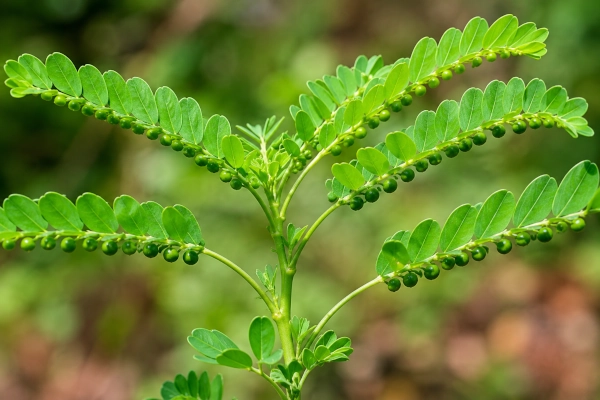
Bhumi Amla is a small herb with an unusually important place in traditional Indian medicine. It grows close to the ground and produces tiny round fruits beneath its delicate leaf-like branches. These fruits resemble miniature Amla berries. This appearance explains the Sanskrit name Bhumyamalaki, meaning roughly “Amalaki of the ground.”
The National Medicinal Plants Board records Bhumiamalaki as Phyllanthus amarus, confirming its recognised place among India’s medicinal plants.
Ayurveda particularly associates Bhumyamalaki with the liver, digestion, Pitta balance and urinary system. Traditional systems have also used the herb for jaundice, digestive disturbances and several conditions involving excessive heat or Pitta.
Modern researchers have therefore taken considerable interest in Phyllanthus amarus, especially its lignans and other plant compounds.
Understanding the Name Bhumyamalaki
The word can be understood through two Sanskrit elements:
Bhumi — earth or ground
Amalaki — Amla or Indian gooseberry
The plant remains close to the earth, while its small fruits resemble tiny Amla fruits.
It should not, however, be confused with the actual Amla tree, Phyllanthus emblica. The two plants belong to the same broader botanical group but are different species.
Another complication is that several small Phyllanthus species have historically been traded under names such as Bhumyamalaki. Botanical studies have noted this overlap. Correct identification therefore becomes important when the herb is intended for medicinal use.
Ayurvedic Properties of Bhumyamalaki
Traditional descriptions of Bhumyamalaki generally characterise it as a cooling herb dominated by bitter and astringent qualities.
Rasa — Taste
- Tikta — Bitter
- Kashaya — Astringent
- Madhura — Sweet, according to some traditional descriptions
Guna — Qualities
- Laghu — Light
- Ruksha — Dry
Virya — Potency
- Sheeta — Cooling
Vipaka — Post-Digestive Effect
- Madhura — Sweet
Dosha Action
Bhumyamalaki is traditionally regarded as particularly useful for balancing:
Pitta and Kapha
Its cooling character makes it especially relevant where Ayurveda identifies excessive Pitta, heat or inflammatory tendencies.
Traditional Ayurvedic literature and later pharmacognostic studies identify Bhumyamalaki or Tamalaki as an important medicinal herb.
Bhumyamalaki and the Liver
The liver is the organ most strongly associated with Bhumyamalaki in traditional Ayurvedic practice.
Ayurveda connects the liver closely with Pitta and Rakta Dhatu. When excessive heat, impaired metabolism or disturbed Pitta affects this system, cooling and bitter herbs may form part of the therapeutic approach.
Bhumyamalaki has consequently been used traditionally in conditions involving liver dysfunction and jaundice.
Modern science has also investigated this reputation.
Experimental studies have reported hepatoprotective effects from Phyllanthus amarus extracts. Research has examined compounds such as phyllanthin, one of the characteristic lignans found in the plant. However, much of this evidence comes from laboratory or animal studies, so it should not be interpreted as proof that the herb can treat human liver disease by itself.
Traditional Use in Kamala — Jaundice
Bhumyamalaki is perhaps most widely known in Indian folk and Ayurvedic traditions for its association with Kamala, a condition commonly compared with jaundice.
Its bitter taste and cooling potency fit the Ayurvedic approach to Pitta-dominant conditions.
This traditional use is significant, but jaundice should never be self-treated. It can result from hepatitis, gallstones, obstruction, medication toxicity or serious liver disease. Anyone who develops yellow eyes or skin should obtain medical evaluation.
Research literature also records the long traditional association of Bhumyamalaki with jaundice and liver disorders.
Supports Healthy Digestion
Bhumyamalaki is traditionally used when digestion is disturbed by excessive Pitta.
Its Tikta Rasa can support Ayurvedic digestive regulation, while its cooling character makes it quite different from strongly heating digestive herbs.
Traditional practice has therefore employed it in situations involving:
- Poor digestion
- Excessive internal heat
- Acidity-related discomfort
- Loss of appetite
- Pitta-associated digestive disturbance
Rather than simply stimulating Agni strongly, Bhumyamalaki is traditionally used where digestion requires regulation without adding excessive heat.
Traditionally Used for the Urinary System
The small Phyllanthus herbs have a long reputation in several traditional medical systems for urinary complaints.
Bhumyamalaki has been used traditionally to support normal urination and urinary tract function. This explains why related Phyllanthus species acquired the popular English name “stonebreaker.”
However, kidney stones vary greatly in size and composition. A painful stone or urinary obstruction requires medical diagnosis. Bhumyamalaki should not replace appropriate investigation or treatment.
Bhumyamalaki and Rakta — Blood Tissue
Ayurveda closely links excessive Pitta with disturbances of Rakta Dhatu.
Because Bhumyamalaki possesses bitter, astringent and cooling qualities, Ayurvedic practitioners traditionally use it in formulations intended to calm Pitta associated with Rakta.
This relationship also helps explain its traditional use in certain Pitta-related skin conditions.
Traditional Role in Skin Health
Ayurveda often approaches skin disorders through digestion, Rakta, Pitta and the liver rather than treating the skin alone.
Bhumyamalaki may therefore appear in traditional formulations where excessive Pitta is believed to contribute to:
- Heat in the skin
- Redness
- Irritation
- Pitta-related eruptions
- Disturbed Rakta
Its role depends on the individual’s Dosha pattern and should not be generalised to every skin condition.
Bhumyamalaki and Excess Heat
One of the simplest ways to understand this herb is through its Sheeta Virya, or cooling potency.
Traditional Ayurveda therefore considers it more appropriate when symptoms reflect excess heat rather than profound coldness.
People with strong Vata, poor appetite or naturally cold digestion may require different herbs or combinations. Ayurvedic prescribing traditionally considers constitution, digestion, age and disease pattern rather than relying on a single herb.
Important Plant Compounds
Modern phytochemical research has identified numerous compounds in Phyllanthus amarus, including:
- Phyllanthin
- Hypophyllanthin
- Flavonoids
- Tannins
- Polyphenolic compounds
- Other lignans
These compounds have encouraged research into antioxidant, hepatoprotective, inflammatory and metabolic pathways. Reviews of P. amarus describe a broad range of laboratory and pharmacological studies.
These findings are promising, but traditional use and laboratory activity are not the same as clinically proven treatment.
What Modern Research Says About Liver Protection
The strongest scientific interest surrounding Bhumi Amla concerns the liver.
Experimental research has found protective activity in models of chemically or alcohol-induced liver injury. One study investigating a standardized extract linked part of this activity to phyllanthin.
A small human study has also examined a standardized P. amarus preparation following alcohol consumption. The researchers described the results as preliminary and called for larger studies.
Therefore, Phyllanthus amarus should presently be viewed as a promising medicinal plant under continuing investigation, not as a replacement for established liver treatment.
Research into Viral Hepatitis
Phyllanthus amarus attracted scientific attention decades ago because of traditional use in liver disorders.
Researchers have examined it in relation to hepatitis viruses, including early clinical investigation involving chronic hepatitis B carriers.
The overall scientific evidence is not strong enough to recommend Bhumi Amla as a substitute for modern antiviral therapy.
People with hepatitis B, hepatitis C or other viral liver infections should therefore remain under qualified medical care.
Common Traditional Forms
Bhumyamalaki may traditionally be administered as:
Swarasa — fresh plant juice
Kwatha — herbal decoction
Churna — dried plant powder
Extracts or tablets — modern preparations
Compound Ayurvedic formulations — combined with other herbs
The appropriate preparation and quantity depend upon the purpose, the patient’s constitution and other medicines being taken.
For this reason, therapeutic dosing is best decided by a qualified Ayurvedic physician.
Who Should Use Bhumyamalaki Carefully?
Medicinal herbs can produce biological effects and should not automatically be considered harmless.
Extra caution is appropriate for:
- Pregnant or breastfeeding women
- Children
- People with chronic liver or kidney disease
- People taking several prescription medicines
- Individuals with very low blood pressure
- People receiving medication for diabetes
- Patients scheduled for surgery
- Anyone receiving treatment for hepatitis or another serious liver condition
Laboratory research has also suggested that P. amarus may affect enzymes involved in drug metabolism, including CYP3A4. This creates a potential for herb–drug interactions.
Bhumyamalaki in the Ayurvedic View
Bhumi Amla demonstrates an important feature of Ayurveda: a herb does not need to be large or rare to possess therapeutic importance.
This tiny plant grows close to the earth and can easily disappear among grasses and weeds. Yet traditional medicine gave it a respected position, particularly in the management of Pitta, liver function, digestion and urinary health.
Its bitter taste, cooling potency and affinity for Pitta-related systems explain much of its Ayurvedic reputation.
Modern scientific investigations into Phyllanthus amarus have provided interesting evidence for several biological activities, particularly liver protection. Yet clinical evidence remains much more limited than traditional usage might suggest.
Bhumyamalaki is therefore best understood through a balanced approach. It is a valuable medicinal herb with a long traditional history and an expanding scientific record. At the same time, serious liver, kidney or metabolic disorders require proper diagnosis and professional care.
References
National Medicinal Plants Board, Ministry of AYUSH — records Bhumiamalaki (Phyllanthus amarus) among medicinal plants cultivated in India.
Patel JR et al. — review of the ethnomedicinal uses, phytochemistry and pharmacological research concerning Phyllanthus amarus.
Krithika R et al. — experimental investigation of standardized Phyllanthus amarus extract and phyllanthin in liver protection.
Pratima H et al. — research discussing the phytochemical profile and hepatoprotective potential of Phyllanthus species used as Bhumyamalaki.
Taesotikul T et al. — investigation highlighting the potential for interaction between P. amarus and CYP3A4-metabolised medicines.
Health Disclaimer
This article is intended for educational and informational purposes only. It describes traditional Ayurvedic uses of Bhumyamalaki and discusses selected scientific research. It is not medical advice and should not be used to diagnose, prevent, treat or cure any disease. Do not stop or replace prescribed medicines with Bhumi Amla without consulting a qualified healthcare professional. Pregnant or breastfeeding women, children, people with chronic illnesses, and those taking prescription medicines should seek professional advice before using concentrated herbal preparations. Symptoms such as jaundice, severe abdominal pain, dark urine, persistent vomiting or unexplained weight loss require prompt medical evaluation.
You may also like
-
Ayurveda on Eating at the Right Time: How Food Timing Supports Balance and Health
-
Ayurveda and Late-Night Living: What Irregular Sleep Does to the Body
-
India’s Ayush Services Economy Reaches $36.92 Billion, RIS Study Projects Strong Growth to 2047
-
Daytime Sleep in Ayurveda: When It Helps and When It Harms
-
Ayurveda and Sleep: Understanding Nidra as a Pillar of Health
