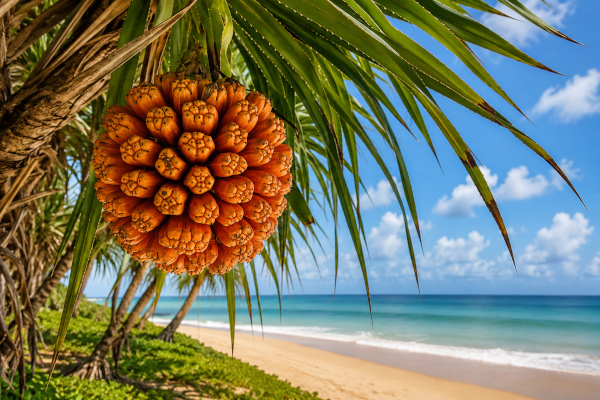
Ketaki, also known as Kewda, Screw Pine and Thatch Screw Pine, is a fragrant plant valued in Ayurveda, traditional cuisine, perfumery and coastal culture. Botanically, it is associated with the Pandanus group, especially Pandanus tectorius and the closely related fragrant screw pine varieties used in India. In Sanskrit and regional traditions, Ketaki is remembered for its strong fragrance, sharp leaves, aromatic flowers and medicinal value.
The plant grows with long sword-like leaves arranged in a spiral manner, giving rise to the name “screw pine.” It is commonly seen in coastal and tropical regions, where it withstands wind, heat, sandy soil and saline conditions. This hardy nature gives Ketaki a special place in traditional life. Its leaves have been used for thatching, weaving and household craft, while its flowers are valued for fragrance, ritual use and medicinal preparations.
Sanskrit and Common Names
In Sanskrit, Ketaki is also known as Ketaka, Suchipushpa, Sugandha, Krakachapatra and Trinashunya. The name Sugandha refers to its pleasant fragrance, while Suchipushpa points to the sharp, pointed nature of its floral structure.
In Hindi, it is commonly called Kewda or Kevada. In Malayalam, related screw pine varieties are known as Kaitha, Pookaitha or Thazhampoo. In Tamil, it is associated with Thazhai. In English, it is known as Screw Pine, Fragrant Screw Pine or Thatch Screw Pine.
Ayurvedic Nature of Ketaki
Ketaki is mainly valued as a fragrant, penetrating and stimulating plant. Its flowers, roots and leaves are used in different traditional preparations. The flower is especially important because of its aroma. In Ayurveda, fragrance is not only a matter of beauty; it can influence appetite, mood, prana, mental freshness and the sensory experience of food and medicine.
Rasa: Tikta, Katu and mild Madhura — bitter, pungent and slightly sweet
Guna: Laghu, Ruksha and Tikshna — light, dry and penetrating
Virya: Ushna — warming in potency
Vipaka: Katu — pungent after digestion
Dosha action: Helps reduce Kapha and Vata when used properly
Main actions: Sugandha, Deepana, Pachana, Kapha-hara, Vata-hara, Shothahara and Vedanasthapana in traditional use
Ketaki’s fragrance and sharpness make it useful in preparations meant to awaken digestion, reduce heaviness, clear dullness and bring freshness to the senses.
Ketaki as a Fragrant Ayurvedic Ingredient
The most celebrated part of Ketaki is its flower. The male flowers of fragrant screw pine are used to prepare aromatic waters and perfumes. Kewda water is used in sweets, drinks, festive food and traditional preparations. It gives a deep floral aroma and makes food more pleasing to the senses.
Ayurveda recognises that pleasant smell can support digestion. When food is fragrant, fresh and properly prepared, it stimulates salivation and improves the desire to eat. This is especially useful in conditions of low appetite, heaviness, dull taste and Kapha dominance.
Ketaki also belongs to the group of plants that combine medicine with culture. It is used in rituals, festive preparations, hair fragrance, cooling drinks and aromatic formulations. This makes it a plant of both household life and sacred life.
Ketaki in Digestive Health
Ketaki is useful in digestive preparations because of its aromatic and stimulating quality. Its fragrance helps awaken the senses, while its light and sharp nature supports digestion. In traditional recipes, Ketaki is often combined with digestive spices such as ginger, dry ginger, black pepper, coriander, rock salt and asafoetida.
Such combinations show the Ayurvedic principle of balancing taste, aroma and action. Ketaki alone gives fragrance and subtle stimulation. When combined with Takra or buttermilk, spices and salts, it becomes part of a digestive drink that supports Vata-Kapha balance.
Classical Recipe: Temana Takra or Fragrant Spiced Buttermilk
A classical preparation known as Temana Takra, meaning flavoured buttermilk, uses Ketaki flower as one of the important aromatic ingredients. This preparation belongs to the category of Pana, or drinkable preparations. It is designed as a fragrant, light and digestive buttermilk drink.
The main ingredient is well-churned Takra, or buttermilk. A small quantity of Tila Taila, or sesame oil, is mixed into the buttermilk. Ketaki flowers are then added for fragrance. Once the aroma of the flowers has infused into the buttermilk, the flowers are removed.
A mixture is then prepared using Karpura, Kasturi or Kankola, and Ardraka, or fresh ginger. This is blended with Katphala, Dhanyaka, Shunthi, Saindhava Lavana and the leaves of Jambiri Nimbu. Hingu and Maricha are then added and the mixture is stirred well.
The prepared buttermilk is placed on mild heat and stirred carefully with a ladle. It is covered and cooked gently. Once complete, aromatic ingredients such as Matulunga leaves, Karpura, Kasturi and Ketaki flowers are added again to enrich the fragrance and medicinal value.
This recipe is described as Ushna, or warming in potency, Tikta, Katu, Ruksha, Tikshna and Laghu. It is considered useful in reducing Vata and Kapha related problems. Its combination of buttermilk, spices, salt, citrus leaves and Ketaki fragrance makes it a digestive, aromatic and light preparation.
Importance of the Manuscript Tradition
The recipe of Temana Takra is recorded in the classical culinary-medical tradition of Pakadarpanam, a text connected with India’s old understanding of food as medicine. Such manuscripts show that Ayurveda did not separate cooking from healing. Food, taste, fragrance, digestion and seasonal suitability were all treated as part of health. The use of Ketaki in this buttermilk preparation reveals the refined nature of ancient Indian dietetics, where a flower was not added merely for scent but for its ability to improve the sensory and digestive quality of the drink. The manuscript tradition also shows how ingredients such as Takra, ginger, coriander, asafoetida, rock salt, citrus leaves, camphor and Ketaki were combined with great care to produce a balanced preparation for Vata-Kapha conditions.
Medicinal Meaning of the Ingredients
The ingredients in Temana Takra are chosen with clear Ayurvedic logic. Takra is light, digestive and useful in many Kapha and Vata disorders. Sesame oil helps balance Vata and adds unctuousness. Ginger and dry ginger kindle Agni and reduce digestive sluggishness. Black pepper and asafoetida reduce gas, heaviness and abdominal discomfort. Rock salt improves taste and supports digestion. Coriander adds mild digestive and balancing action. Citrus leaves and Matulunga give freshness, fragrance and appetite-supporting quality. Ketaki flower completes the preparation with aroma and subtle stimulation.
This shows the Ayurvedic art of formulation. A simple drink becomes medicinal through correct combination, sequence, aroma and method of preparation.
Ketaki for Vata and Kapha
Ketaki is especially useful when Vata and Kapha are disturbed together. Vata creates dryness, pain, gas and irregular movement. Kapha creates heaviness, mucus, dullness and sluggish digestion. A preparation like Temana Takra, with Ketaki and warming spices, helps reduce heaviness while supporting proper movement of Vata.
Its Laghu quality makes it light. Its Tikshna quality helps penetrate stagnation. Its Ushna potency supports warmth and digestion. Its fragrance brings freshness and mental clarity.
External Uses of Ketaki
Ketaki is also used externally in traditional practice. Flower and root-based oils are used for scalp massage, fragrance and comfort. Ketaki-infused oils may be used for body massage in stiffness and Vata-related discomfort when prepared properly.
The aromatic nature of the flower makes it useful in perfumed oils, hair preparations and ritual fragrances. However, raw plant parts should not be applied directly without knowledge, as the leaves are sharp and some parts can irritate the skin.
Ketaki in Skin and Beauty Traditions
Ketaki has a place in traditional beauty care because of its fragrance and cleansing nature. Properly prepared fragrant waters or oils may be used for freshness, hair fragrance and body aroma. The plant is associated with beauty, purity and refinement.
In Ayurveda, beauty is linked with digestion, circulation, mental calmness and proper use of natural substances. Ketaki supports the sensory side of beauty through fragrance and freshness.
Cultural and Sacred Importance
Ketaki is deeply connected with Indian cultural memory. Its flower is intense, beautiful and fragrant. In many regions, it is used in perfumery, festive foods and traditional household preparations. In Kerala and Tamil regions, screw pine flowers are associated with hair decoration, fragrance and temple culture.
The plant also represents the bond between coastal ecology and traditional life. Its leaves help in weaving and thatching, while its flowers support fragrance and ritual use. Thus Ketaki serves the home, the body, the senses and the sacred space.
Precautions
Ketaki should be used with care. Internal medicinal use of roots, leaves or concentrated extracts should be taken only under qualified guidance. Strong fragrant products may not suit people with sensitivity, headache, asthma triggered by perfumes or allergies.
Raw leaves are sharp and fibrous. Direct use on skin should be avoided unless properly processed. Pregnant women, children, people with chronic illness and those taking regular medicines should avoid self-medication with Ketaki preparations.
Temana Takra is a classical preparation and should be understood according to digestive strength, season and body constitution. Since it is warming and pungent, people with high Pitta, burning sensation, gastritis or severe acidity should use caution.
Conclusion
Ketaki, or Thatch Screw Pine, is a powerful example of how Ayurveda understands fragrance as medicine. Its flowers bring aroma, freshness and subtle digestive stimulation. Its traditional use in Temana Takra shows how ancient Indian food science used fragrance, spice, buttermilk and citrus leaves to create a preparation that supports digestion and helps reduce Vata-Kapha imbalance.
Ketaki is not merely a fragrant flower. It is a coastal plant of strength, beauty, medicine and culture. It belongs to the world of Ayurveda, ritual, perfumery, cooking and traditional household wisdom. When used with knowledge and moderation, Ketaki becomes a reminder that healing can come through taste, smell, touch and the refined art of preparing food as medicine.
You may also like
-
High Blood Pressure Through an Ayurvedic Lens: Stress, Diet and Dosha Imbalance
-
IISc Develops Engineered Nanobody Antivenom With Broad Protection Against Indian Cobra Venoms
-
Indian MedTech Startup Periwinkle Takes Rapid AI Cervical Cancer Screening to BRICS
-
WHO Chief Praises India’s Gains in Maternal, Child Health and NCD Care
-
Ayurvedic Foods for Liver Health and Digestion
