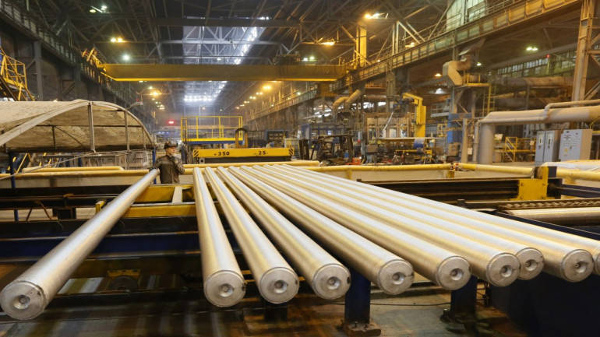
India’s steel industry is moving through a strong demand cycle, with capacity utilisation expected to remain above 90% in the medium term. The momentum is being driven by infrastructure construction, manufacturing expansion, real estate activity, engineering demand and the country’s wider capital expenditure push.
Domestic steel demand grew by around 9% year-on-year in May 2026, showing that consumption remains firm across core sectors. The current fiscal year has also opened with healthy demand growth, supported by continued investment in roads, railways, ports, airports, industrial corridors, housing, energy projects and urban infrastructure.
The strength of India’s steel market comes after several years of rapid expansion. Steel demand grew 7.6% in FY26, following four straight years of double-digit growth. This shows that the Indian market has developed a broad and durable consumption base, supported by both public infrastructure spending and private sector investment.
High capacity utilisation is an important signal for the sector. When plants operate above 90%, it reflects strong order books, efficient production planning and healthy demand absorption. For steelmakers, this can improve operating leverage, support better margins and justify fresh investment in new capacity.
India’s infrastructure pipeline remains the biggest driver of steel consumption. Highways, metro rail systems, bridges, freight corridors, ports, logistics parks and renewable energy projects require large volumes of steel. As these projects move from planning to execution, they create steady demand for long steel, flat steel, structural steel and specialised grades.
Manufacturing is another major growth pillar. The expansion of automobiles, capital goods, machinery, defence production, rail equipment, shipbuilding and engineering goods is increasing the use of higher-quality steel. As India works to become a larger manufacturing hub, steel consumption is expected to deepen across industrial value chains.
Urbanisation is also supporting demand. Rising construction activity in housing, commercial buildings, warehouses, data centres and industrial parks is strengthening steel consumption across cities and emerging growth centres. This makes domestic demand more diversified and less dependent on any single segment.
The trade picture remains mixed but active. Steel exports increased by 30% year-on-year to 0.5 million tonnes in May 2026, helped by a lower base and overseas demand opportunities. Imports stood higher at 0.7 million tonnes during the same month, showing that India still faces competition from foreign suppliers in some grades and price-sensitive segments.
This import pressure makes domestic competitiveness important. Indian producers will need to focus on cost efficiency, product quality, technology upgrades and timely capacity expansion. Strong demand gives the sector room to grow, while global price movements and cheaper imports can influence margins in the short term.
India’s steel capacity has already reached around 220 million tonnes per annum, and the country is moving toward the 300 million tonnes target by 2030. Major producers are expanding capacity through brownfield and greenfield projects, while secondary steel producers continue to play a large role in regional supply and employment.
The next phase of growth will depend on value addition. India’s steel industry needs deeper capability in specialty steel, automotive steel, electrical steel, high-strength construction steel and green steel. These segments can improve export quality, reduce import dependence and support advanced manufacturing.
Decarbonisation is also becoming central to the industry’s future. Steel production is energy-intensive, and global buyers are increasingly watching the carbon footprint of industrial materials. India’s movement toward scrap-based production, electric arc furnaces, hydrogen-ready systems, renewable power and energy-efficient plants can help the sector remain globally competitive.
The outlook for Indian steel remains strong because the demand base is structural. Infrastructure, housing, manufacturing, energy transition and urban growth are long-term drivers. With utilisation expected to stay above 90%, the sector has a strong foundation for investment, production growth and deeper integration with India’s economic expansion.
India’s steel story is now closely tied to the country’s development story. Roads, factories, bridges, rail networks, homes, ports and clean-energy systems all depend on steel. As demand continues to rise, the industry is positioned to remain one of the strongest pillars of India’s industrial growth.
You may also like
-
India and Mauritius Sign Oil and Gas Cooperation Pact, Deepen Long-Term Energy Partnership
-
Over 6.5 Crore Income-Tax Returns Filed for Assessment Year 2026-27
-
India’s Unincorporated Non-Agriculture Establishments Rise 9.2% in Q1 FY27, Employment Reaches 13.7 Crore
-
Big Bang Boom Solutions — Building Indigenous Counter-Drone Defences for India’s New Battlefield
-
India Prepares Major Incentive Scheme to Localise Advanced Construction Equipment Manufacturing
