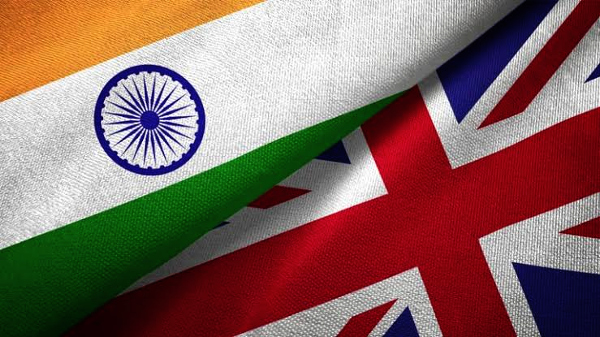
India and the United Kingdom will bring the Comprehensive Economic and Trade Agreement, or CETA, into force on 15 July 2026, opening a new phase in one of India’s most important economic partnerships. The Agreement on Social Security, also called the Double Contribution Convention, will also come into effect on the same day. Together, the two agreements create a wider India–UK economic corridor covering goods, services, professional mobility, social security protection and long-term supply-chain cooperation.
The biggest gain for Indian exporters comes through market access. CETA gives zero-duty access to nearly 99% of India’s exports to the UK, covering almost the entire value of India’s trade basket. This directly benefits labour-intensive and manufacturing-linked sectors such as textiles, leather, footwear, marine products, processed foods, engineering goods, auto components, chemicals and pharmaceuticals. Tariffs that earlier reached up to 70% on processed foods, 21.5% on marine products, 18% on engineering goods and auto components, 16% on leather and footwear, 12% on textiles and clothing, and 8% on chemicals and pharmaceutical products will move to zero under the agreement.
UK is a high-value consumer market with strong demand for quality products, premium food, fashion, healthcare-linked goods, technology services and professional solutions. Indian exporters will now enter that market with stronger price competitiveness. MSMEs, regional manufacturing clusters, farmers, fisherfolk, artisans and export-oriented factories can use this opening to expand their presence in the UK. The tariff advantage also strengthens India’s position in global value chains at a time when companies are diversifying supply networks.
The agreement protects India’s sensitive sectors. Dairy products, cereals, millets, edible oils, oilseeds, apples and several vegetable products have been kept under protective treatment. This gives Indian agriculture and rural producers policy space while allowing export-focused sectors to gain from the UK market. The structure shows India’s current trade strategy clearly: open markets where Indian industry is competitive, preserve safeguards where livelihood sensitivity is high, and use trade agreements to support domestic production.
CETA also gives major attention to services. The UK has made commitments across 137 services sub-sectors of export interest to India, including IT and IT-enabled services, professional services, financial services, healthcare, education, engineering, telecommunications and consultancy. This is important for India because services exports are one of the country’s strongest global advantages. Indian companies and professionals will gain better regulatory certainty and clearer mobility channels for business visitors, intra-corporate transferees, contractual service suppliers, independent professionals and investors.
A notable mobility provision creates annual access opportunities for 1,800 Indian chefs, yoga instructors and classical musicians. This gives cultural professions a formal place inside the trade framework. It also reflects the wider India–UK relationship, where commerce, diaspora, education, culture and professional services often move together.
The Double Contribution Convention is another major part of the package. Indian workers and employers on temporary assignments in the UK will be exempt from paying double social security contributions. The exemption period has been increased from three years to five years. More than 75,000 Indian professionals and over 900 companies are expected to benefit from this arrangement.
This provision has direct value for Indian IT firms, consulting companies, engineering service providers and other businesses that send employees to the UK for limited assignments. It reduces costs, improves take-home earnings for workers, and strengthens the competitiveness of Indian companies operating in the British market. For skilled professionals, it makes overseas assignments more financially attractive and administratively smoother.
The agreement also covers modern trade themes beyond tariff reduction. CETA contains 30 chapters and includes areas such as digital trade, telecommunications, financial services, intellectual property, government procurement, innovation, SMEs, sustainability and transparency. This makes it a next-generation trade agreement rather than a narrow goods pact. It creates a broader framework for technology cooperation, supply-chain security, services integration and rules-based commerce.
Steel exporters have also received protection under the arrangement. According to the PIB release, India and the UK reached an understanding to safeguard bilateral steel trade in the context of the UK’s upcoming steel measures effective from 1 July 2026. Around 85% of India’s exports are outside the steel measures, while affected lines have received protection through quota arrangements and access mechanisms.
The wider strategic meaning of CETA is also important. India and the UK had laid the foundation for this partnership through the Enhanced Trade Partnership and India–UK Roadmap 2030 in May 2021. The agreement was concluded on 6 May 2025 after fourteen rounds of negotiations and signed on 24 July 2025 in London by India’s Commerce and Industry Minister Piyush Goyal and the UK’s Secretary of State for Business and Trade Jonathan Reynolds. The Double Contribution Convention was later signed on 10 February 2026.
For India, the entry into force of CETA on 15 July 2026 is a trade, industry and employment milestone. It gives exporters stronger access to a major developed market, gives services companies clearer operating space, supports temporary workers through social security relief, and protects sensitive domestic sectors. It also signals India’s growing confidence in negotiating trade agreements that serve both global integration and domestic economic priorities.
The agreement fits into the larger Viksit Bharat 2047 vision by linking external trade with jobs, manufacturing, services, MSMEs and professional mobility. Its real success will now depend on how quickly Indian exporters, state governments, industry bodies, startups and service firms convert the agreement into contracts, shipments, partnerships and jobs.
You may also like
-
Tarang Shakti Delegates from 28 Countries Visit HAL and BEL to Explore India’s Defence Manufacturing Ecosystem
-
Swiss President Guy Parmelin to Visit India as EFTA Economic Partnership Deepens
-
India and Brazil Move to Expand Mercosur Trade Pact Beyond 450 Tariff Lines
-
India and Qatar Accelerate FTA and Investment Treaty Talks
-
India and Russia Review Bilateral Ties and International Developments in Moscow
