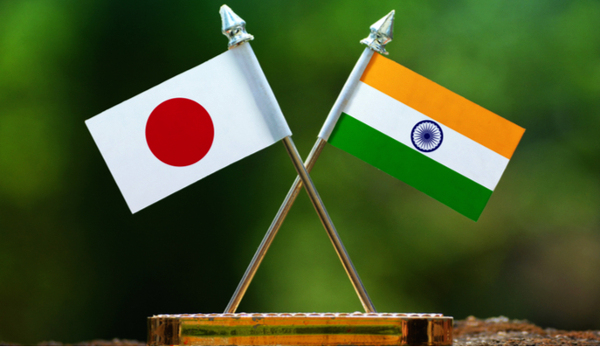
India and Japan have moved their climate partnership into a more operational phase by adopting the Rules of Implementation for the Joint Crediting Mechanism under Article 6.2 of the Paris Agreement. The step gives both countries a clearer framework for developing, approving, verifying and tracking climate mitigation projects that can generate carbon credits through bilateral cooperation.
The mechanism builds on the Memorandum of Cooperation signed between India and Japan in 2025. That agreement created a channel for both countries to work together on projects that reduce or remove greenhouse gas emissions while supporting sustainable development in India and contributing to the climate targets of both nations.
Article 6.2 of the Paris Agreement allows countries to cooperate through internationally transferred mitigation outcomes, often called ITMOs. In practical terms, it enables one country to support emission-reduction projects in another country and use the verified mitigation outcome toward its own climate goals, while the host country also benefits through finance, technology and capacity building.
The newly adopted rules are important because carbon credit systems require strong governance to maintain credibility. India and Japan have agreed on structures such as a Joint Committee with representatives from both governments, project approval procedures, third-party validation and verification, sustainable development safeguards and national registries for tracking the issuance and transfer of credits.
For India, the arrangement can help attract investment into low-carbon technologies. These may include clean energy, industrial efficiency, green mobility, waste management, energy-saving systems and other climate-friendly infrastructure. The value of such cooperation lies in combining India’s large project base with Japanese technology, finance and implementation experience.
Japan has used the Joint Crediting Mechanism as a bilateral climate cooperation tool with several partner countries. The model is designed to support greenhouse gas reduction projects while allowing Japan and the partner country to share the verified climate benefits. Japan’s Ministry of Foreign Affairs describes the JCM as a system for cooperation with developing countries in which emission reductions are assessed as contributions by both Japan and the partner country.
The India-Japan framework also fits into India’s wider climate strategy. India has consistently argued for climate action that supports development, technology access and affordable finance. A transparent crediting mechanism gives Indian project developers another route to mobilise climate-linked investment while aligning with the country’s Nationally Determined Contribution under the Paris Agreement.
The inclusion of third-party validation and verification is especially significant. Carbon markets depend on trust, and every credit must represent a real, measurable and verified emission reduction or removal. The registry system will help track credits from issuance to transfer, reducing the risk of double counting and improving transparency between the two governments.
This development also gives industry a clearer signal. Indian companies working in clean technology, energy transition, industrial decarbonisation and sustainability-linked infrastructure can expect a more structured route for eligible projects under the India-Japan framework. Japanese companies, financiers and technology providers also gain a policy-backed platform for collaboration in India’s climate sector.
The adoption of the Rules of Implementation marks the shift from agreement to execution. The earlier memorandum created the partnership; the new rules provide the operating architecture. With governance, verification and registry systems now defined, the Joint Crediting Mechanism can begin functioning as a practical tool for climate investment, technology transfer and sustainable development cooperation between India and Japan.
You may also like
-
Rajnath Singh to Lead Indian Delegation at ASEAN Defence Summit in Philippines, Strengthening Indo-Pacific Security Cooperation
-
India to Track Challenges Faced by Women Entrepreneurs in New National Business Survey
-
India Updates Vehicle Rules to Strengthen E85 and E100 Flex-Fuel Technology
-
Adani Green Energy Expands Battery Storage to 6.63 GWh at Khavda, Strengthening India’s Renewable Power Infrastructure
-
India Hosts 12th BRICS Parliamentary Forum in New Delhi
