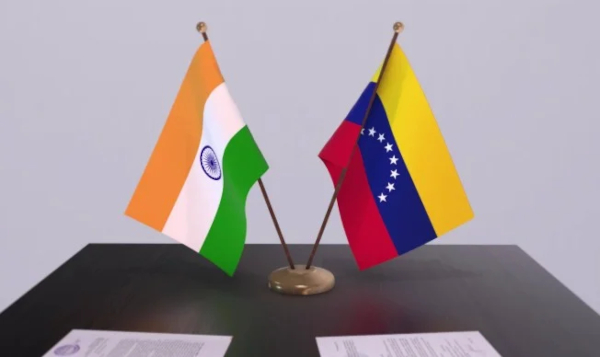
India and Venezuela are entering a renewed phase of engagement as Acting President Delcy Rodríguez begins a working visit to New Delhi at a time when energy security has become one of the most important questions in global diplomacy. The visit carries strong strategic weight because it links India’s need for diversified crude supplies with Venezuela’s desire to rebuild external partnerships, attract investment and expand trade beyond oil.
The timing is significant. Global energy markets are under pressure from geopolitical uncertainty, and India, as one of the world’s largest crude oil importers, is actively widening its supply options. Venezuela, with its vast oil reserves and long history as an energy supplier, offers India an additional route for securing heavy crude. This gives the visit a practical economic purpose and a larger strategic meaning.
Energy is expected to remain the central pillar of the discussions. Indian refiners have experience in processing heavy Venezuelan crude, especially at advanced refinery complexes capable of handling difficult grades. This gives India a technical advantage in using Venezuelan oil efficiently. For Venezuela, India offers a large and reliable market with long-term demand for crude, fuels and petrochemical feedstock.
The rise in Venezuelan crude flows to India shows how quickly the relationship can regain momentum when policy conditions allow trade to expand. Indian companies have historically engaged with Venezuela’s oil sector through crude purchases, refining arrangements and upstream participation. A stronger energy dialogue can help both sides explore stable contracts, better shipping arrangements, refinery cooperation and investment-linked opportunities.
The visit also has importance beyond crude oil. India and Venezuela are expected to discuss trade, investment, pharmaceuticals, healthcare, transportation and renewable energy. This broader agenda shows that both countries want to avoid keeping the relationship limited to hydrocarbons alone. A diversified partnership can create more resilience and reduce dependence on one commodity.
Pharmaceuticals can become one of the strongest non-oil pillars of cooperation. India is a global supplier of affordable medicines, vaccines, generics and healthcare products. Venezuela, like many countries in Latin America, can benefit from India’s pharmaceutical manufacturing scale and cost-effective medical supply chains. Cooperation in this area can support hospitals, public health systems and wider healthcare access.
Healthcare cooperation can also extend into medical technology, telemedicine, hospital supplies, training and capacity building. India’s experience in digital health, low-cost diagnostics and public health platforms gives it a useful role in supporting partner countries. For Venezuela, such cooperation can help strengthen health services while opening new markets for Indian companies.
Trade diversification will be another important theme. India can export pharmaceuticals, engineering goods, machinery, vehicles, textiles, chemicals, rice, processed food and technology services. Venezuela can offer crude oil, minerals, petrochemical products and other commodities. A more balanced trade basket would give the relationship greater depth and reduce vulnerability to crude price cycles.
Transportation and logistics also matter in this partnership. The distance between India and Venezuela makes shipping, port handling, insurance and payment systems crucial. A stronger trade framework can help companies manage these practical challenges more effectively. Better logistics can support crude movement, container trade, pharmaceutical exports and project cargo.
Renewable energy adds a forward-looking dimension to the talks. India has built major capacity in solar power, renewable manufacturing, green hydrogen planning and grid-scale energy transition. Venezuela, as a traditional energy power, can explore new cooperation in clean energy while strengthening its conventional energy trade. This combination of oil and renewables gives the partnership both immediate value and future relevance.
The visit also reflects India’s wider Latin America outreach. New Delhi is steadily expanding its engagement with countries across the region through energy, minerals, agriculture, pharmaceuticals, digital technology and trade. Latin America offers India resources, markets and diplomatic partnerships across the Global South. Venezuela remains an important part of this larger map because of its energy base and historical relationship with India.
For Venezuela, closer ties with India offer access to a major Asian economy with steady demand, industrial capability and global pharmaceutical strength. India’s market size and refining capacity make it a valuable partner as Caracas works to revive external economic engagement. Stronger relations with New Delhi can also help Venezuela diversify its international partnerships.
The political significance of the visit is equally clear. Rodríguez has engaged with India several times in earlier official capacities, and her latest visit continues that long channel of dialogue. Regular high-level contact helps maintain trust, resolve commercial obstacles and convert broad diplomatic goodwill into practical economic agreements.
India’s approach is likely to remain pragmatic. New Delhi will look at energy security, commercial viability, regulatory clarity and strategic autonomy. A stable arrangement with Venezuela can help India build flexibility in crude sourcing, especially when traditional supply routes face stress. This fits India’s broader energy doctrine of diversification, affordability and reliability.
The larger message from the visit is that energy diplomacy is becoming more multi-directional. India is strengthening ties with Gulf producers, Russia, the United States, Africa and Latin America at the same time. Venezuela adds another important piece to this supply-security architecture.
If the discussions produce concrete follow-up, India and Venezuela can rebuild their economic relationship on stronger foundations. Energy may remain the anchor, but pharmaceuticals, healthcare, transportation, investment and renewable energy can become the new support beams. The Rodríguez visit therefore marks a serious opportunity to turn an old oil-linked relationship into a wider strategic economic partnership.
You may also like
-
INS Sahyadri and INS Kulish Reach Philippines for ADMM-Plus Maritime Cooperation
-
India–Mongolia Joint Military Exercise Nomadic Elephant 2026 Begins in Pithoragarh
-
India–Thailand Trade Nears $14 Billion in Seven Months as Economic Ties Broaden
-
Japanese Parliamentary Delegation Visits BEL and Reviews Advanced Defence Systems
-
India and Thailand Move Toward UPI–PromptPay Link and Rupee–Baht Settlement to Deepen Economic Integration
