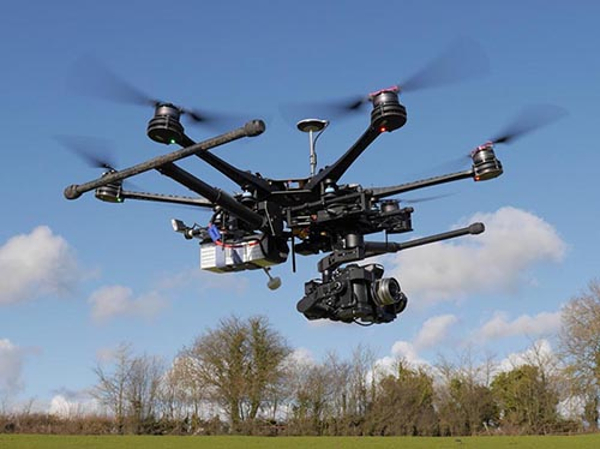
India is preparing for one of the most significant shifts in its military modernisation journey, with a proposed drone procurement programme worth more than ₹17,000 crore. The scale of the plan shows how unmanned systems have moved from the margins of battlefield support to the centre of modern warfighting. Drones are now becoming scouts, strike platforms, logistics carriers, loitering munitions, target spotters and electronic warfare assets in a single expanding ecosystem.
The proposed acquisition is expected to focus on Indian manufacturers, giving the programme a strong Make in India character. This matters because drone warfare depends on scale, speed, software, sensors, payloads and rapid battlefield adaptation. A country that builds its own drone ecosystem gains greater control over upgrades, supply chains, encryption, mission software and wartime production. For India, this is both a military requirement and an industrial opportunity.
The urgency comes from the changing character of war. Recent conflicts have shown that relatively low-cost drones can produce battlefield effects once associated only with expensive aircraft, missiles and artillery systems. A tactical drone can locate a target, stream live intelligence, guide artillery fire, drop precision payloads or crash into a high-value asset. Swarms can overwhelm air defences, while loitering munitions can wait above the battlefield until a target appears.
For the Indian Armed Forces, the value of drones lies in their flexibility. Along the northern borders, drones can monitor difficult terrain, track troop movement, observe infrastructure activity and support units operating at high altitude. Along the western front, they can watch launch pads, forward posts, supply nodes and armoured movement. In maritime zones, unmanned systems can strengthen coastal surveillance, support island security and watch suspicious activity across long stretches of sea.
The expected delivery window of 18 to 24 months shows that the programme is being shaped around urgency. Traditional defence acquisition timelines often stretch across years, but drones evolve at a much faster pace. Hardware changes quickly, software upgrades become decisive, and battlefield lessons must be absorbed almost immediately. A fast-track route allows the armed forces to induct systems quickly, test them under operational conditions and scale up the best-performing platforms.
This procurement also marks a major leap from earlier tactical drone orders. Recent orders were worth around ₹3,000 crore, while the next phase may cross ₹17,000 crore. That jump reflects a clear doctrinal change. India is moving from selective drone use to large-scale drone integration across formations. Infantry units, artillery batteries, special forces, air defence teams, logistics units and intelligence networks can all gain from dedicated unmanned assets.
The Indian drone industry is also ready for this moment. The country now has hundreds of drone and component firms, with many focused on defence applications. Large defence companies such as Adani Group, Larsen & Toubro and Tata Advanced Systems bring manufacturing strength, integration capability and capital depth. Specialist firms such as ideaForge, NewSpace Research and Asteria Aerospace bring agility, software knowledge, sensor integration and platform innovation.
The strength of this ecosystem lies in diversity. Reconnaissance drones can provide live battlefield awareness. Logistics drones can move ammunition, medicines and critical supplies to forward troops. Loitering munitions can hunt radar sites, vehicles, bunkers and command posts. Precision-strike drones can support deeper battlefield engagement. Component manufacturers can build motors, batteries, airframes, flight controllers, communication links and payload systems that reduce dependence on foreign supply chains.
Drone warfare also changes the economics of combat. A low-cost unmanned platform can force an adversary to spend expensive missiles or electronic systems to counter it. This creates a cost-imposition strategy. When a small drone threatens a tank, radar or ammunition dump, the defender must react with disproportionate effort. Over time, this alters battlefield calculations and gives commanders new ways to exhaust enemy resources.
The rise of drones also strengthens India’s intelligence, surveillance and reconnaissance grid. Modern warfare rewards the side that sees first, decides first and strikes first. Drones help close the gap between detection and action. A drone observing enemy movement can transmit data to artillery, command centres or strike platforms in real time. This shortens the sensor-to-shooter cycle and improves battlefield tempo.
The connection between drones and artillery is especially important. Artillery becomes far more accurate when paired with aerial observation. Drones can identify targets, correct fire, assess damage and search for follow-up targets. In mountain warfare, desert warfare and built-up terrain, this pairing can give field commanders a decisive edge. It turns artillery from area fire into more precise and responsive combat power.
The programme also supports special forces operations. Small, quiet and portable drones can help special units scout buildings, ridgelines, infiltration routes and enemy positions before movement. Larger unmanned systems can provide overwatch during raids, extra communication support and rapid target confirmation. For missions where surprise and speed matter, drone-backed situational awareness can reduce risk and increase operational confidence.
Another major area is logistics. Battlefield supply is becoming more contested, especially in mountains and forward areas. Drones can carry small but critical loads such as ammunition, batteries, blood packs, medicines, communication equipment and surveillance devices. In difficult terrain, even a limited drone logistics chain can save time, reduce exposure and keep isolated units better supplied.
The planned procurement also highlights the need for counter-drone systems. As India expands its unmanned fleet, adversaries will also use drones for surveillance and attack. The future battlefield will involve drone against drone, jammer against drone, radar against swarm and software against software. Indigenous drone production must therefore grow alongside electronic warfare, directed-energy systems, anti-drone guns, spoofing tools and integrated air defence networks.
India’s March 2026 defence approvals already pointed in this direction, with remotely piloted strike aircraft included in a wider package of capability enhancement. The new procurement push adds tactical mass to that strategic direction. Heavy unmanned strike platforms, smaller tactical drones and loitering munitions together can create a layered unmanned force structure.
The larger meaning of this programme is clear. India is building a future battlefield architecture where soldiers, sensors, drones, artillery, missiles, aircraft and command systems operate as a connected web. The drone becomes the eye, the messenger, the hunter and sometimes the weapon itself. This is the new grammar of warfare.
A ₹17,000-crore indigenous drone push can reshape India’s defence industry, strengthen operational readiness and give the armed forces a sharper technological edge. It can create new manufacturing capacity, support startups, deepen private-sector participation and reduce reliance on imports. More importantly, it prepares India for a battlefield where unmanned systems will decide visibility, speed, precision and survival.
India’s drone doctrine is now taking flight. The next phase of military power will be measured not only by tanks, fighter jets and warships, but also by the number of intelligent unmanned systems that can see, communicate, strike and return. In that world, this proposed procurement is not just a purchase. It is a signal that India is preparing for the wars of the next decade.
You may also like
-
JCBL Receives DRDO Technology for Indigenous 20-Tonne Heavy Drop System for C-130J and C-17
-
DRDO Moves 30 kW Laser Weapon Towards Production, Industry Partner Selection Planned Within Six Months
-
IG Defence Validates KAL Long-Range Strike Drone’s Integrated Systems in Pokhran Trial
-
Vajra Air Defence Warriors Validate AKASHTEER Sensor-to-Shooter Network in Day-Night Firing Drills
-
INS Sahyadri and INS Kulish Reach Philippines for ADMM-Plus Maritime Cooperation
