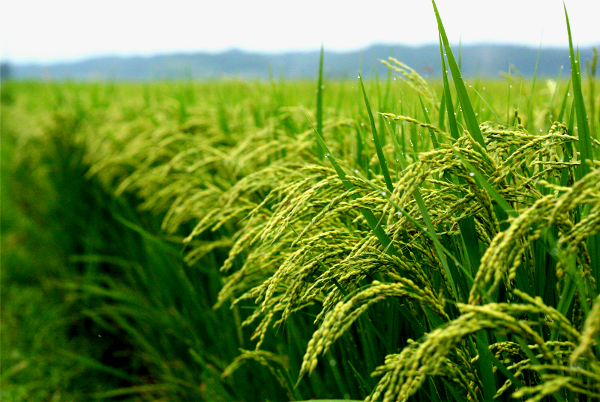
India has achieved a major agricultural milestone by recording rice production of 150.18 million tonnes, placing the country at the centre of the global rice economy and reinforcing its role as a food-security anchor for millions of people. The achievement reflects the combined strength of Indian farmers, improved seed varieties, wider irrigation support, procurement systems, better crop management and sustained public investment in agriculture.
Rice is more than a crop in India. It is a staple food, a livelihood source, a rural economy driver and a strategic commodity linked with national food security. From the paddy fields of West Bengal, Uttar Pradesh, Punjab, Haryana, Andhra Pradesh, Telangana, Tamil Nadu, Odisha, Bihar, Assam and Chhattisgarh, rice cultivation supports millions of farming families and feeds a large share of the population. Crossing the 150 million-tonne mark therefore represents a national agricultural achievement with deep social and economic meaning.
The record output also highlights India’s transformation from a food-deficit country of the past into one of the world’s most important grain producers. The country that once depended heavily on imports and food aid now produces enough rice to support domestic consumption, public distribution, buffer stocks and exports. This journey reflects decades of work in agricultural research, irrigation expansion, fertiliser access, farmer support, procurement mechanisms and rural infrastructure.
The rise in rice production has been supported by improved varieties developed through agricultural research institutions. New paddy varieties are designed for better yield, disease resistance, climate tolerance, grain quality and regional suitability. This matters because India’s rice-growing regions are highly diverse. Eastern India faces floods and waterlogging, northern India depends heavily on procurement-driven paddy cultivation, southern India uses multiple cropping systems, while rainfed regions require varieties that can handle moisture stress.
The Indian Council of Agricultural Research and state agricultural universities have played a major role in this progress. Their work in breeding improved seeds, advising farmers, studying pests and promoting scientific cultivation has helped increase productivity. Modern rice cultivation now includes better nursery management, line transplanting, direct seeded rice, mechanised harvesting, soil testing, water-saving methods and digital advisory services. These improvements raise output while gradually reducing waste and uncertainty.
The achievement is also important for India’s food security architecture. Rice forms a major part of the Public Distribution System and other welfare schemes. A strong rice harvest helps maintain buffer stocks, stabilise prices and ensure that vulnerable households receive grain support. In a country with a large population and varied income levels, reliable rice production strengthens both economic stability and social security.
High rice output also supports India’s position in global agricultural trade. India has been one of the world’s leading rice exporters, especially in basmati and non-basmati categories. Indian rice reaches markets across West Asia, Africa, Southeast Asia, Europe and other regions. Strong production gives India the ability to serve domestic needs while also remaining an important supplier in global food markets. This gives the country strategic influence in periods of international food stress.
At the same time, India’s rice story is linked closely with climate resilience. Paddy cultivation depends heavily on monsoon patterns, groundwater availability, river systems and timely rainfall. Climate change has made agriculture more exposed to erratic rains, heat stress, floods and pest outbreaks. A record harvest therefore also points to the resilience of farmers who manage weather risks through experience, adaptation and local knowledge.
Water use remains one of the biggest questions in India’s rice economy. Paddy is traditionally a water-intensive crop, and states such as Punjab and Haryana face serious groundwater pressure due to long-term paddy cultivation. The future of rice production will require a careful balance between output and sustainability. Water-saving techniques such as direct seeded rice, alternate wetting and drying, micro-irrigation support, better field levelling and region-specific crop planning will become increasingly important.
The record also shows the importance of crop diversification. India can remain strong in rice while encouraging farmers to grow pulses, oilseeds, millets, maize and horticultural crops in suitable regions. This approach can improve farm income, reduce import dependence in edible oils and pulses, protect soil health and lower pressure on water resources. Rice will remain central to food security, but the broader agricultural system must become more balanced and climate-smart.
For farmers, higher production becomes meaningful when it translates into stable income. Minimum Support Price operations, procurement centres, storage facilities, transport links, market access and processing infrastructure all influence the final benefit received by cultivators. Record production must therefore be matched with efficient procurement, timely payments and better value addition through rice mills, export chains, branding and food-processing units.
The private sector also has a growing role in the rice value chain. Seed companies, agri-tech platforms, warehousing firms, logistics providers, exporters and food brands are becoming more important in connecting farmers to markets. Digital platforms can help farmers access weather data, market prices, pest warnings and input advice. These tools can reduce uncertainty and improve decision-making at the farm level.
India’s rice production milestone also strengthens rural employment. Paddy cultivation involves land preparation, nursery raising, transplanting, weeding, harvesting, threshing, milling, transport and marketing. Mechanisation is increasing, but rice remains deeply connected with rural labour and village economies. A strong harvest supports income flows across many layers of the countryside.
The next phase of India’s rice success will depend on quality as much as quantity. Global buyers increasingly look for consistency, traceability, residue control, grain quality, packaging standards and timely delivery. Indian exporters will need stronger quality systems, modern milling, better storage and compliance with international standards. This can help India move beyond volume leadership into premium market leadership.
There is also a strong opportunity in branding Indian rice. Basmati already carries a powerful identity in global markets, but non-basmati varieties from different regions also have export potential. Geographical indication, regional branding, organic cultivation and speciality rice varieties can help farmers capture better prices. Traditional rice varieties from Kerala, Odisha, Assam, West Bengal, Tamil Nadu and the Northeast can also find niche markets when supported with proper promotion.
The milestone of 150.18 million tonnes is therefore not only a production number. It represents India’s agricultural capacity, scientific progress, farmer resilience and food-security strength. It shows that the country can produce at scale while preparing for the next generation of challenges in water, climate, nutrition, exports and rural income.
India’s rice economy now stands at an important moment. The country has achieved historic production, strengthened its global position and built a foundation for future growth. The task ahead is to make this success more sustainable, more profitable for farmers and more resilient against climate risks. If India combines high output with smart water management, better seed technology, stronger markets and value addition, rice will remain one of the strongest pillars of the country’s agricultural power.
You may also like
-
India Ranks First Among 41 Markets in Swedish Global Business Climate Survey 2026
-
India’s Semiconductor Market Could Cross US$200 Billion by 2035 as Domestic Demand Accelerates
-
Pace Robotics Moves Construction Automation From Pilot Stage to Commercial Deployment
-
Hindustan Shipyard Docks Three Vessels Simultaneously in Precision Engineering Milestone
-
BCCL Dispatches First Rake From 5-MTPA Maheshpur Rapid Loading System
