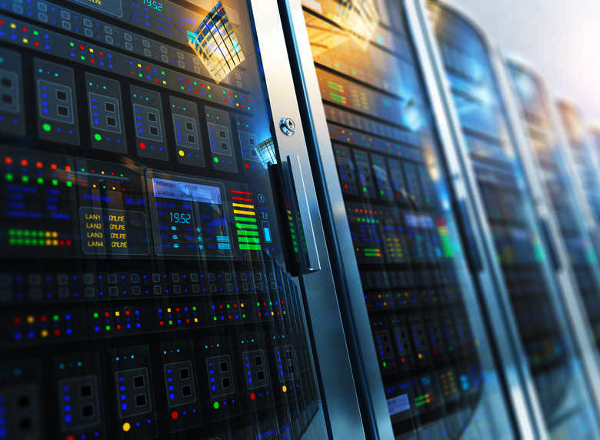
India’s digital infrastructure is entering a decisive expansion phase, with the country’s data centre capacity expected to cross 3 GW by 2028. The surge is being driven by the rapid adoption of artificial intelligence, rising demand from hyperscale cloud companies, deeper enterprise digitisation and the country’s growing need for domestic data storage and processing capacity. What was once seen as a support layer for the internet economy is now becoming one of the core pillars of India’s industrial and technological future.
The scale of this shift is significant. India’s live data centre capacity had reached around 1,700 MW by the end of 2025, and another 500 MW is expected to be added in 2026. This means the country is moving from a fast-growing digital market to a serious data infrastructure destination. As more Indian businesses shift to cloud platforms, AI tools, digital payments, e-commerce systems, online education, telemedicine, gaming, streaming and government digital services, the requirement for secure and high-capacity data centres is rising sharply.
Artificial intelligence is the strongest new force behind this expansion. AI workloads require large computing power, dense server infrastructure, advanced cooling systems, continuous power supply and high-speed connectivity. Training and running AI models involves massive data processing, and this creates a new category of demand beyond traditional cloud storage. As AI moves into banking, manufacturing, healthcare, logistics, governance, cybersecurity, agriculture and education, data centres become the physical backbone of this intelligence economy.
Hyperscalers are also reshaping the market. These large cloud and technology companies need massive campuses that can support millions of users, enterprise customers and AI-driven applications. Their investment decisions are based on power availability, fibre connectivity, land, policy support, regulatory clarity and long-term demand. India offers a rare combination of scale, digital adoption and growth potential, making it one of the most attractive markets in the Asia-Pacific region.
Mumbai continues to dominate India’s data centre map. The city accounts for nearly half of the country’s operational capacity, supported by its position as India’s financial capital, a major corporate hub and a key connectivity node. Banks, stock markets, fintech platforms, telecom companies, media firms and global enterprises require low-latency and resilient digital infrastructure. This gives Mumbai a natural advantage in data centre development.
At the same time, the industry is spreading beyond one geography. Chennai, Hyderabad and Delhi-NCR are emerging as major destinations for hyperscale infrastructure, while Bengaluru remains important for enterprise colocation and technology-driven demand. Tier-II locations are also beginning to enter the conversation through edge data centres, smaller facilities and regional computing requirements. As digital services expand deeper into India, data infrastructure will move closer to users, businesses and regional consumption centres.
The investment opportunity is enormous. India’s data centre market could attract investments of more than ₹2 lakh crore by 2030, supported by AI-ready infrastructure, cloud services, enterprise demand, edge computing and data localisation needs. This investment will flow into land, buildings, electrical systems, cooling infrastructure, network connectivity, renewable energy supply, cybersecurity systems and specialised operations talent. The sector therefore creates economic value far beyond server halls.
Data centres are also becoming closely linked with India’s energy future. Large facilities require continuous electricity, backup systems, grid stability and efficient cooling. As capacity rises into gigawatt scale, sustainability becomes central to the sector’s growth. Future leaders in this space will be those who combine renewable power, efficient cooling, water-conscious design, battery storage, smart grid integration and strong energy management. India’s data centre boom will therefore create demand for both digital infrastructure and clean energy infrastructure.
The rise of data centres also strengthens India’s data sovereignty. As more personal, financial, commercial, health, educational and government data is generated inside the country, domestic storage and processing capacity becomes strategically important. Local infrastructure reduces dependence on overseas systems, improves latency, supports regulatory compliance and gives enterprises greater control over critical digital operations. In a world where data has become an economic and strategic asset, data centres are as important as ports, roads and power plants.
The sector also has a strong employment and skills dimension. Building and running data centres requires engineers, electricians, cooling specialists, cybersecurity professionals, network technicians, facility managers, project planners and energy experts. As campuses become larger and more technically complex, India can build a specialised workforce around data infrastructure. This can support high-quality jobs across construction, technology, operations and maintenance.
For India’s economy, the data centre boom reflects a deeper transformation. The country is moving from digital usage to digital ownership. Indians generate massive volumes of data through payments, shopping, streaming, public platforms, telecom networks and enterprise systems. The next phase is about hosting, processing, securing and monetising this data within strong domestic infrastructure. This gives India the ability to support AI innovation, cloud services, fintech growth, digital governance and global enterprise operations from within its own borders.
The challenge now is execution. Land acquisition, power planning, permissions, fibre connectivity, environmental compliance, skilled manpower and sustainability standards must move in coordination. States that offer reliable power, transparent approvals, strong urban planning and digital infrastructure policies will attract the largest investments. The race for data centre leadership will therefore be shaped by both technology demand and state-level infrastructure readiness.
India’s projected move beyond 3 GW of data centre capacity by 2028 is more than an industry milestone. It signals the construction of a new digital foundation for the country. As AI, cloud computing, fintech, streaming, gaming, e-commerce and public digital services grow, data centres will become the industrial parks of the information age. They will power businesses, protect data, support innovation and give India a stronger position in the global digital economy.
You may also like
-
Pace Robotics Moves Construction Automation From Pilot Stage to Commercial Deployment
-
Hindustan Shipyard Docks Three Vessels Simultaneously in Precision Engineering Milestone
-
BCCL Dispatches First Rake From 5-MTPA Maheshpur Rapid Loading System
-
NPCIL Begins Fuel Loading at RAPP-8 as India’s Fourth Indigenous 700 MWe PHWR Moves Towards Commissioning
-
FUJIFILM India Dedicates First Serial-Numbered Made-in-India Endoscopy System Through AIIMS New Delhi
