India’s seafood sector has delivered one of its strongest performances, with exports touching a record 19,72,018 metric tonnes worth ₹73,890.46 crore, or US $8.46 billion, during FY 2025–26. This marks an all-time high in both volume and value, showing the growing strength of India’s marine economy at a time when global trade conditions remain tense and unpredictable.
The achievement is important because seafood exports connect many layers of the Indian economy. It begins with fishermen, aquaculture farmers, hatcheries, feed suppliers and cold-chain operators, then moves through processing units, ports, shipping networks, laboratories and global buyers. A record year in seafood exports therefore represents income generation across coastal communities, rural production clusters, logistics corridors and foreign exchange earnings.
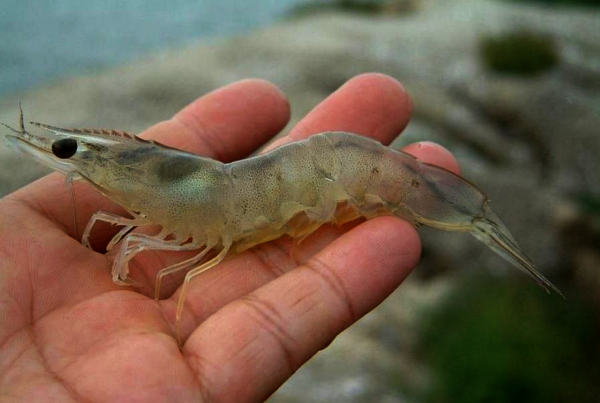
Frozen shrimp remained the central pillar of India’s seafood export success. The country exported 7,92,647 metric tonnes of frozen shrimp, earning ₹49,037.93 crore, or US $5.62 billion. Shrimp alone contributed 40.19% of total export volume and 66.52% of total seafood export earnings in dollar terms, proving its continued dominance in India’s marine export basket.
This dominance has been built through years of aquaculture expansion, improved processing standards, traceability systems and strong demand in high-value markets. Indian shrimp has become a major product in global seafood trade because it combines scale, competitive pricing and reliable processing capacity. The growth of both Vannamei shrimp and Black Tiger shrimp also shows that exporters are serving different buyer segments instead of relying on a single product type.
The United States remained India’s biggest seafood market by value, buying seafood worth ₹20,263.27 crore, or US $2.33 billion, while importing 2,79,193 metric tonnes. Frozen shrimp dominated this market, accounting for more than 93% of India’s seafood earnings from the US. At the same time, China emerged as the largest destination by volume, importing 4,90,369 metric tonnes of Indian seafood worth US $1.61 billion.
The export map shows that India’s seafood trade is becoming increasingly diversified. The European Union imported 2,97,518 metric tonnes worth US $1.59 billion, while South-East Asia purchased 4,51,756 metric tonnes valued at US $1.35 billion. Japan imported 1,05,228 metric tonnes worth US $452.91 million, and the Middle East bought 76,743 metric tonnes valued at US $283 million. This wide market spread gives Indian exporters greater resilience when demand slows in one region.
Beyond shrimp, other marine products also contributed to the record performance. Frozen fish became the second-largest export category with earnings of ₹5,658.37 crore, or US $643.70 million. Dried seafood products came third, earning ₹5,079.09 crore, or US $577.44 million, with a sharp 78.05% rise in rupee value. This growth in dried seafood points to rising demand for value-added and region-specific products in international markets.
Frozen squid and cuttlefish added further strength to the export basket. Frozen squid exports reached 1,02,060 metric tonnes, earning ₹4,493.80 crore, or US $513.84 million. Frozen cuttlefish shipments stood at 67,157 metric tonnes, with dollar earnings of US $331.96 million. Chilled seafood earned ₹622.31 crore, while live seafood exports grew by 11.46% in dollar value to reach US $62.43 million.
The logistics network behind this performance is equally significant. Visakhapatnam, Jawaharlal Nehru Port Trust and Kochi emerged as the top three ports handling seafood cargo. Their role highlights the importance of port efficiency, reefer container availability, inspection systems, documentation speed and cold-chain reliability in maintaining India’s competitiveness in perishable exports.
The record also carries a larger message for India’s blue economy. Seafood exports are more than a trade statistic; they represent the conversion of coastal resources into global value. With better aquaculture practices, deeper processing capacity, disease control, branding, product diversification and market access, India can move from being a high-volume seafood exporter to a stronger value-added seafood power.
The coming opportunity lies in premium products, ready-to-cook seafood, certified sustainable aquaculture, organic shrimp, traceable supply chains and deeper penetration into East Asia, Europe, the Middle East and emerging African markets. If India strengthens quality assurance and invests in coastal infrastructure, the seafood sector can become one of the most dynamic export engines of the country’s blue economy.
India’s record seafood exports in FY 2025–26 show a sector that has learned to compete globally through scale, resilience and product strength. Shrimp continues to lead the charge, but the rise of fish, squid, cuttlefish, dried seafood and live products shows a broader export base taking shape. From fishing harbours to global supermarket shelves, India’s marine economy is entering a higher-value phase.
You may also like
-
Hindustan Shipyard Docks Three Vessels Simultaneously in Precision Engineering Milestone
-
BCCL Dispatches First Rake From 5-MTPA Maheshpur Rapid Loading System
-
NPCIL Begins Fuel Loading at RAPP-8 as India’s Fourth Indigenous 700 MWe PHWR Moves Towards Commissioning
-
FUJIFILM India Dedicates First Serial-Numbered Made-in-India Endoscopy System Through AIIMS New Delhi
-
India’s Defence Production Hits Record ₹1.78 Lakh Crore as Private-Sector Share Rises to 24%
