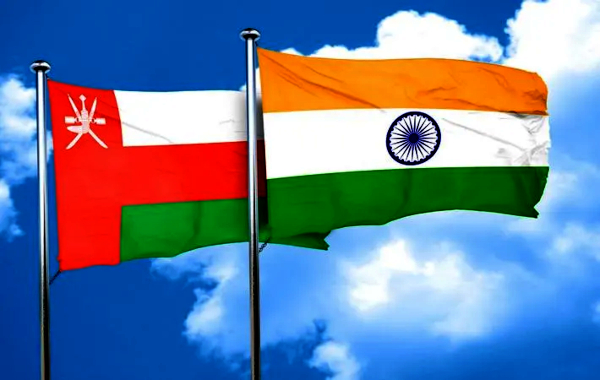
India and Oman have entered a new phase of economic partnership with the operationalisation of the India–Oman Comprehensive Economic Partnership Agreement, marking a major milestone in India’s growing trade engagement with the Gulf region. The agreement came into force on 1 June 2026 after both countries completed their internal approval procedures, creating a wider framework for goods, services, investment, logistics and regulatory cooperation.
The CEPA was signed in Muscat on 18 December 2025 in the presence of Prime Minister Narendra Modi and Sultan Haitham bin Tarik Al Said. Its entry into force now gives Indian exporters immediate preferential access to Oman’s market and strengthens India’s strategic trade corridor through the Gulf. The agreement was operationalised in the presence of Union Commerce and Industry Minister Piyush Goyal and Oman’s Ambassador to India, Issa Saleh Al Shibani. To mark the occasion, the first consignments using preferential tariff benefits, including agriculture and gems and jewellery exports, were flagged off from Mumbai, Kolkata and Chennai.
The agreement gives duty-free access to 99.38 per cent of India’s exports to Oman by value, covering 98.08 per cent of Oman’s tariff lines. This is one of India’s most comprehensive market access outcomes in the Gulf region. Earlier, only 15.33 per cent of Indian exports entered Oman duty-free under the Most Favoured Nation regime. With CEPA, Indian exporters gain a major price advantage in Oman’s nearly 28-billion-dollar import market.
Oman is India’s second-largest trading partner in the Gulf region and an important gateway to the wider GCC and East African markets. Its logistics hubs at Sohar, Duqm and Salalah give India a stronger trade route into West Asia, Africa and global supply chains. Bilateral trade between India and Oman reached 11.18 billion dollars in FY 2025–26, rising from 10.61 billion dollars in FY 2024–25.
The agreement is expected to benefit labour-intensive sectors such as agriculture, marine products, textiles, gems and jewellery, pharmaceuticals, engineering goods, footwear, processed food and automobiles. These sectors gain immediate tariff elimination, improved competitiveness and wider access to Omani buyers. The CEPA is also designed to support MSMEs, manufacturing clusters, women entrepreneurs, startups and employment generation across export-linked sectors.
Marine products are among the major beneficiaries. Shrimp, fish and cuttlefish will now receive immediate duty-free access, replacing earlier duties of up to five per cent. This is expected to help exporters from coastal states such as Kerala, Andhra Pradesh, Tamil Nadu and Gujarat expand their presence in the Gulf food supply chain. Oman’s marine imports stood at 35.3 million dollars in 2025, while India’s exports accounted for around 10 million dollars, showing strong room for growth.
The gems and jewellery sector also receives a significant boost. Import duties of up to five per cent have been removed from the first day of implementation. India’s gems and jewellery exports to Oman stood at 25.78 million dollars in 2025, while Oman’s total import market in the sector is valued at around 1.07 billion dollars annually. With tariff elimination, Indian clusters in Surat, Jaipur, Mumbai, Kolkata and Chennai are expected to gain a stronger foothold in the Omani market.
Agriculture and processed food exports will also benefit from the new arrangement. India is already Oman’s second-largest agricultural supplier, with a 17.8 per cent share in Omani agricultural imports. Duty-free access is expected to strengthen exports of products such as basmati rice, parboiled rice, cashew kernels, onions, potatoes, soybean meal, sweet biscuits, butter, frozen boneless bovine meat, fertilised eggs and mango varieties such as Alphonso, Kesar and Dasheri.
The pharmaceutical sector gains an important regulatory breakthrough. Medicines, vaccines and pharmaceutical ingredients will receive binding zero-duty access. Products approved by regulators such as the USFDA, EMA, UK MHRA and Australia’s TGA will qualify for marketing authorisation in Oman within 90 days. This faster pathway will reduce compliance burdens and help Indian pharmaceutical companies enter the Omani market with greater certainty.
Engineering goods and electronics are another major focus area. All engineering products will receive zero-duty access, replacing earlier tariffs of up to five per cent. This covers machinery, automobiles, electrical equipment, iron and steel, industrial machinery and related products. India’s engineering exports to Oman reached 875.83 million dollars in FY 2025–26 and are projected to rise to between 1.3 billion and 1.6 billion dollars by 2030.
The services chapter of the CEPA is especially important for Indian professionals. Oman has offered market access commitments across 127 services sub-sectors, including computer services, engineering, healthcare, education, financial services, construction, tourism, telecommunications and professional services. Business visitors may stay in Oman for up to 90 days, independent professionals for up to 180 days and intra-corporate transferees for up to four years. These provisions create clearer mobility pathways for Indian professionals, consultants, teachers, doctors, engineers and IT workers.
The agreement also improves trade facilitation. Oman will accept certificates issued by India’s Export Inspection Council, reducing duplicate testing and inspection requirements. India’s organic certification system and halal certification systems have also been recognised. These measures are expected to reduce non-tariff barriers, speed up cargo clearance and make exports more predictable, especially for perishable goods and regulated products.
At the same time, India has protected sensitive domestic sectors. Dairy, cereals, fruits, vegetables, edible oils, oilseeds, rubber, leather, spices and key agricultural products have been placed under the exclusion list. Tariff Rate Quotas and Minimum Import Price mechanisms have also been included for selected sensitive products. This calibrated approach seeks to expand exports while safeguarding farmers, rural livelihoods, food security and domestic industry.
The India–Oman CEPA is more than a tariff agreement. It creates an economic bridge connecting South Asia, the Gulf and East Africa. It supports India’s larger strategy of building trusted trade partnerships, strengthening manufacturing competitiveness, expanding services exports and integrating Indian enterprises into global value chains.
For India, the agreement opens new opportunities for exporters, professionals, MSMEs and manufacturing clusters. For Oman, it strengthens access to Indian goods, skills, services and investment. Together, the two countries are building a long-term economic architecture that links trade, logistics, investment, services and regional connectivity. The CEPA therefore stands as a major step in India’s journey towards a more globally integrated and competitive economy under the vision of Viksit Bharat 2047.
Source: PIB
You may also like
-
Two-Thirds of 98 Tracked Indian Startups Report FY26 Profits as Revenue Reaches ₹3.22 Lakh Crore
-
MOIL Manganese Production Rises 19% to 1.81 Lakh Tonnes in September
-
Ukraine Says India’s Ceasefire Proposal Is Broadest Among Four International Initiatives
-
India Demonstrates First 5.56 km Free-Space Quantum Key Distribution Link
-
Russian Navy Delegation Visits Southern Naval Command and Indian Naval Academy
