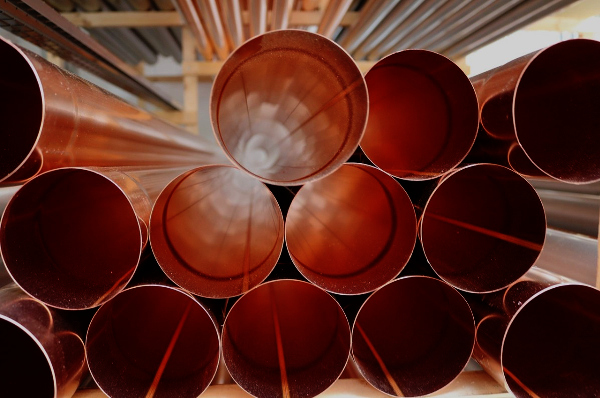
India’s copper industry is entering a decisive phase as new smelting capacity, downstream expansion and recycling investments begin to reduce the country’s dependence on refined copper imports. For a metal that sits at the centre of power transmission, renewable energy, electric vehicles, electronics, air-conditioning, railways, defence manufacturing and urban infrastructure, this shift is more than an industrial update. It is a strategic supply-chain correction.
For several years, India’s refined copper balance has carried a structural vulnerability. Domestic demand has continued to rise with electrification and infrastructure growth, while local refined copper availability struggled to keep pace. The Ministry of Mines had earlier noted that India imported about 363,000 tonnes of refined copper cathode in FY 2023-24, valued at around ₹24,552 crore, with Japan accounting for the largest share of those imports. The same official note also observed that the ramp-up of Kutch Copper’s new refinery would move India closer to self-sufficiency in refined copper.
The biggest change is the entry of large new domestic capacity. Kutch Copper, part of the Adani portfolio, commissioned the first unit of its greenfield copper refinery project at Mundra in March 2024. The first phase involves a 0.5 million tonnes per annum smelter, while the second phase is planned to add similar capacity, taking the project to 1 million tonnes per annum. That scale matters because copper is no longer a routine industrial metal; it is now a critical input for India’s clean-energy and high-growth manufacturing plans.
Hindalco remains the country’s strongest established copper player. Its Birla Copper facility at Dahej in Gujarat is one of the world’s major single-location copper smelting complexes, supported by integrated port facilities, captive power, oxygen plants, by-product units, utilities and a captive jetty. Hindalco’s copper network also includes the Asoj facility in Gujarat, with the company listing 500,000 tonnes per annum capacity at Dahej and 225,000 tonnes per annum at Asoj.
The company’s latest performance also shows why copper has become central to India’s metals story. In FY26, Hindalco reported 487 KT of copper metal sales, copper revenue of ₹69,838 crore, and copper segment EBITDA of ₹2,809 crore. In Q4 FY26 alone, copper revenue rose to ₹22,156 crore, while quarterly copper EBITDA touched ₹907 crore. The company has also said its copper recycling project is nearing commissioning, while its copper tubes and inner-grooved tubes plant is ramping up.
This is where India’s copper story becomes more layered. Refined copper import dependence may reduce sharply as domestic smelters raise output, but raw-material dependence will remain a major challenge. India has limited domestic copper ore availability, and the country will continue to need imported copper concentrate, blister copper and scrap to feed smelters and secondary producers. In other words, India can strengthen domestic refining and downstream manufacturing, but the upstream mining gap will still require long-term resource diplomacy, overseas mineral partnerships, recycling capacity and domestic exploration.
That distinction is important. A country can become stronger in refined copper without becoming fully self-reliant in copper ore. The near-term industrial win is that more cathodes, rods, tubes and copper products can be made inside India. The longer-term strategic task is to secure the feedstock that keeps those smelters running. This is why Indian companies are increasingly looking at long-term concentrate arrangements, overseas sourcing and recycling as part of a broader copper-security architecture.
The demand side is powerful. Copper is the metal that carries the energy transition. Solar plants, wind farms, EVs, charging stations, transformers, substations, metro systems, high-speed rail, data centres, battery manufacturing and modern buildings all consume copper in different forms. Adani’s own project note highlighted renewable energy, electric vehicles, charging infrastructure and power transmission networks as major demand drivers. The Government of India has also listed copper among the country’s 30 critical minerals, underlining its role in economic security and future industrial competitiveness.
This makes domestic copper capacity a strategic industrial asset. A stronger local copper base reduces exposure to shipping disruptions, overseas smelter shutdowns, price spikes, certification bottlenecks and foreign supply concentration. It also supports India’s wider ambitions in electrical equipment, power cables, renewable projects, electronics, defence systems and advanced manufacturing. Copper sits inside the hidden backbone of modern industry; when that backbone is imported in large volumes, the economy carries a silent vulnerability.
The closure of Vedanta’s Sterlite Copper smelter at Tuticorin in 2018 had a major impact on India’s copper balance, turning the country more heavily toward imports. Since then, Hindalco has carried a large part of the domestic refined copper burden, while new capacity from Kutch Copper has begun changing the competitive map. The next phase will be determined by how quickly new capacity stabilises, how efficiently companies secure concentrate, and how strongly India builds a circular copper economy through organised recycling.
The recycling angle deserves special attention. Scrap copper is not merely waste recovery; it is a strategic material loop. In a country where power cables, construction, appliances, electronics and industrial equipment are expanding rapidly, organised copper recycling can reduce import pressure, improve resource efficiency and support lower-carbon manufacturing. If India combines primary smelting with formalised recycling, the country can build a more resilient copper ecosystem rather than depending only on imported cathodes.
Quality standards will also shape the market. The Copper Quality Control Order and BIS certification framework aim to ensure that copper cathodes supplied to Indian industry meet reliable standards. This is critical because copper goes into products where safety, conductivity and durability matter, including transformers, wires, cables, motors and electrical systems. India’s copper push is therefore not only about producing more metal; it is also about producing consistent, high-grade metal for infrastructure that must last decades.
The positive outlook is clear. India is moving from a copper-deficit mindset to a capacity-building phase. Hindalco’s established base, Kutch Copper’s new scale, recycling investments and rising downstream demand are together creating a stronger domestic value chain. The country may still depend on imported ore and concentrates, but refined copper dependence can shrink as local production rises.
For India’s industrial future, this is a crucial transition. Copper will decide the speed and reliability of power grids, renewable energy deployment, electric mobility, electronics manufacturing and next-generation infrastructure. Building domestic capacity now means India is preparing for the metal demands of the next economy. The country’s copper story is no longer just about imports and smelters; it is about energy security, manufacturing depth and strategic industrial independence.
You may also like
-
India Advances Trade Diplomacy at G20 Ministerial in Milwaukee
-
Kokasa Launches to Build Indigenous Mission-Critical Systems for Su-30MKI, MiG-29 and T-72
-
Tata Projects and MDS Aero Partner to Build Advanced Aero-Engine Test Infrastructure in India
-
Flying Wedge Defence Partners With Portugal’s Keydef to Manufacture Kaal Bhairava and YAMA Drones in Europe
-
Armenia Conducts Live-Fire Exercise With Indo-French TRAJAN 155 mm Howitzers Manufactured in India
