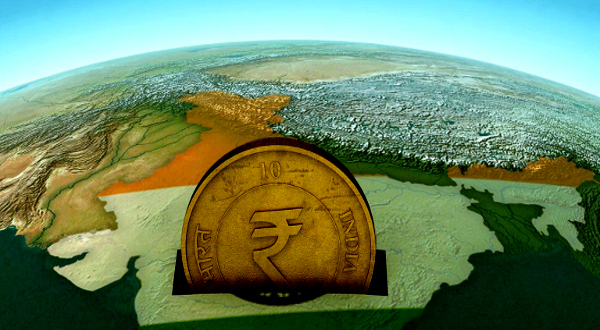
India has recorded a strong rise in foreign company registrations, with the number of overseas firms setting up operations in the country reaching a nine-year high in FY26. Registrations rose to 101 in FY26, compared with 57 in FY25, signalling a renewed wave of international business interest in the Indian market. The last comparable peak was in FY17, when 103 foreign companies registered in the country.
This is a significant business signal because foreign company registration is more than a paperwork statistic. It usually reflects a company’s decision to establish a legal and operational presence in India, whether for services, trading, technology, manufacturing support, consulting, sourcing, market development or project execution. Under the Companies Act, 2013, a foreign company refers to an overseas-incorporated body corporate that has a place of business in India and carries out business activity in the country.
The latest rise shows that India is being viewed not merely as a consumption market, but as an operating base. Global companies are increasingly looking at India for talent, digital infrastructure, supply-chain diversification, engineering depth, domestic demand and long-term growth. In a world where companies are reassessing overdependence on single geographies, India’s combination of scale, skilled manpower and policy stability is becoming attractive.
Singapore led the latest registration wave with 13 new foreign company registrations in FY26, up from seven in FY25. The United States followed with 10 registrations, while the United Kingdom accounted for nine. Germany and South Korea saw eight each, while Japan recorded seven. Together, Singapore, the US, the UK, South Korea, Germany and Japan accounted for more than half of all foreign company registrations during the year.
The country mix is important. Singapore’s lead reflects its role as a major investment and business structuring hub for Asia. The US presence points to continuing technology, finance, consulting and innovation linkages. The UK’s position reflects India’s deep commercial relationship with London-based firms, professional services, fintech, education-linked ventures and investment platforms. Germany, South Korea and Japan indicate the strength of India’s industrial, engineering, automotive, electronics and manufacturing connections.
The revival of registrations from manufacturing-heavy economies is especially noteworthy. Germany’s foreign company registrations rose to eight from just one in FY25, while South Korea doubled from four to eight. These are countries with deep capabilities in precision manufacturing, industrial machinery, automobiles, electronics, chemicals, green technologies and advanced engineering. Their increased operational presence in India fits into the broader shift towards diversified production networks and India’s ambition to become a larger manufacturing and export hub.
The data also shows a widening of India’s global business map. Companies from South Africa, Ghana and Uzbekistan registered in India for the first time in FY26. China also returned to the registration table with three companies, after recording zero registrations in the preceding three years. This suggests that India’s appeal is no longer limited to the traditional investment corridors of the US, Europe, Japan and Singapore. It is beginning to attract companies from emerging economies that see India as a market, partner and platform.
The sectoral pattern is equally revealing. Services accounted for around 90% of total foreign company registrations, while industry, including manufacturing, mining and quarrying, electricity, gas and water supply, made up about 10%. This reflects the present structure of India’s foreign business pull. Global companies are using India for business services, finance, insurance, real estate, trading, transport, storage, communications, consulting and technology-enabled operations.
This does not reduce the importance of manufacturing. Instead, it shows how modern foreign investment often enters through services first. A multinational may begin with a sales office, design team, sourcing unit, consulting arm, technology centre or logistics operation before expanding into deeper manufacturing, assembly, vendor development or R&D. In India’s case, services often act as the first bridge between foreign intent and long-term investment.
The broader foreign direct investment picture supports this trend. During April–December 2025, India received ₹4,16,709 crore, or US$47.87 billion, in FDI equity inflows. Singapore contributed the largest share at 37%, followed by the United States at 16%, Mauritius at 10%, Japan at 7% and the UAE at 5%. This overlaps strongly with the foreign company registration pattern, showing that the countries setting up operational presence are also among the major sources of investment capital.
The leading FDI sectors also explain why foreign firms are entering India. Computer software and hardware attracted 22% of FDI equity inflows during April–December 2025, followed by the services sector with 18%, trading with 7%, food processing with 6% and non-conventional energy with 5%. These are all sectors where India offers a combination of domestic demand, skilled manpower, policy support and export potential.
Technology remains one of the strongest magnets. India’s software talent, startup ecosystem, global capability centres, digital public infrastructure and growing AI adoption make it a natural base for foreign companies seeking scale. Many overseas firms now look at India not only for back-office work, but for product engineering, cybersecurity, cloud services, financial technology, semiconductor design support, analytics and enterprise software development.
The services-led registration pattern also connects with India’s growing role as a global operations hub. Multinationals are increasingly placing high-value functions in India: finance operations, legal processing, engineering services, research support, healthcare analytics, consulting delivery, logistics management and digital transformation work. This creates white-collar employment, raises managerial capability and integrates India deeper into global corporate networks.
At the state level, the investment map shows where foreign firms are likely to deepen operations. During April–December 2025, Maharashtra attracted the largest FDI equity inflow at ₹1,34,188 crore, followed by Karnataka at ₹96,644 crore, Gujarat at ₹44,041 crore, Tamil Nadu at ₹33,530 crore and Haryana at ₹33,305 crore. These states offer strong combinations of infrastructure, ports, airports, industrial clusters, technology hubs, financial services, manufacturing ecosystems and skilled labour.
Maharashtra’s strength comes from Mumbai’s financial ecosystem, Pune’s industrial base and a wide services-manufacturing mix. Karnataka benefits from Bengaluru’s technology dominance and deep talent pool. Gujarat remains a major draw for manufacturing, chemicals, ports, renewables, semiconductors and financial services through GIFT City. Tamil Nadu has a strong base in automobiles, electronics, textiles, renewable energy and industrial manufacturing. Haryana benefits from its proximity to Delhi-NCR, corporate headquarters, automotive clusters and logistics networks.
The rise in foreign company registrations also fits into India’s larger economic positioning. The country offers a rare combination of domestic demand and export ambition. A company entering India can sell to a large internal market, build products for global customers, tap competitive talent and connect with growing infrastructure networks. This dual advantage is what makes India different from many smaller investment destinations.
Policy stability has also played a role. Over the past decade, India has steadily liberalised sectors for foreign investment, simplified business processes, expanded digital compliance systems, improved tax administration and pushed infrastructure spending. Foreign companies still face challenges around land, state-level procedures, dispute resolution, compliance complexity and sector-specific rules, but the direction of travel is clearer than before.
The nine-year high in registrations should therefore be read as an early indicator of confidence. Registration comes before hiring, leasing, procurement, project execution, partnerships and investment scaling. When more foreign firms choose to legally establish themselves in India, it suggests that boardrooms abroad are moving from observation to action.
For India, the opportunity is to convert these registrations into deeper economic value. That means encouraging foreign firms to build local supply chains, hire Indian talent, partner with MSMEs, invest in R&D, transfer technology, expand exports and support high-quality employment. The real success will be measured not only by the number of companies entering India, but by the depth of their operations and the value they create inside the country.
The FY26 registration surge shows that India’s business story is becoming broader and more global. The interest is coming from financial hubs, technology leaders, industrial economies and new emerging partners. If India continues improving infrastructure, regulatory predictability and ease of operations, this rise in foreign company registrations can become the foundation for a larger wave of investment, innovation and global business integration.
You may also like
-
When Trade Routes Become Weapons: Why BRICS Needs a Resilient Supply-Chain Architecture
-
India’s Trade With BRICS More Than Doubles to $417 Billion as Export Opportunity Expands
-
India and Uruguay Agree Trade and Connectivity Roadmap as Montevideo Ratifies International Solar Alliance
-
The Return of Multipolarity: Why the World Is Moving Beyond a Single Centre of Power
-
The Financial Chokepoint: Why BRICS Can No Longer Depend on SWIFT and the Dollar Alone
