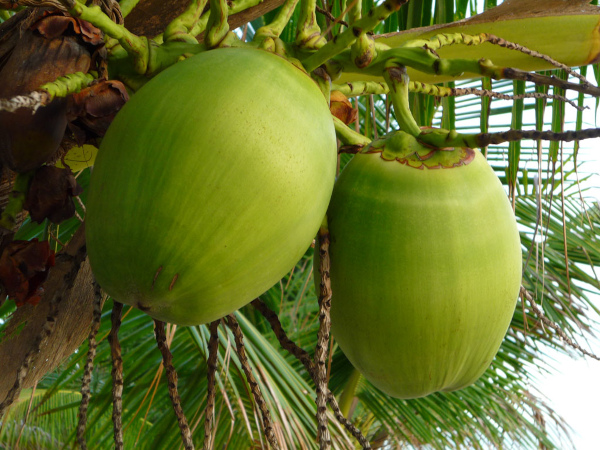
In Indian culture, coconut oil is not merely a cooking fat or a cosmetic oil. It belongs to the older household wisdom where food, medicine, ritual purity and daily care are not separated into rigid boxes. In Ayurveda, coconut is known as Narikela, and coconut oil is generally understood as Narikela Taila or, in Kerala usage, Kera Tailam / Keram. It is one of the most familiar examples of the Indian belief that the kitchen itself can become a small pharmacy when ingredients are used with knowledge, season, body type and moderation.
The Ayurvedic Pharmacopoeia of India describes Narikela as the dried endosperm of Cocos nucifera, cultivated especially in the coastal and deltaic regions of South India. It gives Narikela the qualities of madhura rasa or sweet taste, guru and snigdha guna or heavy and unctuous qualities, shita virya or cooling potency, and madhura vipaka or sweet post-digestive effect. Its actions are described as balya, hridya, vrishya, vatahara, pittahara, brimhana and kaphakara, meaning it is strengthening, heart-supportive, nourishing, Vata-Pitta pacifying and Kapha-increasing when overused.
This single Ayurvedic profile explains why coconut oil occupies such a respected place in Kerala and coastal Ayurveda. It is cooling, softening, nourishing and stabilising. It does not have the sharp heat of mustard oil or the deeply penetrating heaviness of some other medicated oils. Its personality is gentle, moist, soothing and Pitta-calming. That is why it is traditionally loved in hot, humid coastal regions where the body is often exposed to heat, sweat, sun, skin irritation and scalp dryness.
Ayurvedic Nature of Coconut Oil
Coconut oil is best understood as a cooling sneha. In Ayurveda, sneha means oiliness, affection, lubrication and nourishment. A proper sneha substance does not merely coat the body; it softens dryness, supports tissue nourishment and helps carry herbs deeper into the channels when prepared as a medicated oil.
Because coconut oil is snigdha and shita, it is traditionally suitable where there is heat, dryness, burning sensation, scalp heat, roughness, sun exposure, Pitta aggravation and Vata dryness associated with heat. It is especially useful for external application over the head, scalp and skin in hot climates. In Kerala Ayurveda, this is one reason why many classical and traditional medicated oils are made in a coconut oil base.
At the same time, Ayurveda never treats any substance as universally good for everyone at all times. Coconut oil is nourishing and cooling, but because it is also heavy and Kapha-increasing, excessive internal use may not suit people with strong Kapha symptoms, sluggish digestion, heaviness, coating on the tongue, cold congestion or weak agni. This is why the old Indian method was not blind consumption, but intelligent use according to body type, season and condition.
Why Coconut Oil Became Central to Kerala Ayurveda
Kerala’s relationship with coconut is civilisational. Coconut gives food, oil, fibre, water, timber, medicine and ritual offerings. In traditional Kerala homes, coconut oil entered almost every layer of life: cooking, baby massage, hair care, skin care, post-bath application, temple lamps, seasonal remedies and medicated oils. This is food as medicine in its most natural form.
Ayurvedically, Kerala’s climate also explains this preference. A warm, humid, coastal region requires cooling and skin-protective oils. Coconut oil, being naturally cooling and unctuous, became an ideal base for herbs used in hair, skin, wound-care and Pitta-calming preparations. When herbs such as Bhringaraja, Neeli, Amla, Nalpamara, Haridra, Manjishta, Karanja, Kumari and Shigru are processed in coconut oil, the oil becomes a carrier of their actions.
Main Ayurvedic Uses of Coconut Oil
For the head and scalp, coconut oil is valued because the head is a major seat of Pitta and sensory activity. Regular but moderate head oiling with suitable coconut-based medicated oils is traditionally used to cool the head, nourish the scalp, reduce dryness, support hair quality and calm excess heat. This is why many famous Kerala hair oils are prepared as Keram formulations.
For the skin, coconut oil is used as a soothing, softening and protective substance. It is especially suitable when the skin is dry but hot, sun-exposed, rough, irritated or affected by mild Pitta-type redness. In classical practice, it is often used before bath, not always as a leave-on oil for everyone. People with oily, acne-prone or Kapha-dominant skin need more caution.
For Abhyanga, or oil application, plain coconut oil is used more in hot climates and summer-like conditions. It is not always the best oil for cold, damp, Kapha-heavy weather. Ayurveda would choose sesame oil for many Vata conditions, mustard oil in some Kapha-cold situations, and coconut oil where cooling and softness are needed.
For burning sensation and heat-related discomfort, Narikela is traditionally respected because of its cooling nature. The Ayurvedic Pharmacopoeia lists therapeutic uses of Narikela including daha or burning sensation, raktapitta, trishna, shosha, kshata and shula, while describing its nourishing and Pitta-pacifying qualities.
Coconut Oil-Centric Ayurvedic Medicines and Formulations
Neelibhringadi Keram / Nilibhringadi Kera Tailam is one of the best-known coconut oil-based Ayurvedic hair oils. It is traditionally associated with hair nourishment, scalp care, premature greying, hair fall and dandruff. Kerala Ayurveda describes Neelibringadi Keram as containing herbs such as Neeli, Bhringaraja and Amla in a pure coconut oil base, while Kottakkal Arya Vaidya Sala lists Nilibhringadi Kera Tailam as a hair oil preparation.
Kayyanyadi Kera Tailam is another important Kerala hair oil centred on coconut oil. Kottakkal Arya Vaidya Sala lists Keratailam / Cocos nucifera as the oil base along with herbs such as Bhringaraja, Amrita and Dhatri. This preparation is traditionally used for maintaining scalp and hair health, especially where the aim is cooling, nourishment and strengthening of the hair roots.
Nalpamaradi Keram is a coconut oil-based skin preparation used in Kerala Ayurveda for complexion, skin brightness, sun-exposed skin and Pitta-type skin heat. It usually contains the bark group known as Nalpamara, along with herbs such as turmeric, Manjishta and sandalwood in a coconut oil base. Kerala Ayurveda describes Nalpamaradi Keram as a classical oil made with Nalpamara, fresh turmeric, Manjistha and sandalwood in a nourishing coconut oil base.
Eladi Keram is another coconut oil-based skin formulation used for blemishes, itching, rashes and skin discomfort. Kerala Ayurveda describes Eladi Keram as an Ayurvedic oil prepared for skin blemishes, pigmentation, rashes and itching, especially where Vata-Kapha imbalance is involved.
Murivenna is a famous Kerala Ayurvedic oil traditionally used for wounds, sprains, swelling, pain and injury-related external application. Several Kerala traditions prepare it in a coconut oil base with herbs such as Karanja, Kumari, Shigru, betel leaf and onion-related ingredients. Sri Sri Tattva’s formulation listing includes coconut oil with herbal juices such as Palandu, Arka, Karanja, Kumari, Shatavari, Shigru, Paribhadra and Tambula.
Durdurapatradi Keram is used in scalp conditions such as itching and flake-prone scalp. Kerala Ayurveda lists Durdurapatradi Keram among its Keram preparations and describes it as a scalp-supporting oil for itchy, flake-prone scalp.
Chemparathyadi Keram is another Kerala-style coconut oil preparation associated with hair and scalp care. It is traditionally linked with hibiscus-based hair nourishment and is used in the wider Kerala household-Ayurveda tradition for maintaining softness, shine and scalp comfort.
Coconut Oil in Daily Ayurvedic Household Practice
In the Indian home, coconut oil is often used before bath as a simple abhyanga oil for the head and body. A small amount is applied to the scalp, crown, soles or dry skin, left for a short period, and then washed off. This method is especially suitable in hot weather, after sun exposure, or when the body feels heated and dry.
For hair care, plain coconut oil is often warmed mildly and applied to the scalp. But Ayurveda would usually prefer medicated oils such as Neelibhringadi Keram or Kayyanyadi Kera Tailam when the aim is therapeutic hair care rather than simple lubrication. Plain coconut oil nourishes; medicated coconut oil directs that nourishment through herbs.
For skin care, coconut oil may be used on dry and heated skin, but it should be used carefully on acne-prone, very oily or clogged skin. Traditional practice often applies oil before bath rather than leaving a thick layer on the skin all day. Nalpamaradi Keram, for example, is commonly applied before bath and washed off after a short duration, especially because turmeric-based oils can stain clothing.
For children, coconut oil has a long household tradition, but medicated oils should be chosen carefully. A baby’s skin is delicate, and not every classical oil suits every child. Mild plain coconut oil may be used externally in many homes, but strong medicated oils should be used under guidance, especially for infants.
Who Benefits Most from Coconut Oil?
Coconut oil is generally best suited for people with Pitta-Vata tendencies: heat, dryness, irritability of the scalp, sun sensitivity, burning sensation, dry hair, rough skin and hot-climate discomfort. It is also suitable for those living in tropical coastal climates where the body naturally needs cooling and softening support.
It may not suit everyone in the same way. People with strong Kapha signs — heaviness, sluggish digestion, coldness, excess mucus, oily skin, severe dandruff with greasiness, or a tendency to blocked pores — should use coconut oil cautiously. For them, heavy oiling may worsen congestion or scalp stickiness if used incorrectly.
Ayurvedic Precautions
Coconut oil should not be treated as a cure-all. Ayurveda respects it, but also places it within rules of desha, kala, prakriti and vikriti — place, season, constitution and present imbalance. In cold rainy weather, during cough and congestion, or in people with Kapha accumulation, heavy use of coconut oil may not be ideal. For internal medicinal use, especially in disease conditions, it is better to consult a qualified Ayurvedic physician.
For skin diseases, wounds, burns, eczema, fungal infections, infected lesions, scalp disease or chronic hair fall, self-treatment with oil alone is not enough. The right formulation depends on whether the condition is Vata, Pitta, Kapha, Rakta, Ama or infection-dominant. A wrong oil at the wrong time can aggravate symptoms.
Conclusion
Coconut oil is one of the finest examples of India’s food-as-medicine culture. It begins as a familiar kitchen substance, but in Ayurveda it becomes a cooling sneha, a Pitta-calming oil, a carrier of herbs, a scalp nourisher, a skin soother and a foundation for many Kerala Ayurvedic medicines. Its greatness lies not in dramatic claims, but in its daily usefulness.
In the Indian tradition, medicine was not always locked inside a clinic. Sometimes it sat quietly in the kitchen, in the courtyard, near the lamp, beside the grinding stone, and in the hands of grandmothers who knew when to apply oil, when to avoid it, when to cook with it, and when to turn it into a herbal remedy. Coconut oil belongs to that living tradition. It reminds us that Ayurveda is not only about rare herbs from forests; it is also about understanding the medicinal intelligence of ordinary foods that have protected Indian households for centuries.
You may also like
-
Indian MedTech Startup Periwinkle Takes Rapid AI Cervical Cancer Screening to BRICS
-
WHO Chief Praises India’s Gains in Maternal, Child Health and NCD Care
-
Ayurvedic Foods for Liver Health and Digestion
-
Ayurvedic Diet for Joint Health and Stiffness
-
Ayurvedic Breakfasts: What Traditional Ayurveda Suggests for the First Meal of the Day
