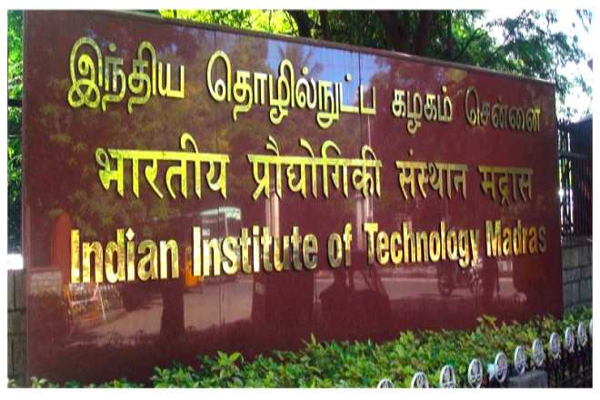
New Delhi, April 24, 2026: India has taken an important step towards strengthening its semiconductor and photonics technology ecosystem with the launch of two indigenously developed Silicon Photonics solutions at IIT Madras. The technologies were launched by S. Krishnan, Secretary, Ministry of Electronics and Information Technology, marking what the government described as a major milestone in India’s push for technology sovereignty in Silicon Photonics.
The two solutions include a Silicon Photonics Process Design Kit, or PDK, for photonic chip manufacturing, and a Universal Packaged Programmable Photonic Integrated Circuit Test Engine. Both have been developed at the MeitY-sponsored Centre of Excellence for Centre for Programmable Photonic Integrated Circuits and Systems, IIT Madras. The launch event was attended by Amitesh Sinha, Additional Secretary, MeitY and CEO of the India Semiconductor Mission, along with senior IIT Madras officials and members of the centre’s governing council.
The indigenously developed Silicon Photonics PDK comes with more than 50 verified components, giving Indian industry, startups, academic institutions and defence R&D organisations an important design foundation to develop advanced photonic integrated circuits. In simple terms, this PDK acts like a technology library that enables designers to build photonic chips with greater reliability, standardisation and local design capability.
The second solution, the Universal PPIC Test Engine, is an automated characterisation platform designed for photonic and optoelectronic modules. This platform will help test, package and characterise photonic modules across multiple application areas, supporting the wider Indian research and development community working on next-generation optical, semiconductor and quantum-linked technologies.
Speaking at the launch, S. Krishnan said that India’s Silicon Photonics capability is now matching the global state of the art. He also underlined the need to complement this progress with the establishment of a dedicated Silicon Photonics fabrication facility under the India Semiconductor Mission.
Amitesh Sinha said the technology has relevance across both classical and quantum regimes. He added that with the right industry partner, such technologies could be supported under the upcoming ISM 2.0 R&D vertical for further improvement and product development. He also indicated that after successful demonstration of commercial capabilities, a Silicon Photonics fabrication facility with integrated packaging infrastructure may be considered.
Prof. Bijoy Krishna Das, Chief Investigator of the centre, said that starting in the third quarter of the current financial year, the centre will enable Silicon Photonics Multi-Project Wafer fabrication runs, while also offering testing, packaging and module characterisation support.
The Silicon Photonics CoE-CPPICS follows a Product Research, Development and Manufacturing model, using CMOS-compatible silicon photonics technology. The centre is working with SilTerra Malaysia as its foundry partner and izmo Microsystems, Bengaluru, as its photonic IC packaging partner.
The launch is significant because Silicon Photonics sits at the intersection of semiconductors, optical communication, high-speed computing, quantum technologies and defence electronics. By developing a domestic design kit and testing engine, India is creating foundational infrastructure that can reduce dependence on foreign technology platforms and help Indian researchers, startups and strategic-sector organisations build advanced photonic chips within a national ecosystem.
You may also like
-
Large- and Small-scale Magnetic Activity Driving Microwave Polar Brightening in the Sun
-
Molecular Geometry Tweak Opens New Way for Smart Biomaterials
-
ISRO’s Indo-French TRISHNA Satellite Enters Advanced Development Stage, Launch Expected in 2027–28
-
IISc Scientists Show How Strong Magnetic Fields Could Allow White Dwarfs to Exceed Chandrasekhar Limit
-
IIT Madras to Launch Global Mission to Map 100 Human Brains in 3D
