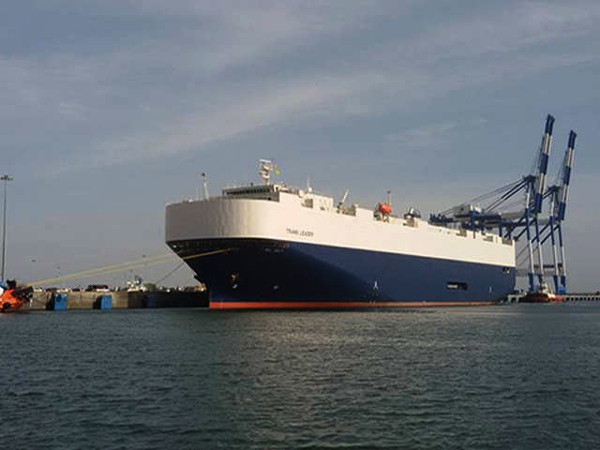
India’s exports continued to show resilience in the first ten months of FY 2025–26, with total merchandise and services exports rising to USD 714.73 billion during April–January, according to information shared in the Lok Sabha on Tuesday. The figure marks a 5.26 per cent increase over USD 679.02 billion recorded during the same period of FY 2024–25, reflecting the country’s steady trade momentum despite continuing global uncertainty, supply chain pressures and volatile commodity prices.
The government said India’s export growth has remained broad-based and consistent over the past few years. Between FY 2021–22 and FY 2024–25, exports grew at a compound annual growth rate of 6.9 per cent, rising from USD 497.90 billion in 2020–21 to USD 828.25 billion in 2024–25. Officials said this sustained expansion underlines India’s emergence as a resilient and diversified player in global trade, capable of maintaining growth even amid challenging international conditions.
To further strengthen the country’s export ecosystem, the government has continued to focus on policy support, financial incentives, digital trade infrastructure and improved market access, with special emphasis on helping MSMEs compete more effectively in global markets. Central to this effort is the Foreign Trade Policy (FTP) 2023, which has been positioned as a flexible and evolving framework designed to respond to changing global trade conditions. Built around trade facilitation, export promotion, state-level partnerships and digital integration, the policy is being supported by a range of targeted initiatives aimed at improving India’s export competitiveness.
Among the key measures highlighted was the RoDTEP scheme, which helps neutralise embedded taxes on exported goods and improve price competitiveness in international markets. The government has also approved the Export Promotion Mission 2 with a budgetary outlay of Rs. 25,060 crore for the period from FY 2025–26 to FY 2030–31. The mission is structured around two pillars — Niryat Protsahan, focused on trade finance and credit enhancement, and Niryat Disha, aimed at improving export logistics, warehousing and market access — with a particular thrust on MSME competitiveness.
In response to rising risks linked to geopolitical tensions in the Gulf and West Asia maritime corridor, the government has also notified a time-bound “RELIEF” Scheme under the Export Promotion Mission. The scheme will be implemented through the Export Credit Guarantee Corporation of India (ECGC) to address elevated export risks arising from disruptions in the region. Officials said the initiative is intended to offer exporters additional protection at a time when geopolitical events are affecting trade routes and business confidence.
The government also pointed to the growing role of digital systems in simplifying export procedures and improving transparency. Platforms such as the 24×7 EIC interface, Trade Intelligence and Analytics platform, Common Digital Platform for Certificates of Origin and the Trade e-Connect portal are helping exporters access online approvals, real-time compliance information, digital certification and market intelligence with greater speed and ease. These reforms, the government said, are making India’s trade architecture more efficient, transparent and data-driven.
Trade diplomacy remains another major pillar of India’s export strategy. The government said India currently has 19 free trade agreements and has stepped up negotiations and deal-making since 2021. Among the major developments cited were progress on the India-EU FTA, the India-EFTA Trade and Economic Partnership Agreement, and proposed agreements with New Zealand, Oman and the United Kingdom. Ongoing negotiations with Israel, Canada, GCC nations, Chile and Peru were also highlighted as part of New Delhi’s push to expand high-value trade corridors and improve long-term market access for Indian businesses.
The information was shared by Minister of State for Commerce and Industry Shri Jitin Prasada in the Lok Sabha, as the government outlined its broader strategy to build a more resilient, technology-driven and globally competitive export ecosystem. With a mix of financial support, institutional reforms, digital facilitation and proactive trade engagement, India is seeking to position itself not just as a major exporter, but as a trusted and future-ready partner in global trade.
Reference: PIB
You may also like
-
Tata Power Renewables Commissions 72.5 MW Solar Project in Rajasthan to Support Tata Steel’s Decarbonisation
-
NTPC Targets 244 GW by 2037 With ₹16.86-Lakh-Crore Expansion Across India’s Energy Sector
-
UPI Completes a Decade as Transaction Value Surges More Than 4,000-Fold
-
AGNIT Semiconductors: Building India’s Gallium-Nitride Chip Capability for Radar, Communications and Power Electronics
-
India and Canada Target Comprehensive Trade Agreement by End of 2026
,%20Government%20Unveils%20New%20Measures%20to%20Strengthen%20Trade)