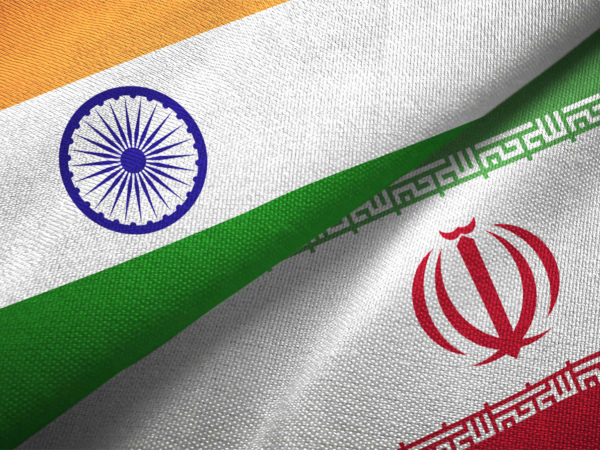
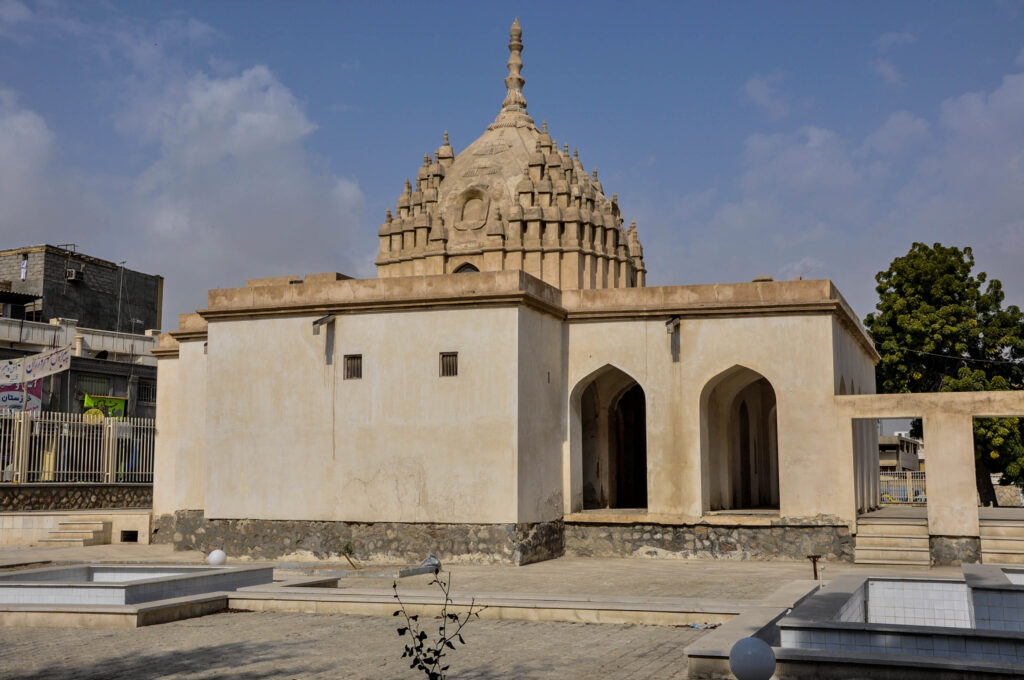
The Vishnu Temple in Bandar Abbas, often called the Hindu Temple of Bandar Abbas or Bet-e-Goran, is one of the most unexpected religious monuments in Iran. Standing in the southern port city of Bandar Abbas, it is a reminder that the Persian Gulf was not just a sea route for goods, but also a meeting place of people, beliefs, and cultures. Most sources place its construction in 1892 CE, during the reign of Mohammad Hassan Khan Sa’d-ol-Malek, which makes the temple about 134 years old as of 2026. Some Iranian pages describe the date using a different calendar notation, which has caused a little confusion in modern references, but the late 19th century is the safest and most widely repeated dating.
What makes the temple especially fascinating is why it exists at all. It was built for the Hindu merchant community living in Bandar Abbas, a city that had long been tied to Indian Ocean trade. Iranian official and tourism sources describe it as a temple created by Indian merchants, including traders from Shikarpur, for Hindus who had settled in the port for commerce. In plain terms, this was not a temple planted by conquest or royal expansion; it was built because a community far from home wanted a place to worship, gather, and preserve a familiar spiritual life in a foreign land. That makes the building feel deeply human. It is as much a story about migration and memory as it is about religion.
Architecturally, the temple is important because it does not look entirely like a standard Indian temple, nor does it fully resemble the usual sacred buildings of Iran. Its core plan centers on a large square room, and this central chamber is covered by a dome, one of the structure’s most striking features. Around this are corridors and smaller rooms, and some accounts mention that a few of these were used by students connected to a Brahman school. The building materials include coral stone, mortar, mud, thick stucco, and chalk, all of which suited the coastal climate and local construction practices. In other words, the temple is not simply “Indian architecture dropped into Iran”; it is an adapted building, shaped by Indian religious needs but also by Iranian setting, local materials, and Gulf conditions.
Its dome is one of the reasons the temple is so memorable. Official Iranian descriptions stress that the shape and treatment of the dome make it different not only from many Hindu temples, but also from other domes in the Persian Gulf and Iran. Some travel and heritage accounts describe it as a rare blend of Indian and Persian design instincts, while older reporting highlights the temple’s unusual visual effect in the middle of Bandar Abbas. This makes the building feel like a small piece of architectural dialogue between two civilizations. A visitor looking at it would not simply see “India” or “Iran” in isolation; they would see a structure born from contact between the two.
Inside, the temple once carried a richer ritual atmosphere than what survives today. Sources mention religious paintings, including images of Krishna, and older reports describe wall paintings that helped draw visitors’ attention. One report also mentions a niche with a dome-shaped ceiling that seems to have been the place where the idol or statue was once set. Over time, however, the original ritual life of the temple faded as the Hindu merchant community dwindled. Today, the building survives more as a protected historical monument than as a fully functioning religious center.
The building’s importance lies not in sheer size but in what it represents. One report gives its total area as about 300 square meters, which means this was not a giant ceremonial complex, but a modest, urban temple built for a working community. Yet its small scale does not diminish its historical value. In fact, it strengthens it. The temple tells us that older trade networks were not just about ships, taxes, and cargo. They also carried personal faith, daily customs, and emotional needs. People brought their gods with them, built places of worship where they settled, and left behind monuments that still speak long after the community itself has changed.
The temple has also been formally recognized as part of Iran’s own heritage. Iranian sources describe it as a registered national monument, and one official tourism reference notes that the Anthropological Museum of Bandar Abbas is located in the city’s ancient Hindu temple. That is a significant detail. It means the temple is not treated merely as a foreign relic sitting awkwardly on Iranian soil, but as part of the country’s layered past. It belongs to the story of Bandar Abbas itself — a port shaped by exchange, migration, and the long cultural traffic between Iran and India.
In the end, the Vishnu Temple of Bandar Abbas is important because it quietly overturns simple ideas about history. Iran and India were never sealed worlds with no contact; they traded, interacted, and influenced one another for centuries. This temple is one of the clearest surviving proofs of that relationship. At roughly 134 years old, with its square central hall, distinctive dome, coastal materials, painted interiors, and mixed Indian-Iranian character, it stands as a rare monument of shared history. It may not be among the largest temples of the Hindu world or the most famous monuments of Iran, but it is one of the most meaningful — because it preserves, in stone and plaster, the memory of a community that crossed the sea and made a little piece of home on the Persian Gulf.
Reference:
Wikipedia – Bandar Abbas Vishnu Temple
https://en.wikipedia.org/wiki/Bandar_Abbas_Vishnu_Temple
IRNA English – Hindu Temple in Bandar Abbas, Southern Iran
https://en.irna.ir/photo/83642031/Hindu-Temple-in-Bandar-Abbas-Southern-Iran
Iran Ministry of Foreign Affairs – Hindus Temple
https://en-economic.mfa.ir/en/general_content/45153-Hindus-Temple.html
Visit Iran – Hindus Temple
https://www.visitiran.ir/en/attraction/hindus-temple
Iran Tourism & Touring Organization – Hindus Temple (Indians Temple)
https://itto.org/iran/photo/bot-goran-hindus-temple/
Hinduism Today / HPI – Iran’s Bandar Abbas Hindu Temple
https://www.hinduismtoday.com/hpi/2003/07/19/2003-07-19-iran-s-bandar-abbas-hindu-temple/
You may also like
-
Bahlika: The Ancient Bactrian Realm of Balkh in the Mahabharata
-
Kamboja: The Horse-Breeding Frontier Kingdom of the Hindu Kush in the Mahabharata
-
Darada: The Upper Indus Mountain Realm of the Mahabharata
-
Abhisara: The Himalayan Frontier Kingdom Between Kashmir and Punjab in the Mahabharata
-
Kekaya or Kaikeya: The Western Punjab Kingdom Divided by the Kurukshetra War
