The government is working on offering production linked incentives for up to five sectors to boost domestic manufacturing, a top finance ministry official said on Thursday, bolstering efforts to attract new investments in the coronavirus-stricken economy.
Asia’s third-largest economy is expected to contract by as much as 10% in the current fiscal year beginning April, some private economists’ estimate, after the outbreak crippled business and consumer activity since late March, compared to government’s earlier target of about 6% growth.
The government has announced a raft of measures including direct food subsidy to nearly 810 million people and credit guarantees of Rs 3 trillion ($40.17 billion) on loans to small businesses.
Tarun Bajaj, economic affairs secretary at the Ministry of Finance, told a virtual conference that incentives would be offered to sectors to push manufacturing and help struggling industries.
Bajaj didn’t specify the sectors that may be eligible for incentives.
The government earlier announced production linked incentives for large scale electronic goods makers for five years, to attract investments in mobile phone manufacturing and electronic component units.
Incentives have also been announced for pharmaceutical companies for production of bulk drugs and on medical devices.
Speaking at a virtual conference organised by the Federation of Indian Chambers of Commerce and Industry (FICCI) on Thursday, finance ministry official said the government was expecting a “V” shape economic recovery beginning next fiscal year.
Reuters earlier reported that India is drawing up an incentive scheme for the autos sector aimed at doubling exports of vehicles and components in the next five years.
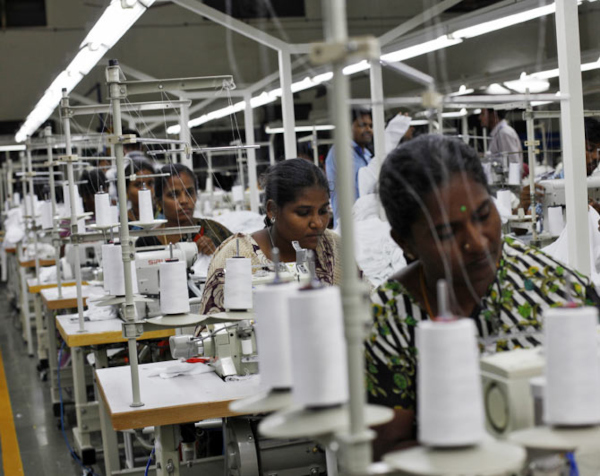
Industry and government sources said sectors such as textile and food processing manufacturers could be offered production linked incentives.
The latest data on 14-15 economic indicators including railway freight and tax collections showed a pick up in economic activities, Bajaj said, adding the government was open to borrow more from the market to meet spending targets for infrastructure projects.
Source : BS
You may also like
-
When Trade Routes Become Weapons: Why BRICS Needs a Resilient Supply-Chain Architecture
-
India’s Trade With BRICS More Than Doubles to $417 Billion as Export Opportunity Expands
-
India and Uruguay Agree Trade and Connectivity Roadmap as Montevideo Ratifies International Solar Alliance
-
The Return of Multipolarity: Why the World Is Moving Beyond a Single Centre of Power
-
The Financial Chokepoint: Why BRICS Can No Longer Depend on SWIFT and the Dollar Alone
