
Mustard, known in Ayurveda as Sarshapa, Rājikā, Siddhārtha, or simply Sarson/Rai, is one of the finest examples of how the Indian kitchen works like a living pharmacy. It is not merely a spice thrown into hot oil for flavour. In the Ayurvedic imagination, mustard is heat, movement, sharpness, digestion, circulation and cleansing packed into a tiny seed. It wakes up food, wakes up the stomach, wakes up sluggish channels and gives Indian cooking that unmistakable medicinal intelligence where taste and health are not separated.
Ayurveda classifies mustard as katu-tikta rasa — pungent and bitter in taste — with snigdha and tikshna guna, meaning oily and penetrating in quality. Its virya, or potency, is ushna, meaning heating, and its vipaka, or post-digestive effect, is pungent. The Ayurvedic Pharmacopoeia of India lists mustard seed as Deepana, Kaphahara, Vatahara, Hridya and Pittakara, meaning it supports digestive fire, helps reduce excess Kapha, pacifies Vata in suitable contexts, supports the heart, and can increase Pitta if overused.
This is why mustard sits so naturally in Indian cooking. In dals, pickles, fish curries, saag, kanji, chutneys and vegetable stir-fries, mustard does more than add aroma. It helps cut heaviness. It makes oily and starchy foods easier to digest. It brings warmth to cold, damp, heavy preparations. It makes winter greens more stimulating. It turns a simple tadka into a digestive spark. That is the genius of Indian food: the medicine is not always in a tablet; sometimes it crackles in the pan before the curry is born.
Modern nutrition also supports mustard’s reputation as a functional food. Mustard belongs to the Brassica family, the same broad family as cabbage, broccoli, cauliflower and other cruciferous vegetables. Recent scientific reviews describe Brassica juncea, Indian/brown mustard, as rich in bioactive compounds such as glucosinolates, phenolic compounds, dietary fibre, vitamins and minerals. These compounds are studied for antioxidant, anti-inflammatory and other protective biological activities, though everyday food use should be understood as dietary support rather than a disease cure.
In Indian homes, mustard’s most famous action is on digestion. A small tempering of mustard seeds in ghee, sesame oil, coconut oil or mustard oil can sharpen appetite and reduce the dullness that comes after heavy food. This is especially useful in dishes made with lentils, tubers, curd, rice or leafy greens. Mustard does not politely sit in the background; it announces itself. That sharp crackle in hot oil is the kitchen version of Deepana-Pachana — lighting the digestive fire and helping the body process food more efficiently.
Mustard is also deeply connected with Kapha balance. Kapha qualities are cold, heavy, slow, moist and sticky. Mustard is almost the opposite: hot, sharp, mobile, penetrating and drying in effect. This is why mustard has traditionally been used in winter foods, fermented preparations, pungent pickles and warming oils. A spoon of mustard in the right dish can transform a heavy meal into something lively. Sarson ka saag with makki roti is not just rustic comfort food; it is a seasonal intelligence where pungency, fat, greens and warmth come together.
Mustard oil, or Sarshapa Taila, has its own place in Ayurveda. The Ayurvedic Pharmacopoeia describes mustard oil as the fixed oil expressed from clean and healthy mustard seeds, with a pale-yellow appearance and pungent sulphurous odour. It records its properties as bitter-pungent in taste, oily, sharp, light and heating, and lists actions such as Deepana, Kaphahara, Krimighna, Lekhana, Snehana, Tvachya, Vatahara and Vedanāsthapana. In simple language, traditional Ayurveda sees mustard oil as warming, cleansing, skin-supportive, Vata-reducing in suitable use, and useful in pain-relieving external applications.
This explains why mustard oil massage remains part of traditional Indian life, especially in colder regions. Warm mustard oil has been used for body massage, joint stiffness, winter dryness and post-bath oiling. Its heat makes it different from cooling oils like coconut oil. A mustard oil massage is not soft luxury; it is a strong, warming, circulation-stimulating practice. For people with cold hands and feet, sluggishness, body stiffness or winter heaviness, it has been valued as a household support. But because it is strong and heating, it should not be used carelessly on sensitive skin, inflamed skin, fresh rashes, wounds, burns or allergy-prone skin.
Mustard also shows why Indian pickles are not just side dishes. Pickles made with mustard seed, mustard oil, turmeric, asafoetida, fenugreek and salt are small digestive condiments. Their purpose is not to be eaten in large amounts but to awaken taste, stimulate saliva, support appetite and add sharpness to otherwise plain meals. A little mango pickle, lemon pickle or mustard-based vegetable pickle can make a bowl of curd rice, dal-rice or kanji feel complete. In Ayurveda, taste itself is therapeutic when used wisely.
There is also a beautiful regional range to mustard. In North India, sarson ka saag uses mustard greens as a winter food. In Bengal and Odisha, mustard paste and mustard oil shape fish curries and vegetable dishes. In Kerala and Tamil cooking, mustard seeds are almost inseparable from tempering. In Gujarat and Rajasthan, rai enters pickles and digestive foods. In Assamese and northeastern kitchens, mustard greens and mustard flavouring are part of seasonal food culture. This shows that mustard is not a single spice; it is a pan-Indian medicinal grammar expressed differently by region.
How to Identify the Mustard Plant
The mustard plant is usually an erect, annual herb from the Brassicaceae family. The Ayurvedic Pharmacopoeia describes Sarshapa as an erect, stout, simple or branched annual herb, about 50–60 cm tall, with glaucous leaves, commonly cultivated in several parts of India. The seeds are small, slightly oblong, smooth, bright, pale to reddish-brown, around 1.2–1.5 mm in diameter, and have a bitter-sharp taste.
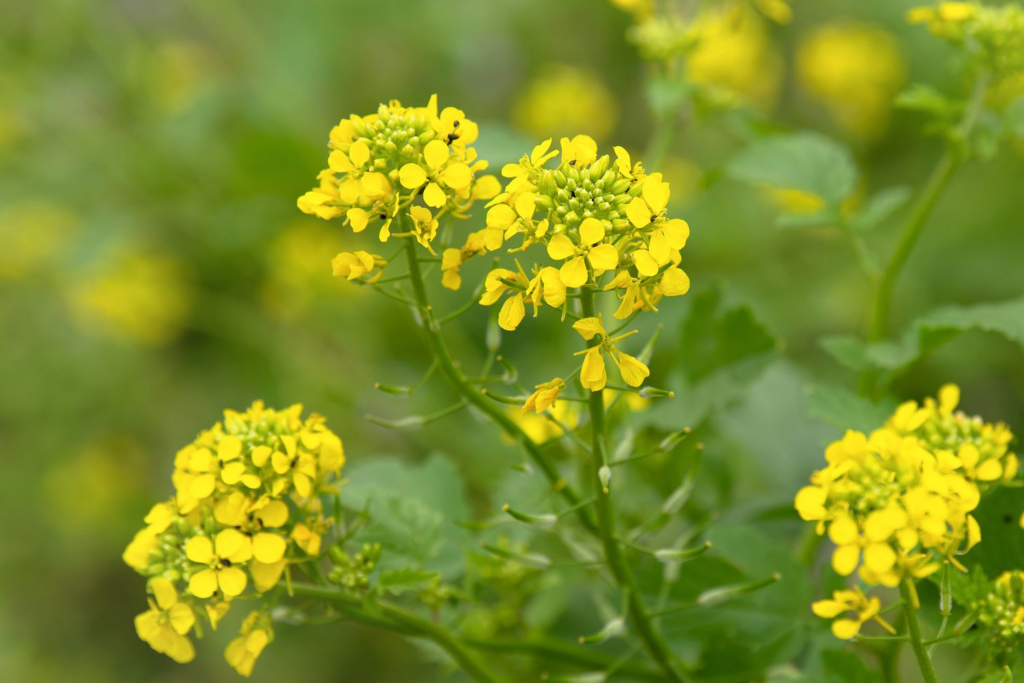
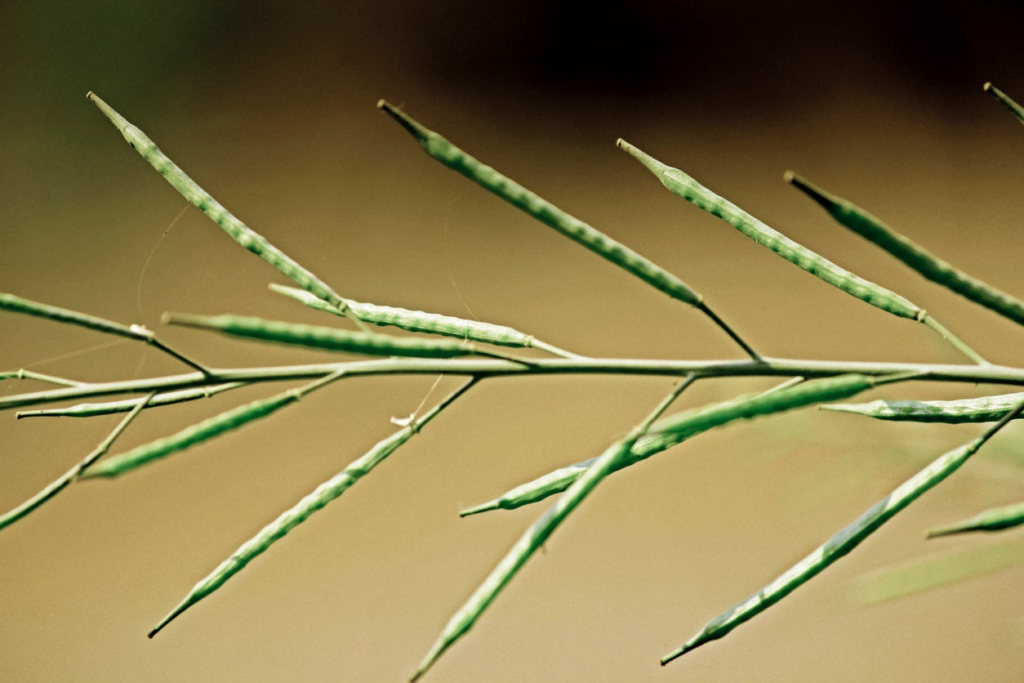
In the field, mustard is easy to recognise during flowering. It carries clusters of bright yellow, four-petaled flowers typical of the cruciferous family. The leaves may be lobed or simple and often have a bluish-green or waxy appearance. Britannica describes Brassica plants generally as pungent herbs with alternate leaves, four-petaled clustered flowers and dry fruits called siliques or silicles. Once the flowers mature, slender pods form, and these pods contain the tiny mustard seeds used in the kitchen and pharmacy.
Ayurvedic Medicines and Formulations Associated with Mustard
Mustard should be understood in two ways: first as a food-medicine used daily in tiny culinary amounts, and second as a classical ingredient used in Ayurvedic formulations under professional guidance. The Ayurvedic Pharmacopoeia lists mustard seed in important formulations such as Mahā Yogarāja Guggulu, Kārpāsasthyādi Taila, Kumkumādi Taila, Prabhanjana Vimardana Taila and Vajraka Taila.
Mustard oil is also listed as an ingredient or base in formulations such as Unmatta Taila, Pañcānana Taila, Sindūrādya Taila, Jīrakādya Taila and Arkamaṇśilā Taila. These are not casual home remedies; many classical oils and formulations are meant for specific conditions, constitutions and methods of use. They should be taken or applied medicinally only after consulting a qualified Ayurvedic physician.
For household health, the safer way to honour mustard is through food: mustard tempering in dal, mustard paste in vegetables, mustard greens in winter, mustard oil in traditional regional cooking where it suits the person, and small quantities of mustard-based pickles with meals. In this form, mustard works quietly and beautifully as a digestive companion.
Practical Health Tips with Mustard
Use mustard in small quantities, because its strength lies in sharpness, not volume. A quarter to half teaspoon of mustard seeds in tempering is often enough for a family dish. Let the seeds crackle properly in oil so their aroma opens and their raw harshness reduces. Pair mustard with turmeric, curry leaves, cumin, fenugreek, ginger, garlic or asafoetida depending on the dish; these combinations show how Indian cooking builds medicinal synergy rather than relying on one ingredient.
Mustard is especially useful in cold seasons, heavy meals and Kapha-type cooking. It suits dishes that feel dense, oily, damp or sluggish. It is excellent with greens, lentils, fish, tubers, rice dishes and fermented foods. Mustard greens are best cooked with warming spices and a little fat, because this improves taste and digestibility.
People with strong acidity, burning sensation, ulcers, active skin inflammation, high Pitta symptoms, mustard allergy or very sensitive digestion should use mustard carefully. Mustard paste applied to the skin can irritate or burn if left too long. Mustard oil should never be used on inflamed skin or near the eyes, and internal medicinal use of mustard oil or concentrated mustard preparations should be guided by a practitioner.
Why Mustard Proves Indian Food Is Medicine
Mustard teaches us one of the greatest truths of Indian food: medicine does not always taste bland. Sometimes medicine is pungent, aromatic, golden, oily, crackling and unforgettable. A mustard tadka is not decorative; it is functional. It wakes the senses before food enters the mouth. It prepares the stomach. It balances heaviness. It brings warmth to cold foods and movement to sluggish meals.
This is why the Indian kitchen is not merely a place of cooking but a place of daily preventive wisdom. Mustard, cumin, turmeric, ginger, asafoetida, curry leaves, pepper and fenugreek are not random flavours. They are a living pharmacopoeia arranged by grandmothers, farmers, vaidyas and cooks across centuries. Mustard is one of the sharpest members of that pharmacy — small in size, fiery in nature, and powerful enough to turn ordinary food into intelligent food.
Sources
Ayurvedic Pharmacopoeia of India, Part I, Vol. III — Sarshapa seed monograph.
Ayurvedic Pharmacopoeia of India, Part I, Vol. VI — Sarshapa Taila / Mustard Oil monograph.
Frontiers in Nutrition — Review on phytochemical components and bioactive functionality of Brassica juncea.
Britannica — Brassica plant description.
You may also like
-
Ayurveda on Cold Foods and Iced Drinks: Why Food Temperature Matters for Digestion
-
Serum Institute of India-Manufactured Ebola Vaccine Enters Clinical Trial in Uganda
-
Ayurveda and Hydration: How Much Water Should We Really Drink?
-
Warm Water in Ayurveda: When and Why It Is Recommended
-
Women Make Up 43% of India’s Ayush Workforce as Sector Supports 17.6 Lakh Livelihoods
