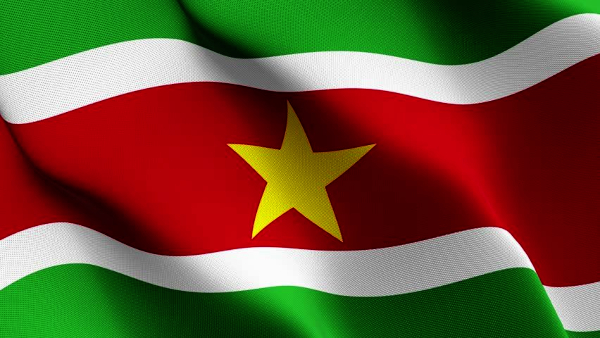
Prime Minister Narendra Modi’s message to the Surinamese-Hindustani community in the Netherlands has once again placed India’s Girmitiya diaspora at the centre of New Delhi’s civilisational diplomacy. Addressing the Indian community in The Hague, he highlighted that Overseas Citizen of India card eligibility for the Surinamese-Hindustani community has been extended from the fourth generation to the sixth generation, a move that carries deep emotional meaning for descendants of Indian indentured workers who left the subcontinent more than 150 years ago.
The significance of this decision lies in the unusual history of the Surinamese-Hindustani people. In 1873, the first group of Indians reached Suriname aboard the ship Lalla Rookh, beginning a long and difficult chapter of migration under the indenture system. Over time, these families built new lives in the Caribbean while preserving Indian languages, rituals, food traditions, music, family structures and sacred memories of their ancestral land. President Droupadi Murmu, during her 2023 visit to Suriname, described the 150th anniversary of Indian arrival in Suriname as a major milestone and recognised the Indian community there as an important pillar of India-Suriname relations.
The OCI extension is more than a technical consular change. Earlier, many descendants of Indian-origin families in Girmitiya countries faced difficulty proving eligibility when their ancestors had migrated four, five or six generations earlier. By extending eligibility up to the sixth generation for Surinamese people of Indian descent, India has acknowledged that civilisational belonging does not disappear simply because paperwork becomes older than family memory. The Embassy of India in Paramaribo has also stated that people of Indian origin up to the sixth generation can now apply for OCI cards there.
For the Surinamese-Hindustani community in the Netherlands, this has a special resonance. The Netherlands is home to a large Surinamese-Hindustani population, many of whom trace their roots to Indian migrants who first arrived in Suriname and later moved to Dutch society after Suriname’s colonial and post-colonial transitions. The Tribune reported that the Netherlands has around 2,00,000 members of the Surinami-Hindustani community, making them a major Indian-origin presence in mainland Europe.
The move also fits into India’s broader policy of reconnecting with the Girmitiya world. At the Pravasi Bharatiya Divas in 2025, PM Modi said the scope of OCI cards was being expanded to include PIOs of the seventh generation from Mauritius and the sixth generation from Suriname, Martinique and Guadeloupe. He also called for deeper documentation of Girmitiya history, including efforts to identify the villages and cities in India from where these communities originated and to preserve their journeys through films, documentaries and research initiatives.
This matters because the Girmitiya story is one of the most emotionally powerful chapters of the Indian diaspora. These were not elite migrants leaving for trade or education; many were ordinary Indians taken across oceans under harsh colonial labour contracts. Yet their descendants preserved fragments of India with astonishing devotion. Bhojpuri songs, Ramayana recitations, Hindu festivals, family ceremonies and Indian food traditions survived in distant lands even when direct contact with India weakened across generations.
The OCI card does not grant Indian citizenship, voting rights or political office in India, but it offers a strong practical and emotional bridge. It allows eligible people of Indian origin to travel to India more easily, live and work in India under OCI rules, reconnect with ancestral places and participate more closely in India’s social, cultural and economic life. For sixth-generation descendants, this is not merely about a travel document; it is about India formally saying that the descendants of those who left under colonial compulsion still belong within the wider Indian civilisational family.
The announcement also strengthens India’s soft-power diplomacy. By reaching out to communities in Suriname, the Netherlands, Mauritius, the Caribbean and other Girmitiya-linked regions, India is building relationships not only through governments but through memory, ancestry and shared heritage. In a world where diaspora networks influence trade, technology, education, tourism and political goodwill, such cultural bridges become long-term strategic assets.
For the Surinamese-Hindustani diaspora, the sixth-generation OCI eligibility marks a restoration of connection. It recognises that their ancestors’ journey from India to Suriname was not the end of their Indian story. It was the beginning of a wider, ocean-crossing chapter in which India continued to live through language, worship, family and memory. By opening the OCI door wider, India is telling those descendants that the bond remains alive.
You may also like
-
US Double Standards in Foreign Policy: 16 Recent Cases Involving India, Russia, China and Global Trade
-
Indian Navy Vice Chief Inspects Japan’s Mogami-Class Stealth Frigate as India-Japan Shipbuilding Cooperation Expands
-
INS Trishul Arrives in UK for Exercise KONKAN 2026 as India and Royal Navy Expand Maritime Cooperation
-
INS Sahyadri Arrives in Russia for Exercise INDRA 2026 to Strengthen India-Russia Naval Cooperation
-
India and Qatar Deepen Strategic Partnership with Focus on Energy Security, Trade and West Asia
