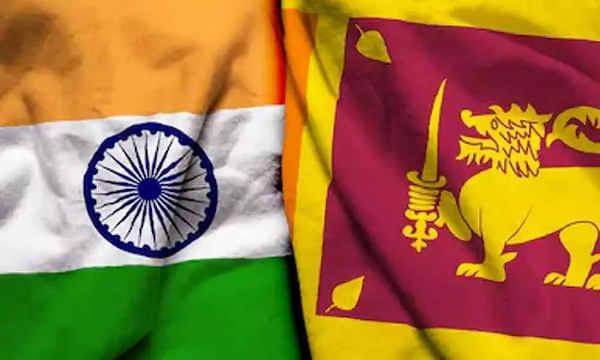
India and Sri Lanka have opened a fresh social-sector dialogue focused on women’s empowerment, child welfare, nutrition, safety and inclusive development, with Union Women and Child Development Minister Annapurna Devi meeting Sri Lanka’s Minister of Women and Child Affairs, Saroja Savithri Paulraj, in New Delhi. The Sri Lankan minister was accompanied by members of the Women Parliamentarians’ Caucus of Sri Lanka during their study visit to India, turning the meeting into a wider exchange on governance, welfare delivery and women-led development.
The meeting was held at the Ministry of Women and Child Development in New Delhi and focused on strengthening bilateral cooperation in women and child development. According to the official statement, the two sides discussed collaboration and exchange of best practices in areas such as gender equality, maternal and child welfare, care economy initiatives and women’s leadership in governance.
The visit is significant because India and Sri Lanka share not only close geographic and cultural ties, but also several similar social-sector challenges. Both countries have to address issues such as women’s safety, child protection, nutrition, maternal health, adolescent development and the economic participation of women. In that sense, the meeting was not just a courtesy interaction; it was an opportunity for both sides to study what works on the ground and how policy systems can be strengthened through institutional cooperation.
A key focus of the interaction was India’s “women-led development” model. Minister Annapurna Devi said India now recognises women as equal partners and active stakeholders in the country’s growth journey, while also underlining the government’s commitment to strengthening institutional mechanisms and welfare frameworks for women and children. The Sri Lankan delegation was briefed on India’s major programmes, including Mission Shakti, Mission Vatsalya and Mission Saksham Anganwadi & Poshan 2.0.
These three missions form the backbone of India’s current women and child development architecture. Mission Shakti focuses on women’s safety, security and empowerment. Mission Vatsalya deals with child protection and welfare, especially for children in difficult circumstances. Saksham Anganwadi & Poshan 2.0 is aimed at improving nutrition and health indicators, particularly for children, adolescent girls, pregnant women and lactating mothers.
This makes the India-Sri Lanka discussion especially relevant for policy learning. For Sri Lanka, India’s experience with large-scale digital welfare delivery, Anganwadi-based nutrition services, women’s safety frameworks and child protection systems could offer useful insights. For India, the engagement provides a platform to strengthen neighbourhood cooperation through social development, not merely through trade, defence, connectivity or diplomacy.
The talks also touched upon the use of digital governance tools and technology-enabled systems to improve service delivery related to women’s safety, empowerment, nutrition and welfare. This is an important point because welfare delivery across South Asia increasingly depends on data systems, beneficiary tracking, grievance mechanisms and last-mile monitoring. In India, digital tools are now being used to support nutrition tracking, service delivery and scheme implementation under women and child development programmes.
The presence of Sri Lanka’s Women Parliamentarians’ Caucus added a governance dimension to the meeting. Women’s leadership in governance was specifically listed as one of the areas of discussion, suggesting that the engagement went beyond welfare schemes and entered the broader question of how women participate in decision-making. For both countries, improving women’s representation in public life remains central to building more inclusive institutions.
Sri Lankan Minister Saroja Savithri Paulraj appreciated India’s initiatives for the empowerment and welfare of women and children and expressed interest in learning from India’s experience and best practices. The two sides reaffirmed their commitment to strengthening institutional cooperation and knowledge-sharing between the two ministries, with the stated objective of advancing inclusive growth and social development.
The meeting also reflects a broader trend in India’s neighbourhood diplomacy. New Delhi’s engagement with neighbouring countries is increasingly being shaped not only by infrastructure and security, but also by capacity building, digital governance, education, healthcare, disaster response and social-sector cooperation. Women and child welfare is a particularly meaningful area for such cooperation because it has direct impact on households, communities and future generations.
For Sri Lanka, which has gone through a difficult economic period in recent years, social protection and community welfare remain critical policy areas. Stronger cooperation with India in women and child development could help create new channels for training, institutional exchange, programme design and community-level welfare delivery. For India, the engagement reinforces its role as a development partner in the neighbourhood, especially in areas where its large-scale public welfare systems can offer practical lessons.
The outcome of the meeting should therefore be seen as the beginning of a deeper policy conversation rather than a one-time diplomatic event. If followed up through technical exchanges, official-level consultations, training programmes and joint learning platforms, India and Sri Lanka could build a meaningful cooperation framework around women’s empowerment, child protection, nutrition, maternal welfare and governance.
In a region where development challenges often cross borders, such cooperation has long-term value. Stronger women and child welfare systems can improve public health, education outcomes, workforce participation and social resilience. The India-Sri Lanka dialogue in New Delhi is therefore important not only for bilateral relations, but also for the larger idea that South Asian cooperation must include the everyday welfare of women, children and families at its centre.
You may also like
-
US Double Standards in Foreign Policy: 16 Recent Cases Involving India, Russia, China and Global Trade
-
Indian Navy Vice Chief Inspects Japan’s Mogami-Class Stealth Frigate as India-Japan Shipbuilding Cooperation Expands
-
INS Trishul Arrives in UK for Exercise KONKAN 2026 as India and Royal Navy Expand Maritime Cooperation
-
INS Sahyadri Arrives in Russia for Exercise INDRA 2026 to Strengthen India-Russia Naval Cooperation
-
India and Qatar Deepen Strategic Partnership with Focus on Energy Security, Trade and West Asia
