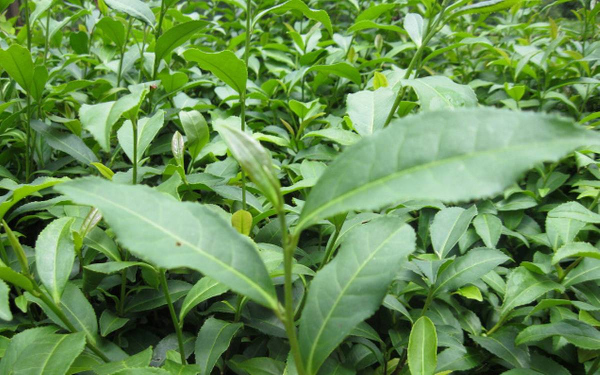
India’s tea export story has brewed a strong global success, with the value of shipments rising by 93% from ₹4,509 crore in 2013-14 to ₹8,719 crore in 2025-26. Union Commerce and Industry Minister Piyush Goyal highlighted the achievement on International Tea Day, describing tea as more than a beverage in India — a part of everyday life, conversations, tradition and identity.
The growth is important because tea is not just another export commodity for India. It is one of the country’s most recognisable cultural products, carrying the identity of regions such as Assam, Darjeeling, Nilgiri, Kangra, Sikkim and the Dooars-Terai belt. Each of these regions contributes a different flavour profile, aroma and market value, helping Indian tea hold its own in competitive international markets.
The latest export figure also reflects the steady globalisation of Indian tea. What was once seen largely as a domestic habit has become an expanding trade opportunity. Indian tea is now consumed across markets in West Asia, Europe, North America, Russia, China and other regions. The growing export value suggests that international buyers are not merely purchasing bulk tea, but increasingly recognising the diversity and quality of Indian varieties.
India’s tea sector had already shown strong momentum in calendar year 2025. Provisional Tea Board data cited by Business Standard showed that India exported 280.40 million kg of tea during January-December 2025, compared with 256.17 million kg in 2024. Export earnings during that calendar year stood at ₹8,488.43 crore, up from ₹7,167.41 crore in the previous year.
This means the sector is showing strength across both volume and value. Higher earnings indicate better demand, improved price realisation and stronger market positioning. The rise also shows that Indian exporters have been able to tap new and expanding markets at a time when global trade conditions remain uncertain.
West Asian demand has played an important role in this expansion. Markets such as the UAE, Iraq and Iran have remained important destinations for Indian tea, while demand from China has also shown a notable pickup. Business Standard reported that exports to Iraq rose to 52.59 million kg in 2025 from 40.47 million kg in 2024, while exports to the UAE increased to 50.71 million kg from 43.48 million kg. Indian tea exports to China also rose sharply to 16.13 million kg in 2025 from 6.24 million kg in the previous year.
The success of Indian tea comes from its natural diversity. Assam tea is known for its strong, malty and full-bodied character. Darjeeling tea is globally recognised for its delicate aroma and muscatel notes. Nilgiri tea adds a fragrant and floral southern profile. Kangra and Sikkim teas bring their own lighter, high-altitude qualities. This regional variety gives India a powerful advantage because the country can serve multiple consumer preferences rather than depending on one uniform product.
However, the real opportunity lies in value addition. India has traditionally exported a large quantity of bulk tea, but the next stage of growth will depend on branding, packaging, specialty blends, wellness teas, organic teas, premium single-origin products and ready-to-consume tea formats. Piyush Goyal has earlier urged the tea industry to develop internationally competitive varieties, strengthen traceability, adopt sustainable farming and increase the share of value-added, branded and packaged teas in domestic and global markets.
This is especially important for small tea growers. If India can move from low-margin bulk exports to higher-value branded products, the gains can flow deeper into tea-growing regions. Better prices, transparent supply chains, testing facilities, quality certification and direct market linkages can help growers receive improved returns for their produce.
The government has also placed focus on worker welfare and sectoral support. News On AIR reported that Goyal referred to a ₹1,000 crore package for tea workers and initiatives such as the Chai Sahayog app, aimed at supporting small growers and improving price realisation.
The export rise also strengthens India’s soft power. Tea is one of the few products that connects economy, agriculture, culture, hospitality and international branding in a single cup. When Indian tea reaches global consumers, it carries not just taste, but also the story of Indian regions, plantations, workers, small farmers and heritage.
The 93% rise to ₹8,719 crore is therefore more than a trade statistic. It signals that Indian tea is finding a wider place in global markets, backed by quality, regional identity and stronger export efforts. With better branding, sustainable cultivation, modern testing, improved packaging and global promotion, India can convert its tea heritage into a higher-value export engine.
For a country where chai is part of daily life, the message is clear: India’s tea story is no longer confined to railway platforms, homes, offices and roadside stalls. It is increasingly becoming a global economic story — one that blends tradition, farmer livelihoods, regional pride and export ambition into one of India’s most familiar symbols.
You may also like
-
EON Space Labs and Dhruva Space Advance Indian Space Hardware on Transporter-18 Mission
-
SatLeo Labs’ TAPAS-1 Reaches Orbit, Advancing India’s Private Thermal-Imaging Capability
-
TakeMe2Space’s MOI-1A Reaches Space on Falcon 9 Transporter-18 Mission
-
Bank of Baroda Enters Pension Fund Management After PFRDA Appointment
-
SCI and India’s Push for a Larger Indigenous Maritime Fleet
