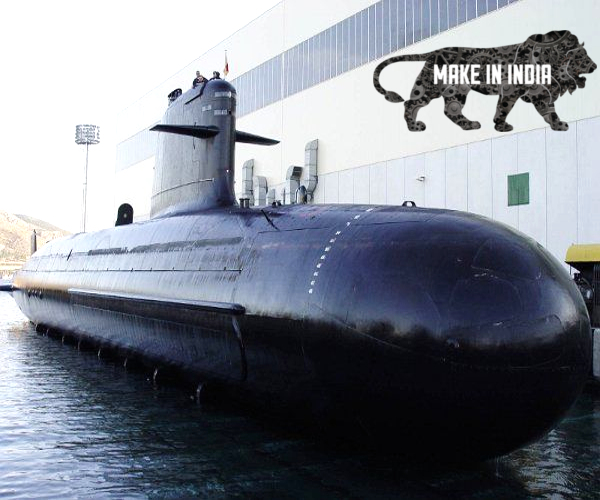
For a conventional submarine, stealth is not only about being hard to hear. It is also about not having to come up and breathe. That is why air independent propulsion, or AIP, matters so much. It gives a diesel-electric boat an additional underwater power source so it does not have to snorkel as often to recharge batteries, reducing one of the biggest exposure windows in submarine operations. Reuters noted in January 2025 that AIP was a key requirement for India’s next conventional submarine programme because it can keep a diesel-electric attack submarine underwater for over two weeks, whereas a conventional boat without AIP must surface or snorkel every few days to recharge. DRDO and PIB have likewise described AIP as a major stealth enhancer because it extends underwater endurance by several folds.
India’s approach is technically significant because it is built around a locally developed phosphoric-acid fuel-cell architecture rather than a noisy mechanical auxiliary engine. PIB’s January 2026 Republic Day release says the system is powered by a phosphoric acid fuel cell with a novel onboard hydrogen generator. In that arrangement, hydrogen and oxygen are fed into the fuel-cell stack, power is generated electrochemically, and the conditioned output is fed directly into the submarine’s power line so the boat can move underwater “silently, without making any noise,” in PIB’s words. Separately, a DRDO technology note on its phosphoric-acid fuel cells says the PAFC is “silent in nature” and suited for underwater onsite power generation. Itt means that India is pursuing an AIP solution whose value lies less in headline speed and more in quiet electrical endurance.
AIP does not turn a conventional submarine into a nuclear boat, nor is it primarily about high-speed sprinting. Technical literature used by MIT’s marine propulsion course notes that current AIP installations are best understood as a low-speed, long-endurance adjunct to conventional submarine performance rather than a full-power replacement for diesel or nuclear propulsion. A 2021 Proceedings article from the U.S. Naval Institute makes the same operational point from another angle: AIP reduces the need to “snort” in patrol areas, cutting the risk of radar and visual detection during the most vulnerable phase of diesel-electric operation. For Indian conditions, that matters because a Kalvari-class boat fitted with AIP becomes far more dangerous as an ambush platform, sea-denial asset, and persistent littoral hunter. It can stay down longer, patrol more patiently, and preserve its batteries for burst manoeuvres instead of burning stealth merely to survive underwater.
The Indian AIP programme has moved through a long but technically meaningful maturation path. In October 2019, PIB said the land-based prototype engineered to the form-and-fit of a submarine had been operated at NMRL in Ambernath in the presence of the Chief of the Naval Staff. Then, in March 2021, DRDO cleared a major milestone when it proved the land-based prototype in both endurance mode and max-power mode as required by the user. That 2021 release added two important technical markers: first, that fuel-cell AIP had performance merits versus other AIP technologies; second, that NMRL’s system was unique because hydrogen is generated onboard. DRDO also identified Larsen & Toubro and Thermax as key industry partners supporting the programme. By January 2023, PIB said the technology had reached a stage of maturity suitable for industrialisation and fitment.
Where the programme stands now is equally important. DRDO’s own industry-partner page says the realisation of energy modules for AIP for P-75 class submarines, along with the detailed design of the AIP plug, is still under progress. It also says the energy module and its sub-systems have already been designed, while the mechanical-system DDR and vetting of the energy module and liquid-oxygen module documents are underway with the submarine designer. That ties directly to the industrial integration effort. In January 2023, DRDO and Naval Group signed an agreement for the detailed design phase and certification of AIP integration on the Kalvari class. In December 2024, the Ministry of Defence followed with a ₹1,990 crore contract to Mazagon Dock Shipbuilders Limited for construction of the AIP plug and its integration onboard Indian submarines. That contract is one of the clearest signs that the programme has moved from laboratory credibility into fleet engineering.
The hardest part, however, is not inventing the fuel cell. It is safely inserting it into a pressure hull designed years earlier. Business Standard reported in March 2026, citing defence sources, that India’s first AIP-fitted submarine is expected to be the second Kalvari-class boat, not the first, and that the installation will involve cutting open the submarine’s hull and plugging in a section to house the technology. The same report said the first boat was already undergoing refit and therefore would not receive the system at present, while the second would enter refit later in the year. That timeline is still source-based rather than a final official delivery announcement, so it should be treated as a target, not a completed milestone. Even so, when read together with DRDO’s statement that plug design and module vetting are under progress, it suggests the programme has entered the decisive phase where metallurgy, weight distribution, buoyancy, shock qualification, integration with submarine services, and post-refit sea trials matter as much as chemistry.
Strategically, this is one of the most important quiet technologies India is developing because it sits at the intersection of stealth, endurance, and sovereign undersea design capability. Project-75 has already delivered six Kalvari-class submarines to the Indian Navy, and the retrofit path now aims to give those boats a much more credible underwater persistence profile. Naval Group’s 2024 annual report says detailed design work on integrating the AIP system on Kalvari-class submarines continued through 2024, while the MoD’s 2025 naval self-reliance review lists DRDO-NMRL’s indigenous AIP as the solution intended for Project-75 integration. In effect, India is trying to domesticate one of the core technologies that separates a good diesel-electric submarine from a truly patient one. And patience, under water, is often the first ingredient of lethality.
You may also like
-
Exercise Tarang Shakti 2026 Concludes in Jodhpur, Showcasing India’s Air Power, Indigenous Defence Technology
-
Indian Navy Vice Chief Inspects Japan’s Mogami-Class Stealth Frigate as India-Japan Shipbuilding Cooperation Expands
-
Philippine Marine Wargames Reportedly Show BrahMos Can Penetrate Chinese Destroyer Air Defences
-
Safran Signs 18 Agreements with Indian Aerospace Suppliers, Expanding Make in India Manufacturing Partnerships
-
Indian Army’s Vajra Corps Certifies First Batch of Drone Operators, Strengthens Battlefield Surveillance
