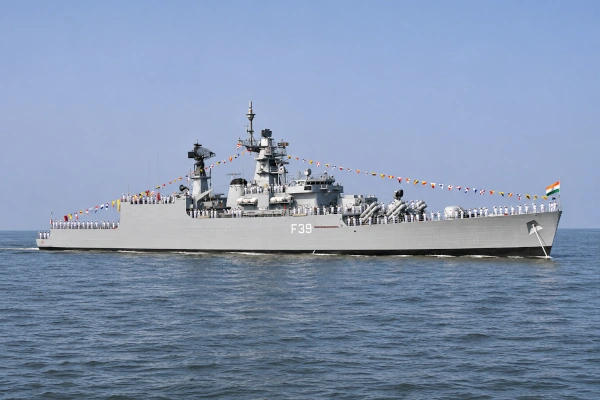
The Ministry of Defence has signed a ₹498.58 crore contract with Cochin Shipyard Limited (CSL) for the normal refit and re-powering of INS Betwa, a Brahmaputra-class frigate of the Indian Navy. The project involves a major transformation of the warship’s propulsion system, replacing its existing steam-based machinery with diesel-engine propulsion, alongside the modernisation of its combat capabilities through an upgraded weapon suite.
The contract was signed in New Delhi on 11 November 2026 in the presence of Defence Secretary Rajesh Kumar Singh. The project represents a significant undertaking in indigenous naval engineering, combining complex propulsion conversion, combat-system modernisation and ship maintenance within a single refit programme.
INS Betwa to Undergo Major Propulsion Transformation
The most significant component of the contract is the replacement of INS Betwa’s existing steam-based propulsion system with a diesel-engine-based propulsion arrangement. Unlike routine machinery maintenance, the conversion involves a fundamental change in the ship’s propulsion architecture and requires extensive engineering integration.
Steam propulsion systems rely on boilers to generate steam, which drives turbines connected to the ship’s propulsion machinery. Diesel propulsion systems instead use internal combustion engines to generate mechanical power, offering a different operating and maintenance framework.
Converting a warship from steam to diesel propulsion involves several interconnected engineering requirements, including machinery integration, fuel and exhaust arrangements, cooling systems, control interfaces and compatibility with the vessel’s existing propulsion equipment.
The transformation is particularly significant because naval propulsion systems must operate reliably under demanding maritime conditions while remaining compatible with the ship’s structural design and operational requirements.
The project will provide Cochin Shipyard with an opportunity to undertake complex propulsion-system transformation on an operational naval platform, further developing domestic expertise in major warship modernisation.
Modernised Weapon Suite to Enhance Combat Capabilities
Alongside the propulsion conversion, INS Betwa will receive an upgraded weapon suite intended to enhance its operational effectiveness. The modernisation will address the ship’s combat capabilities as part of the broader refit programme.
Naval combat systems depend on the coordinated functioning of weapons, sensors, communication equipment and command-and-control arrangements. Modernisation of these systems can improve a warship’s ability to respond to operational requirements and maintain effectiveness throughout its service life.
The Ministry of Defence has confirmed that a modernised weapon suite will be installed aboard INS Betwa. However, the official announcement does not specify the individual weapon systems, equipment configurations or technical capabilities included in the upgrade.
The refit therefore represents a combination of propulsion renewal and combat-capability enhancement, with both elements intended to improve the operational effectiveness of the frigate.
Strengthening India’s Indigenous Naval Repair Capabilities
The INS Betwa project is expected to strengthen India’s ability to undertake technically demanding warship refits within the domestic shipbuilding and ship-repair industry.
Major naval modernisation projects require specialised expertise in marine engineering, mechanical systems, electrical integration, combat equipment and shipboard infrastructure. The ability to execute such work domestically reduces reliance on overseas maintenance facilities and helps retain valuable technical expertise within the country.
Cochin Shipyard Limited, a major Indian shipbuilding and ship-repair enterprise, has established capabilities in constructing and maintaining naval and commercial vessels. The INS Betwa contract adds another complex modernisation assignment to its naval engineering activities.
The propulsion conversion is particularly relevant to the development of indigenous maintenance, repair and overhaul capabilities. Experience gained through such projects can contribute to domestic engineering competence in machinery integration, platform refurbishment and the modernisation of existing naval assets.
The project also highlights the importance of extending the operational utility of existing warships through systematic upgrades rather than relying exclusively on the induction of newly constructed vessels.
More Than 50 MSMEs Expected to Participate
The Ministry of Defence has stated that the INS Betwa modernisation project is expected to involve more than 50 Micro, Small and Medium Enterprises (MSMEs), creating opportunities across India’s shipbuilding and ancillary manufacturing industries.
Large naval refit programmes depend on extensive industrial supply chains involving component manufacturers, engineering contractors, fabrication specialists, equipment suppliers and technical service providers.
The participation of MSMEs can support the domestic production and supply of machinery components, electrical equipment, fabricated assemblies and other materials required for complex ship-maintenance activities.
Such projects also create opportunities for specialised engineering services, skilled technical employment and industrial collaboration between major shipyards and smaller manufacturing enterprises.
The involvement of more than 50 MSMEs is expected to distribute the project’s economic benefits across a wider network of Indian industries while strengthening the supply chains required for naval ship repair and maintenance.
Modernisation of Existing Warships Supports Fleet Readiness
The refit and re-powering of INS Betwa reflects the importance of maintaining the operational effectiveness of existing naval platforms through planned engineering upgrades.
Warships operate for extended periods under demanding conditions, requiring periodic maintenance, machinery refurbishment and technological modernisation. Major refits provide opportunities to address ageing equipment, incorporate newer systems and improve the reliability of essential shipboard machinery.
Propulsion systems are particularly important because they directly influence a vessel’s ability to undertake sustained maritime operations. Replacing older machinery with a different propulsion architecture can offer opportunities to improve maintainability and operational reliability, subject to the final engineering configuration and successful integration.
The simultaneous modernisation of combat equipment is intended to ensure that INS Betwa’s operational capabilities are strengthened alongside its machinery systems.
The project will require coordinated engineering, equipment installation, integration and testing before the modernised frigate can return to operational service.
Advancing Aatmanirbhar Bharat and Make in India
The ₹498.58 crore contract supports the Government of India’s Aatmanirbhar Bharat and Make in India initiatives by placing a complex naval modernisation programme within the country’s domestic shipbuilding and repair ecosystem.
Indigenous execution of major refit projects is an important component of defence industrial self-reliance. While new warship construction remains a major element of naval capability development, the ability to maintain, repair and modernise existing platforms is equally relevant to sustaining long-term fleet readiness.
The INS Betwa programme combines these objectives by bringing together propulsion-system transformation, weapon-system modernisation and domestic industrial participation.
With Cochin Shipyard undertaking the project and more than 50 MSMEs expected to contribute, the contract creates an opportunity to expand India’s specialised naval engineering capabilities while supporting employment and manufacturing activity in associated industries.
The modernisation of INS Betwa represents an important step in developing the technical capacity required to sustain and upgrade India’s naval fleet through indigenous expertise, strengthening the country’s defence maintenance and shipbuilding ecosystem.
You may also like
-
Indian SpaceTech Startup Grahaa Space Develops Indigenous Earth-Observation Satellite Constellation
-
Tamil Nadu Startup Thazhal Develops Satellite and Drone-Based Infrastructure Monitoring Technology
-
Cabinet Extends Stand-Up India Scheme Until 2031 with ₹4,111 Crore Credit Guarantee Corpus
-
Chennai SpaceTech Startup Dream Aerospace Develops Indigenous Spacecraft Propulsion Systems
-
INS Rana and INS Sumedha Join Myanmar Navy for IMNEX-26 at Visakhapatnam
