Research

News on Science, Technology and Research in India

New Plant Species Discovered from Antarctica Named After India

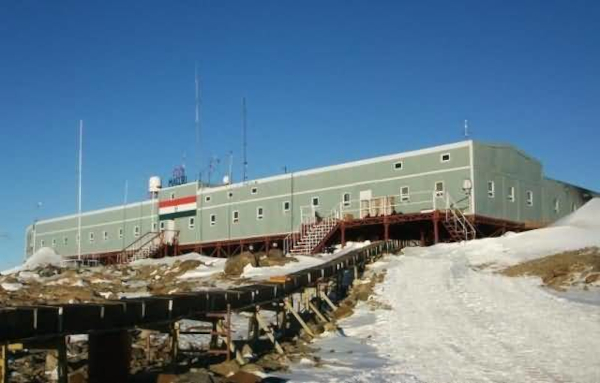
Polar biologists based at Central University of Punjab have discovered a new native species of moss from continental Antarctica. The species is named Bryum bharatiensis– named so as a tribute to the country and India’s Antarctic station Bharati. Felix Bast, Associate Professor and head Department of Botany, Central University, who was part of Indian Antarctic Mission 2016-17 as an expedition scientist, stumbled upon these green plants on rocks near Bharati station at Larsemann Hills, East Antarctica.

DST Inspire Fellow Developing Biomaterials for Bone Tissue Regeneration

A nano biomaterial with a stable link between two molecules or a hormone nanoconjugate called hydroxyapatite-Parathyroid synthesized by Inspire Faculty fellow Dr. Geetanjali Tomar from Savitribai Phule Pune University may soon help tissue regeneration. She has also synthesised and characterised gold nanoparticles (AuNPs) from a microorganism called Actinomycete, Nocardiopsisdassonvillei NCIM 5124.

Molten Iron’s Properties Determined by Its Cooling Period

In a recent study , researchers from the Indian Institute of Technology Bombay (IIT Bombay) proposed an improved model for the cooling of molten spheroidal graphite iron that can optimise the cooling process in iron manufacturing industries for better quality cast iron. The study, published in Metallurgical and Materials transactions B, was partially funded by John Deere India Pvt. Ltd.

Scientists Devise New Strategy for Combating Fungal Eye Infection

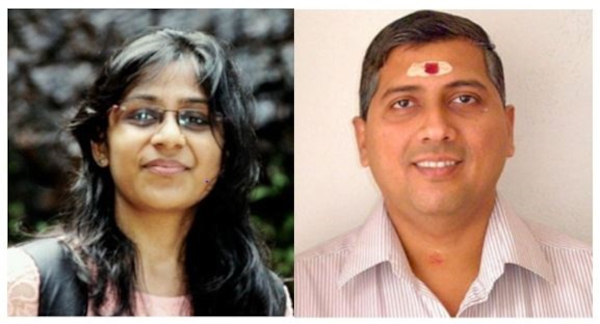
To develop a better antifungal strategy for fungal keratitis, an all-women team of IIT Delhi researchers led by Prof. Archana Chugh from Kusuma School of Biological Sciences (along with her PhD students – Dr. Aastha Jain, Harsha Rohira, and Sujithra Shankar) has been working in collaboration with Dr. Sushmita G Shah, Ophthalmologist and Cornea Specialist from Dr. CM Shah Memorial Charitable Trust and Eye Life, Mumbai.

Study on Social Behavior of Male Asian Elephants

They found that the time spent by male Asian elephants in all-male and mixed-sex groups depended on the age of the male. Adult Asian male elephants preferred to spend their time alone than in mixed-sex or in all-male groups. Besides, old males were found mostly in the company of their age peers and less frequently with young males (15 to 30 years of age). Also, young males did not disproportionately initiate associations with old males.

Study Could Help Beat Multi-Drug Resistance

The scientists at IISER, Yashraj Chavhan, Sarthak Malusare, and Sutirth Dey conducted their study on E Coli bacteria. They grew samples of the bacteria with varying population sizes across different environments and then subjected them to whole-genome, whole-population sequencing analysis. They found that samples with a small population size acquired a certain set of mutations which allow them to survive in a certain environment but not in others.

Researchers Devise Economical Method to Extract Hydrogen from Water

In a recent study , the researchers from the Indian Institute of Technology Bombay (IIT Bombay) have used a new catalyst for extracting hydrogen from water. Researchers have demonstrated how a magnetised catalyst can speed up hydrogen production while bringing down the energy cost. They showed that their chosen catalyst had increased the speed of producing hydrogen and reduced the energy required to do so, compared to previous studies.