Cabinet Approves Continuation Of Phase 4 Of GSLV
The GSLV Programme – Phase 4 will enable the launch of 2 tonne class of satellites for Geo-imaging, Navigation, Data Relay Communication and Space Sciences.
News on Science, Technology and Research in India
The GSLV Programme – Phase 4 will enable the launch of 2 tonne class of satellites for Geo-imaging, Navigation, Data Relay Communication and Space Sciences.
In a world where pollution caused by textiles is a major threat, a brand specialising in eco-friendly fabrics claims it can be a better option for the environment
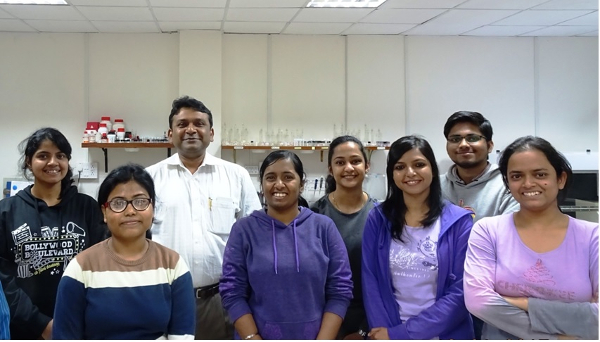
The research team has discovered a stem cell protein called ‘asrij’ (meaning blood in Sanskrit), has found it plays a key role in preventing myeloproliferative disease, a condition characterised by excessive production of mature blood cells, reports TOI.
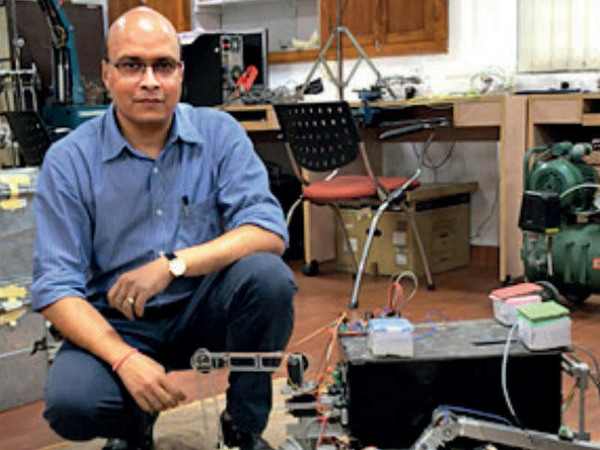
Researchers, Associate Professor Viswanath Balakrishnan and his research scholar Piyush Avasthi, at the Indian Institute of Technology (IIT), Mandi, have developed aligned carbon nanotube-based electrodes that could be used in high energy supercapacitors.
The Madden-Julian Oscillation (MJO) is an eastward moving disturbance of clouds, rainfall, winds, and pressure. It circles the planet along the tropical belt in 30-80 days. During its global ride, it intensifies over three regions – the eastern Indian Ocean, south of the maritime continent and the western Pacific Ocean and transfers a part of its energy to the underlying ocean.
An Indian rocket on Monday placed domestic and foreign satellites in three different orbits on
By the time symptoms of dementia are detected, it is too late — Alzheimer’s disease kicks in and it can’t be managed. But if dementia is caught early, we can delay the progression of Alzheimer’s.
The star-marker has a star by name Dhanushira to the South of another star called Dhanukoti. While the latter is found in almost all astrolabes (and is identified with a bright star called Alpha Oph, Arabic name Ras Alhague), Dhanushira is exclusive to this astrolabe. Its position matches with that of the 1604 supernova.
The Centre for Development of Advanced Computing (CDAC) is in the final stage of creating India’s first 64-bit quad core microprocessor to end the country’s dependence on imported microprocessors and assure better data security.
The process to indigenously build the system under the Microprocessor Development Programme took 18 months at a cost of Rs85 crore.
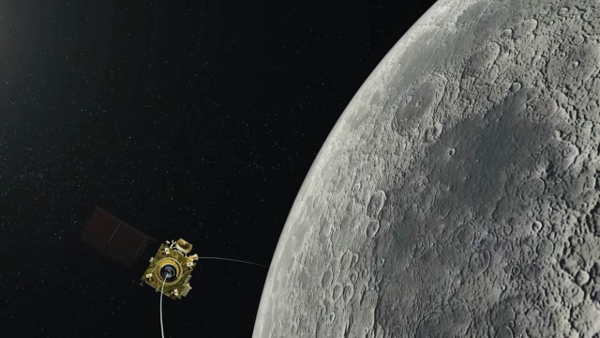
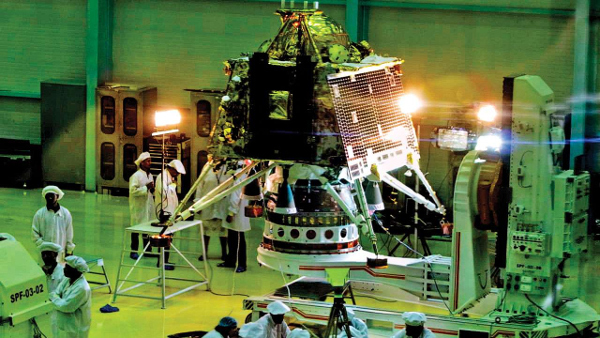
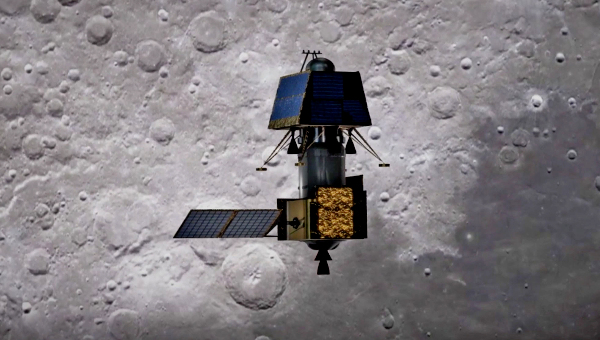
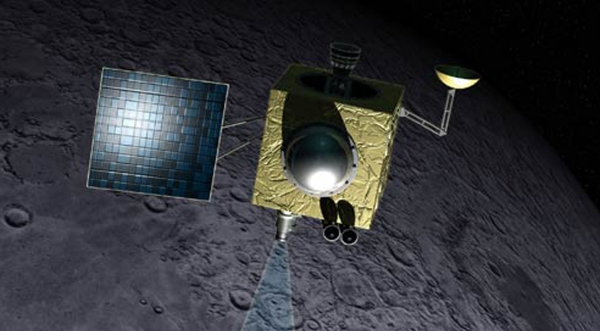
Chandrayaan 2 will carry NASA-owned laser retroreflector arrays that allow scientists to make precise measurements of the distance to the Moon, the US space agency officials said, during the Lunar and Planetary Science Conference held in Texas, the space.com reported.