Young Scientists to Advise Apex Council
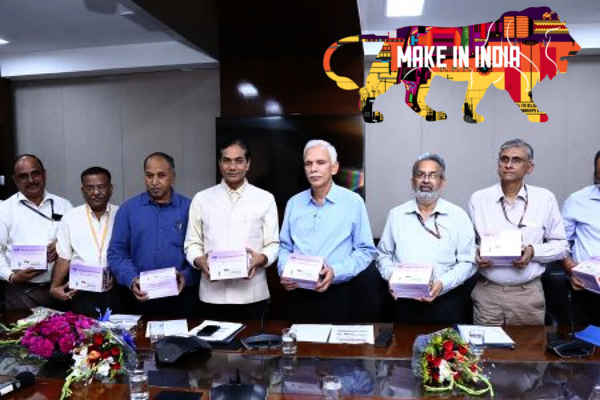
Instituted in September 2018, PMSTIAC comprises nine science experts, 11 ex-officio secretaries from different ministries, and a member nominated by PSA.
News on Science, Technology and Research in India
Instituted in September 2018, PMSTIAC comprises nine science experts, 11 ex-officio secretaries from different ministries, and a member nominated by PSA.
Nitroaromatics are industrial-class chemicals used widely in making dyes, pesticides and polymers. However, they also
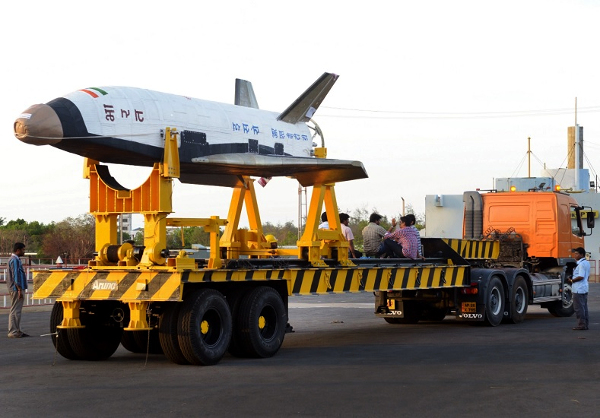
As announced by Prime Minister Narendra Modi in his Independence Day address on August 15, 2018, the space agency will send three astronauts, including a woman, in a capsule into space around the earth’s orbit for a week-long rendezvous by December 2021 or 2022, which marks the country’s 75th year of independence.
Domestic crude oil production is currently insufficient to meet India’s energy demands, said Jitendra Sangwai, Professor, Department of Ocean Engineering, IIT Madras.
The new study has shown that vitamin D deficiency alone can lead to heart failure, possibly through insulin resistance. It has found that cardiac insulin leads to functional deterioration of heart in animals with low vitamin D levels. The utilization of glucose and fatty acids – key fuels for energy generation in heart – is adversely affected due to insulin resistance in heart cells.
Stethoscope, heart monitor, pacemaker…Some of the world’s greatest medical inventions were the result of doctors who used design thinking to solve pressing medical problems. In India, too, doctors are innovating to make health-tech that’s more suited to local conditions, as well as more affordable.
ISRO chairman, Dr K Sivan talked about the low budget of the mission, saying, “Simplifying the system, miniaturising the complex big system, strict quality control and maximising output from a product make our space missions frugal and cost-effective.”
Ganga Hospital Spine Research Team, headed by Dr.S. Rajasekaran, Coimbatore, has won the prestigious North
Satellite ‘RISAT-2B’ will beef up India’s surveillance capabilities in the sky and help track and tackle hostile activity, such as infiltration or gathering of militants
“This RISAT-2B launch on board PSLV-C46 rocket on May 22 is unique as it will be placed in an orbit of 555 km at an inclination of 37 degrees. This inclination supports surveillance better. We are also hiring a ground station in Australia for this launch, for tracking the PSLV during its terminal phase and to watch satellite separation,” Vikram Sarabhai Space Centre (VSSC) director S Somanath told TOI.