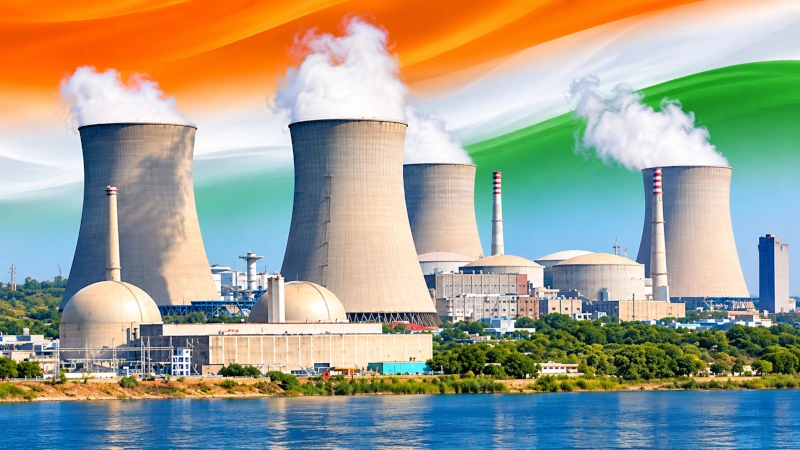
India’s indigenous nuclear power programme has achieved another important regulatory milestone, with the Atomic Energy Regulatory Board (AERB) granting permission for the First Approach to Criticality (FAC) of Rajasthan Atomic Power Project Unit 8 (RAPP-8) at Rawatbhata in Rajasthan.
The approval was granted on 19 November 2026 following the satisfactory completion of prescribed safety reviews. The Department of Atomic Energy announced the development on 20 November, describing it as a significant stage in the commissioning of the country’s indigenous 700-megawatt electrical (MWe) Pressurised Heavy Water Reactor (PHWR) programme.
RAPP-8 is the fourth reactor built using India’s indigenously designed 700 MWe PHWR technology. The development marks further progress in expanding the country’s nuclear electricity generation infrastructure through domestically developed reactor systems.
AERB Completes Comprehensive Reactor Safety Review
The Atomic Energy Regulatory Board granted permission following a detailed assessment of the reactor’s design, construction, commissioning test results and operational preparedness.
According to the Department of Atomic Energy, the regulatory process involved multiple levels of technical evaluation, including assessments conducted by AERB and its specialised safety review committees.
The review also included regulatory inspections and deliberations by the Board of AERB before the necessary permission was granted.
These assessments are intended to establish whether the reactor meets the prescribed safety requirements for progressing to the next stage of commissioning.
The approval confirms that RAPP-8 has satisfactorily completed the safety reviews required for the First Approach to Criticality. However, it does not mean that the reactor has already achieved criticality or commenced electricity generation.
What Is the First Approach to Criticality?
The First Approach to Criticality represents one of the most important stages in commissioning a nuclear power reactor.
In nuclear engineering, criticality refers to the condition in which a controlled nuclear fission chain reaction becomes self-sustaining.
During nuclear fission, the nucleus of an atom splits into smaller nuclei, releasing energy and neutrons. Some of these neutrons can initiate further fission reactions, producing a controlled chain reaction within the reactor core.
A reactor reaches criticality when the chain reaction sustains itself at a stable level without requiring an external neutron source to maintain the process.
This condition is necessary for the controlled production of nuclear energy, which can subsequently be used to generate electricity.
The First Approach to Criticality involves carefully controlled commissioning procedures designed to establish this condition while monitoring reactor behaviour and safety parameters.
The process is conducted under strict regulatory supervision and requires compliance with prescribed operating procedures.
Permission for the First Approach to Criticality therefore represents an important step towards reactor operation, but it is distinct from achieving criticality, synchronising with the electricity grid or beginning commercial power generation.
RAPP-8 Is India’s Fourth Indigenous 700 MWe Reactor
Rajasthan Atomic Power Project Unit 8 belongs to India’s indigenously developed series of 700 MWe Pressurised Heavy Water Reactors.
The first two reactors of this design were constructed at the Kakrapar Atomic Power Station in Gujarat as Units 3 and 4.
The third reactor in the series is Rajasthan Atomic Power Project Unit 7, located at Rawatbhata.
RAPP-8 is the fourth reactor developed using this standardised Indian reactor design.
The technology represents an important advancement in India’s domestic nuclear engineering capabilities, incorporating experience gained from earlier generations of Indian pressurised heavy water reactors.
The 700 MWe design provides greater electricity generation capacity than the earlier 220 MWe and 540 MWe PHWR designs developed and deployed in India.
The reactor series also reflects the country’s experience in nuclear plant engineering, specialised equipment manufacturing, construction and reactor safety systems.
How India’s Pressurised Heavy Water Reactors Work
Pressurised Heavy Water Reactors use natural uranium as nuclear fuel and heavy water as a neutron moderator and coolant.
Heavy water contains deuterium, a heavier isotope of hydrogen, and is used to slow down neutrons produced during nuclear fission.
Slowing these neutrons increases the likelihood that they will cause further fission reactions in the reactor fuel, allowing a controlled nuclear chain reaction to be sustained.
The reactor’s cooling system transfers heat generated by nuclear fission to equipment that produces steam for electricity generation.
The steam drives a turbine connected to an electrical generator, converting thermal energy into electrical energy.
The use of natural uranium fuel and domestically developed reactor technology has been an important feature of India’s nuclear energy programme.
Over several decades, Indian scientists and engineers have progressively developed expertise in reactor design, heavy water technology, nuclear fuel fabrication and associated engineering systems.
The indigenous 700 MWe PHWR programme builds upon these capabilities while increasing the generating capacity of individual reactor units.
Rawatbhata Strengthens Its Position in India’s Nuclear Energy Infrastructure
RAPP-8 is located at the Rawatbhata nuclear power complex in Chittorgarh district of Rajasthan.
The site is one of India’s established nuclear power locations and has played an important role in the development and operation of the country’s pressurised heavy water reactor technology.
According to the Department of Atomic Energy, the Rawatbhata site currently comprises eight nuclear power plant units.
The addition of the indigenous 700 MWe reactor design represents an important stage in the continuing development of the complex.
The successful progression of RAPP-8 through regulatory commissioning stages will contribute to the expansion of nuclear electricity generation capacity once the reactor completes the necessary testing and obtains the required operational approvals.
The project also contributes to the broader deployment of standardised indigenous nuclear reactor technology across different locations in India.
Further Commissioning Stages Required Before Electricity Generation
Following the approval for the First Approach to Criticality, RAPP-8 must complete subsequent commissioning activities before entering commercial operation.
These activities include prescribed reactor tests, technical assessments and regulatory reviews intended to verify the safe performance of the reactor and associated systems.
The Atomic Energy Regulatory Board will continue supervising the commissioning process through safety reviews, regulatory inspections and monitoring by its resident site observer team.
The regulator has stated that subsequent commissioning phases will proceed only after the satisfactory completion of the required tests and the granting of necessary regulatory permissions.
This phased approach ensures that the reactor’s operational performance is assessed before it advances towards electricity generation.
The Department of Atomic Energy has not announced a date for the achievement of first criticality or the commencement of commercial electricity generation by RAPP-8.
Indigenous Nuclear Technology Supports India’s Energy Infrastructure
India’s nuclear power programme is an important component of the country’s long-term energy development strategy.
Nuclear power plants provide electricity without the direct carbon dioxide emissions associated with fossil-fuel combustion during power generation.
Unlike solar and wind energy installations, nuclear reactors can provide continuous electricity generation when operating normally, subject to maintenance requirements and scheduled outages.
This characteristic makes nuclear power a potential complement to renewable energy sources within a diversified electricity generation system.
India’s indigenous pressurised heavy water reactor programme also supports domestic industrial capabilities in specialised steel production, heavy engineering, precision manufacturing, reactor components, electrical systems and construction.
The standardisation of the 700 MWe PHWR design provides opportunities to apply engineering experience across multiple reactor projects.
These capabilities are important for strengthening domestic participation in the nuclear energy industry and supporting the development of advanced engineering expertise.
Another Milestone for India’s Indigenous Nuclear Power Programme
The Atomic Energy Regulatory Board’s approval for the First Approach to Criticality of RAPP-8 marks an important advancement in the commissioning of India’s fourth indigenous 700 MWe Pressurised Heavy Water Reactor.
The clearance follows comprehensive regulatory assessments covering reactor design, construction, commissioning test results and operational preparedness.
With the required permission now granted, the reactor can proceed towards the next stage of commissioning under continued regulatory supervision.
The development reflects India’s sustained investment in indigenous nuclear engineering and its ability to design and construct higher-capacity pressurised heavy water reactors.
As RAPP-8 progresses through the remaining commissioning stages, the project will contribute to the continuing expansion of India’s domestic nuclear power infrastructure and strengthen the country’s capabilities in advanced energy technology.
You may also like
-
SG Defence Secures Manufacturing Order for Indigenous Pinaka Mk-I Rocket Nozzles
-
Voltas and Atomberg Sign ₹200 Crore Joint Venture Agreement for Indigenous AC Compressors
-
Sunita Tools Secures Defence Licence for 81–155 mm Artillery Shells, Reports ₹550 Crore Order Book
-
Rossell Techsys Secures ₹50 Crore-Plus Overseas Order for Satellite Electrical Systems
-
SSS Defence Emerges as Lowest Bidder for Indian Army Counter-Drone Shotgun Procurement
