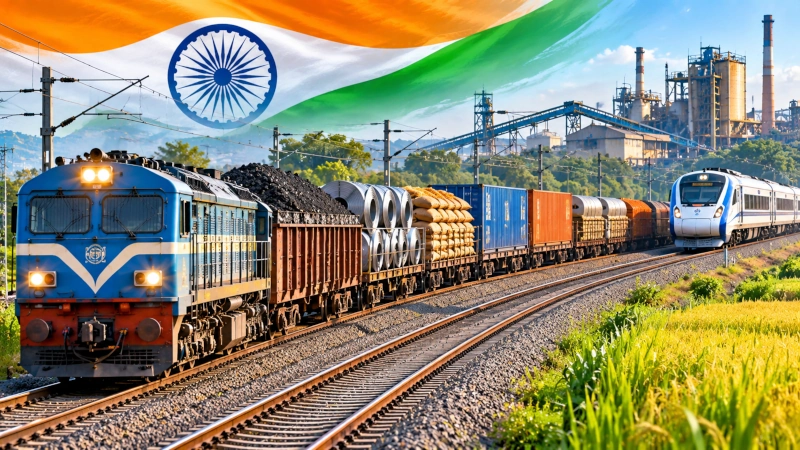
Indian Railways achieved its highest-ever freight loading for the month of October, transporting 145.07 million tonnes (MT) of goods during October 2026, representing an increase of 8.32% over the corresponding month of the previous year. The performance reflects growing demand for railway transportation across major industrial and agricultural sectors, reinforcing the importance of the national railway network in supporting India’s economic activity and logistics requirements.
According to figures released by the Ministry of Railways on 4 November 2026, freight loading increased from 133.93 MT in October 2025 to 145.07 MT in October 2026, an addition of 11.14 MT. The growth was supported by increased transportation of domestic coal, foodgrains, clinker, iron ore, petroleum products, finished steel and containerised cargo. The Ministry attributed the performance to continuing capacity augmentation and improvements in railway operations, which have strengthened the network’s ability to accommodate expanding freight requirements.
Coal and Foodgrain Transportation Register Strong Growth
Domestic coal emerged as a major contributor to the increase in freight traffic, recording year-on-year growth of 16% during October 2026. The expansion was accompanied by a significant increase in coal transportation to thermal power stations, reflecting the important role of Indian Railways in maintaining fuel supplies for electricity generation.
To meet the requirements of power stations, Indian Railways transported an average of 469.8 domestic coal rakes per day during October 2026, compared with 393.2 rakes per day in October 2025. This represented an increase of 19.5%, demonstrating the expansion of railway-based coal supply operations. Reliable transportation of coal remains essential for supporting electricity generation, particularly as industrial production, infrastructure development and domestic power consumption create substantial demand for energy.
Foodgrain transportation also registered particularly strong growth, increasing by 26.3% compared with October 2025. The expansion highlights the railway network’s role in moving agricultural commodities across the country and supporting the movement of food supplies between production centres, storage facilities and consumption markets.
Other important commodity categories recorded higher freight volumes during the month. Clinker transportation increased by 10.4%, while iron ore loading rose by 5%. The movement of mineral oil expanded by 1.9%, and finished steel recorded growth of 0.5%. These commodities are closely associated with industrial manufacturing, construction, infrastructure development and energy supply, making their transportation an important component of India’s broader economic activity.
Containerised Cargo and Other Goods Contribute to Freight Expansion
Beyond conventional bulk commodities, Indian Railways recorded an increase in containerised cargo transportation during October 2026. Domestic container loading rose by 6.3%, reflecting additional freight movement through railway-based logistics services.
The category classified as Balance Other Goods registered growth of 11%, indicating increased transportation activity across commodities outside the principal bulk freight categories. This expansion is important because it demonstrates the railway system’s involvement in moving a broader range of goods serving manufacturing enterprises, commercial establishments and domestic distribution networks.
Container transportation is an important element of modern logistics because it allows goods to move between railway terminals, road transport systems, manufacturing facilities and distribution centres through standardised handling arrangements. Greater use of railway-based container services can help businesses integrate rail transportation into their wider supply chains, particularly for longer-distance freight movements.
The growth across both bulk and non-bulk commodities illustrates the diverse requirements served by Indian Railways. Coal, minerals and construction materials continue to account for substantial freight traffic, while containerised cargo and other goods provide opportunities for extending railway participation in domestic logistics.
Freight Loading Approaches 979 Million Tonnes in First Seven Months of FY2026–27
The strong October performance contributed to higher cumulative freight transportation during the first seven months of the current financial year. Between April and October 2026, Indian Railways transported 978.78 MT of freight, compared with 935.10 MT during the corresponding period of FY2025–26.
The increase of 43.68 MT represented cumulative growth of 4.67%, demonstrating sustained expansion in railway freight movement during the financial year. The figures indicate that the October performance formed part of a broader increase in goods transportation rather than an isolated monthly development.
The cumulative loading figures are particularly relevant to India’s industrial and infrastructure sectors because railways provide an essential transportation link for commodities used in manufacturing, electricity generation, steel production, construction and agricultural distribution. Freight movement connects mines, factories, ports, warehouses and consumption centres, supporting the movement of raw materials and finished products across extensive geographical distances.
The continuing expansion of freight loading also underscores the importance of investments in railway capacity, terminal infrastructure and operational efficiency. As industrial production and domestic commerce expand, the ability to transport larger quantities of goods through an integrated national railway network becomes increasingly important for logistics planning and supply-chain management.
Passenger Traffic Rises to 64.72 Crore During October
Alongside the increase in freight transportation, Indian Railways recorded growth in passenger mobility during October 2026. The national transporter carried 64.72 crore passengers during the month, compared with 63.52 crore passengers in October 2025, representing an increase of 1.20 crore passengers.
Passenger movement also expanded during the April–October period. Indian Railways transported 443.8 crore passengers during the first seven months of FY2026–27, compared with 431.4 crore during the corresponding period of the previous financial year. The increase of 12.4 crore passengers reflects continued growth in demand for railway services across the country.
The Ministry of Railways reported that the non-suburban passenger segment registered growth of 4.2%, while suburban passenger traffic increased by 1.7%. The figures demonstrate the importance of both long-distance railway connectivity and metropolitan commuter services within India’s passenger transport system.
The simultaneous expansion of freight and passenger traffic reflects the extensive operational responsibilities of Indian Railways. While freight services support industrial supply chains and commodity transportation, passenger operations remain essential for daily commuting, intercity travel, regional connectivity and economic mobility.
Railway Capacity Expansion Supports India’s Growing Logistics Requirements
The October 2026 freight performance highlights the importance of strengthening railway infrastructure to support India’s expanding industrial and commercial transportation needs. Higher freight volumes require efficient train operations, adequate terminal capacity, reliable signalling systems and sufficient infrastructure to accommodate goods movement alongside passenger services.
Indian Railways has been undertaking major infrastructure development programmes involving network modernisation, track capacity enhancement, electrification, dedicated freight corridors and improvements in railway operations. These initiatives are intended to increase transportation capacity, improve network efficiency and strengthen connectivity between industrial centres, ports and major consumption markets.
Dedicated freight infrastructure is particularly relevant to the transportation of bulk commodities and containerised goods. By creating additional capacity for freight operations, such infrastructure can facilitate the movement of larger cargo volumes while improving the organisation of passenger and freight services across the railway network.
The growth in coal, foodgrain, mineral and container traffic demonstrates the significance of these investments for India’s economy. Efficient railway transportation supports industries that depend on the timely delivery of raw materials and helps connect agricultural production areas with markets and distribution networks.
Indian Railways Strengthens Its Role in National Economic Development
The transportation of 145.07 MT of freight during October 2026 represents an important milestone in Indian Railways’ operational performance. The 8.32% increase over October 2025, combined with cumulative freight loading of 978.78 MT during April–October, reflects the railway network’s expanding role in supporting industrial activity, energy supplies, agriculture and domestic commerce.
The growth in domestic coal transportation is especially significant for electricity generation, while increased foodgrain, mineral, steel and container movements demonstrate the network’s importance across different sectors of the economy. The simultaneous rise in passenger traffic further illustrates the scale of services provided by India’s national railway system.
As India continues to expand its manufacturing capabilities, infrastructure networks and domestic supply chains, railway freight transportation remains central to the movement of essential commodities and industrial goods. The latest figures demonstrate how improvements in capacity and operational performance are enabling Indian Railways to accommodate greater transportation demand while supporting the country’s wider economic development.
You may also like
-
Indian Fintech Startup Decentro Launches Advanced UPI Soundboxes with Dynamic QR and Contactless Payment Capabilities
-
OneStack Enables Indian Cooperative Banks to Access UPI Network Directly Through Indigenous Banking Technology
-
IIT Bombay-Incubated Peppermint Robotics Raises ₹100 Crore to Expand Indigenous Robot Manufacturing and Global Operations
-
Tata Power Commissions 300 MW Solar Project in Karnataka, Expands Renewable Energy Portfolio to 12 GW
-
India’s Manufacturing Corporate Sector Records 9.28% GVA Growth in FY2024–25
