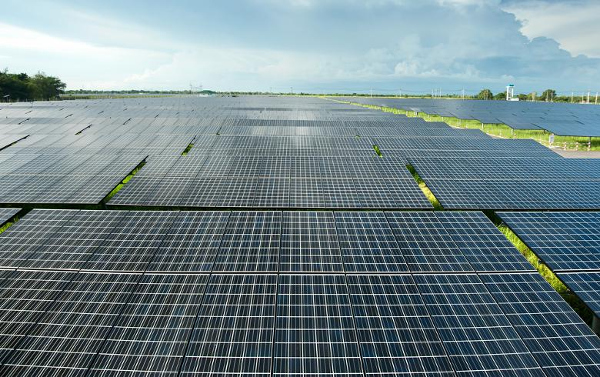
India’s solar manufacturing industry has the potential to emerge as a major global manufacturing and export hub by 2047, generating approximately 32.3 lakh direct and indirect jobs and attracting $89 billion in new investments, according to a long-term industrial development roadmap released by the Indian Solar Manufacturers Association (ISMA). The report outlines a strategy for building an integrated domestic solar manufacturing ecosystem capable of producing everything from polysilicon and semiconductor wafers to finished solar cells, modules and complete photovoltaic systems.
Titled Vision 2047: Solar Manufacturing from Polysilicon to Power Plant, the report presents an ambitious pathway for expanding India’s domestic solar manufacturing capabilities while reducing dependence on imported components. The proposed transformation would enable Indian manufacturers to participate in every major stage of the photovoltaic value chain, capture a greater proportion of industrial value addition and strengthen the country’s position in international renewable energy markets.
Building a Complete Indigenous Solar Manufacturing Ecosystem
India’s solar manufacturing industry has expanded substantially in recent years, supported by growing domestic demand, manufacturing incentives and increasing private investment. However, much of the country’s production capacity remains concentrated in assembling finished solar modules, while several upstream components continue to depend significantly on international suppliers.
The photovoltaic manufacturing process begins with the production of high-purity polysilicon, which is converted into ingots and subsequently sliced into thin wafers. These wafers are processed into solar cells capable of converting sunlight into electricity, before being assembled into modules suitable for installation in power-generating systems.
Developing domestic manufacturing capabilities across these interconnected stages is central to ISMA’s proposed industrial strategy. The association argues that deeper integration would enable India to retain more economic value within the country while strengthening the resilience of its solar manufacturing supply chains.
This approach also aligns with the broader emphasis on advanced manufacturing identified in NITI Aayog’s August 2026 study, Key Sectors to Position India as a Global Manufacturing Hub. The government-supported study identified significant upstream import dependence in India’s photovoltaic industry and highlighted the importance of strengthening domestic production across the manufacturing value chain.
Solar Power Capacity Could Reach 2,275 GW by 2047
Under ISMA’s Vision 2047 scenario, India’s cumulative installed solar power capacity could reach approximately 2,275 gigawatts by 2047. This represents a major expansion of the country’s solar electricity infrastructure and would create substantial demand for photovoltaic equipment, specialised materials and associated manufacturing technologies.
To support the proposed expansion, the association envisages manufacturing capacities equivalent to approximately 3,266 GW for solar modules, 2,796 GW for solar cells, 2,479 GW for ingots and wafers, and 2,156 GW for polysilicon by 2047.
These figures represent the manufacturing capacity envisaged under the long-term scenario, not equipment already manufactured or facilities currently operating in India. They also differ from installed electricity generation capacity, which measures the rated output of deployed solar power systems rather than manufacturing infrastructure.
The roadmap envisages the progressive development of a domestic supply chain capable of meeting India’s photovoltaic requirements within the next decade. Beyond domestic demand, additional manufacturing capacity would support exports to international markets as countries continue expanding renewable electricity generation.
A fully integrated industry could also strengthen domestic capabilities in precision engineering, materials processing, semiconductor manufacturing equipment and advanced industrial automation.
Solar Manufacturing Employment Could Increase to 32.3 Lakh
Employment generation is among the most significant opportunities identified in the Vision 2047 report. ISMA estimates that total direct and indirect employment associated with solar manufacturing could increase from approximately 4.1 lakh currently to 8.1 lakh by 2030 and 32.3 lakh by 2047.
The expansion would create opportunities across manufacturing plants, industrial equipment production, materials processing, component supply chains, engineering services and supporting industries. Developing a complete photovoltaic manufacturing ecosystem would require a workforce with capabilities extending beyond conventional module assembly.
Direct employment within solar photovoltaic manufacturing facilities is projected to increase from approximately 1.4 lakh to 11.1 lakh by 2047. The association estimates that nearly 68% of these direct jobs could be concentrated in upstream manufacturing activities, including polysilicon processing, ingot and wafer production, and solar cell fabrication.
These activities require specialised industrial expertise, including materials engineering, chemical processing, precision manufacturing, industrial maintenance and quality assurance. The proposed expansion could therefore support the development of a larger technically skilled manufacturing workforce.
The employment projections cover the broader manufacturing ecosystem and should not be interpreted as confirmed recruitment commitments by individual companies. They describe the workforce requirements associated with the industrial expansion envisaged under ISMA’s development scenario.
$89 Billion Investment Envisaged for Manufacturing Expansion
The proposed roadmap estimates that India would require approximately $89 billion in new photovoltaic manufacturing investments by 2047. This represents an average annual investment requirement of around $4.3 billion between 2027 and 2047.
Nearly 70% of the proposed investment would be directed towards upstream manufacturing, particularly polysilicon, ingots, wafers and solar cells. These segments require substantial industrial infrastructure, specialised production equipment and technology-intensive manufacturing processes.
The investment programme would involve the establishment of new manufacturing facilities, expansion of existing production lines and development of supporting infrastructure for industrial materials, testing and equipment manufacturing.
ISMA also highlights the contribution of the government’s Production Linked Incentive scheme for high-efficiency solar photovoltaic modules. According to figures presented by the association, PLI-supported manufacturing initiatives had attracted approximately $8.4 billion in investment by June 2026.
The report estimates that each dollar of government incentive has mobilised approximately four dollars in private investment. The figure illustrates the association’s assessment of the scheme’s investment-mobilisation effect, although it should be distinguished from independently verified investment expenditure.
The proposed $89 billion represents an industry investment requirement under the Vision 2047 pathway rather than a single government allocation or financing package already approved.
Reducing Solar Component Imports by 2041
Strengthening domestic production of upstream photovoltaic components is central to the report’s objective of reducing India’s dependence on imported solar manufacturing inputs.
ISMA estimates that India’s annual solar import bill, currently assessed at approximately $4.4 billion, could decline to zero by 2041 under the proposed development pathway. This projection assumes that domestic manufacturing expands sufficiently to meet the country’s requirements across the principal stages of the photovoltaic value chain.
The report’s emphasis on upstream manufacturing reflects the importance of components such as polysilicon, wafers and solar cells, which account for a substantial portion of the industry’s import requirements.
Manufacturing finished solar modules domestically does not necessarily eliminate import dependence when the cells and materials used in those modules continue to be sourced from overseas suppliers. Developing upstream capabilities would address this structural requirement by strengthening domestic production at earlier stages of the manufacturing process.
The initiative could also improve supply-chain resilience by giving Indian manufacturers greater control over component availability and production planning.
The elimination of solar component imports by 2041 remains a scenario-based projection rather than an established government commitment. Its achievement would require the commissioning of competitive domestic manufacturing capacity across all major photovoltaic production stages.
India Could Capture 26.5% of Global Solar Module Supply
The Vision 2047 roadmap also envisages India becoming a major supplier of solar equipment to international markets.
According to ISMA’s projections, India could account for approximately 26.5% of global solar module supply by 2047 under the proposed development pathway. The association contrasts this with an estimated share of around 5.9% by 2030 under a scenario based on the continuation of existing policies.
The expansion would require Indian manufacturers to develop internationally competitive production capabilities while maintaining product quality, manufacturing efficiency and access to export markets.
Global photovoltaic demand is expected to create opportunities for manufacturers capable of supplying reliable equipment at competitive prices. India could participate through exports of finished solar modules, cells, components and specialised technologies, depending on the capabilities established across its domestic industrial base.
The development of advanced manufacturing facilities could also create opportunities for Indian engineering companies producing machinery, automation systems and other equipment required by the photovoltaic industry.
The projected global market share represents ISMA’s long-term scenario rather than an assured outcome. It nevertheless illustrates the scale of the international manufacturing opportunity identified by the industry association.
PLI, ALMM and Domestic Solar Programmes Form Policy Foundation
The report identifies sustained policy support and predictable domestic demand as important foundations for the proposed manufacturing expansion.
The Production Linked Incentive scheme supports the establishment of integrated manufacturing facilities for high-efficiency photovoltaic modules, while the Approved List of Models and Manufacturers framework influences the procurement of eligible domestically manufactured solar equipment.
ISMA recommends maintaining clear implementation timelines under the ALMM framework and ensuring the timely completion of PLI-supported manufacturing projects. These measures are intended to provide greater certainty for manufacturers undertaking capital-intensive investments.
The association also identifies rooftop solar installations and agricultural solarisation as important sources of domestic demand. Programmes such as PM Surya Ghar: Muft Bijli Yojana and PM-KUSUM can contribute to market opportunities for photovoltaic equipment while expanding renewable energy access across households and agricultural applications.
The report further recommends investment in domestic manufacturing equipment, advanced solar cell technologies, technical training and photovoltaic recycling infrastructure.
Developing these supporting capabilities would extend the benefits of solar manufacturing beyond the production of panels and cells, creating opportunities for Indian businesses operating in industrial machinery, engineering services, research and materials recovery.
Phased Development of Solar Manufacturing Through 2047
ISMA’s roadmap proposes a phased expansion of India’s photovoltaic manufacturing industry, beginning with the strengthening of solar cell manufacturing capacity through 2030.
The next stage would concentrate on expanding ingot and wafer manufacturing through 2035, addressing important upstream requirements within the domestic supply chain.
Subsequent development would focus on establishing a comprehensive manufacturing ecosystem extending from polysilicon production to finished photovoltaic modules and associated technologies.
The phased approach recognises the different investment, technology and industrial requirements associated with each manufacturing stage. Module assembly, cell fabrication, wafer production and polysilicon manufacturing involve distinct processes, infrastructure requirements and technical capabilities.
Developing these industries progressively could create opportunities for established manufacturers, specialised engineering companies, research institutions and smaller suppliers to participate in the expanding solar economy.
The roadmap also encourages the development of recycling capabilities to recover useful materials from photovoltaic equipment at the end of its operating life. Such infrastructure could support resource efficiency and create additional industrial opportunities as India’s installed solar capacity expands.
Towards a Globally Competitive Indian Solar Industry
The Indian Solar Manufacturers Association’s Vision 2047 report outlines a pathway through which India’s expanding solar energy requirements could support the development of a much larger domestic manufacturing industry.
Its projections of 32.3 lakh jobs, $89 billion in new investments and substantial growth in global market share demonstrate the scale of industrial development envisaged by the association.
The proposed transformation places particular emphasis on strengthening upstream manufacturing, where domestic production capabilities would enable Indian companies to participate more extensively in the economic value generated by solar photovoltaic technology.
A complete manufacturing ecosystem could also support related industries involving advanced materials, precision engineering, industrial equipment, automation, research and technical services.
The report’s central objective is to position India not merely as a major market for solar electricity generation but as a producer and exporter of the technologies required to support the global energy transition.
As India approaches the centenary of independence in 2047, the development of indigenous solar manufacturing capabilities represents an opportunity to connect renewable energy expansion with industrial growth, employment generation, technological expertise and greater energy security.
You may also like
-
India’s River Interlinking Programme: Comprehensive Status of 30 Projects, Construction Progress and the Road Ahead in 2026
-
India Showcases Digital Public Infrastructure and Expanding Trade Partnerships at Commonwealth Summit
-
Pune Fintech Fibe Enters UPI Payments Market After NPCI Approval
-
Indian AI Startup Sarvam Launches Prism, an Indigenous Decision Model for Enterprise Automation
-
TRAI Introduces Revised Telecom Interconnection Regulations to Modernise India’s Communication Networks
