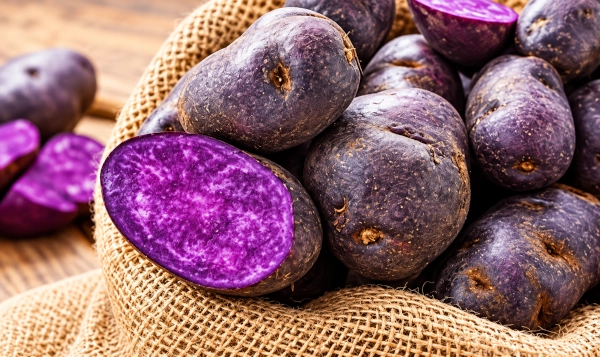
India has developed a nutrient-rich purple potato variety that combines high agricultural productivity with enhanced nutritional value. Known as Kufri Jamunia, the biofortified potato contains higher levels of vitamin C, anthocyanins, iron, zinc and carotenoids than conventional potatoes.
Developed by the ICAR-Central Potato Research Institute (ICAR-CPRI), Shimla, the variety represents an important advancement in India’s efforts to improve nutritional security through agricultural research. Released in 2024, Kufri Jamunia offers farmers a productive crop while providing consumers with a nutritious alternative to ordinary potatoes.
According to a backgrounder published by the Press Information Bureau on October 18, 2026, the variety has demonstrated promising results in nutritional composition, crop yield, storage performance and culinary applications.
Biofortification: Improving Nutrition Through Everyday Foods
Hidden hunger occurs when people consume sufficient calories but fail to obtain adequate vitamins and minerals. Such nutritional deficiencies can persist even among populations with regular access to food.
Biofortification addresses this challenge by increasing the natural nutrient content of crops through plant breeding. Unlike conventional food fortification, which introduces nutrients during processing, biofortification develops crops that naturally contain higher concentrations of beneficial nutrients.
Potatoes are particularly suitable for such improvements because they form an important part of everyday diets. By enhancing their nutritional composition, agricultural scientists can improve the nutritional value of commonly consumed foods without requiring major changes in dietary habits.
ICAR-CPRI has developed several coloured potato varieties as part of this initiative. Kufri Neelkanth, released in 2018, has purple skin and high antioxidant content. Kufri Manik, released in 2021, produces deep-red tubers with yellow flesh and enhanced micronutrient levels.
Kufri Jamunia advances this research with its distinctive purple flesh and improved concentrations of antioxidants and essential nutrients.
Kufri Jamunia: A Purple Potato with Higher Nutritional Value
Kufri Jamunia is distinguished by its dark-purple skin and purple flesh. Its colour comes from anthocyanins, naturally occurring plant pigments with antioxidant properties.
The variety contains approximately 42.75 mg of vitamin C per 100 grams of flesh, compared with 23.15 mg in conventional potatoes. Its zinc and iron concentrations are also considerably higher.
The nutritional comparison published by PIB highlights the following differences.
| Nutrient (per 100 g) | Kufri Jamunia | Common Potato |
|---|---|---|
| Vitamin C | 42.75 mg | 23.15 mg |
| Zinc | 2.28 mg | 0.28 mg |
| Iron | 3.22 mg | 0.57 mg |
Kufri Jamunia also contains approximately 42.05 mg of anthocyanins per 100 grams of flesh and 80.66 mg per 100 grams of skin. Its carotenoid concentration reaches around 161 micrograms per 100 grams of fresh flesh.
These nutritional characteristics make the variety a promising addition to efforts aimed at improving dietary diversity and micronutrient intake. Actual nutritional benefits depend on preparation methods, dietary patterns and the quantities consumed.
High-Yielding Variety with Good Storage Characteristics
Beyond its nutritional advantages, Kufri Jamunia offers favourable agricultural characteristics.
The variety reaches maturity in approximately 90–100 days and develops medium-tall plants with a semi-compact canopy. Its oblong tubers have shallow eyes, a mealy texture and attractive purple flesh.
Each plant generally produces 10–12 medium to large tubers. Under recommended cultivation practices, Kufri Jamunia can produce 32–35 tonnes per hectare. Station trials have recorded yields approaching 49 tonnes per hectare over a 90-day growing period.
The variety has also demonstrated a marketable yield of nearly 90% in trials, indicating that a substantial proportion of harvested potatoes meet market requirements.
Another important advantage is its storage performance. Kufri Jamunia has a dormancy period of approximately six to eight weeks, which helps delay sprouting after harvest. Its good keeping quality, low rottage and limited weight loss provide additional advantages for farmers, traders and storage operators.
Suitable for Cultivation Across North Indian Plains
ICAR has recommended Kufri Jamunia for cultivation across the northern, central and eastern plains of India.
Its recommended cultivation regions include Punjab, Haryana, Uttar Pradesh, the plains of Uttarakhand, Bihar, West Bengal, Assam, Odisha, Madhya Pradesh, Rajasthan, Gujarat and Chhattisgarh.
The variety’s performance across different agricultural environments creates opportunities for expanding the cultivation of nutritionally enhanced potatoes.
Its combination of yield potential, storage quality and attractive appearance could also support greater market acceptance among farmers, wholesalers, retailers and consumers.
Purple Potatoes Offer New Opportunities for Food Processing
Kufri Jamunia is suitable for ordinary household cooking as well as value-added food processing. Its purple colour, pleasant flavour and mealy texture allow it to be incorporated into several traditional Indian preparations.
The potatoes can be used in vegetable curries, parathas, puris and raita. They are also suitable for preparing halwa, upma, dosa and other dishes.
Food processors can use Kufri Jamunia to develop potato flour, dehydrated products, bakery ingredients, soups and specialty snacks.
Its natural pigmentation also offers opportunities to create visually distinctive food products without relying entirely on artificial colouring.
Processing methods that preserve its nutritional components could further expand its applications in health-oriented food products.
Strengthening India’s Nutritional Security Through Agricultural Innovation
The development of Kufri Jamunia demonstrates how Indian agricultural research is moving beyond crop productivity to incorporate nutritional improvement.
By developing varieties that combine higher micronutrient concentrations with desirable farming characteristics, ICAR is helping establish a stronger connection between agriculture and public health.
Kufri Jamunia offers a practical example of this approach. Its enhanced vitamin C, iron, zinc and antioxidant content increases the nutritional potential of a familiar food crop, while its productive and marketable tubers offer advantages for cultivation.
As biofortified varieties gain wider acceptance, innovations such as Kufri Jamunia can strengthen India’s agricultural diversity, support farmers and contribute to the country’s long-term nutritional security.
References
- Press Information Bureau, Government of India — October 18, 2026: India’s Nutrient-Rich Purple Potato
- Indian Council of Agricultural Research: Biofortified Crop Varieties
- ICAR, Potato Journal (2025): Kufri Jamunia: A Purple-Fleshed Biofortified Potato Variety
- ICAR, Indian Horticulture (September 2026): Biofortification in Potato to Strengthen Nutritional Security in Indian Perspective
- Ministry of Agriculture and Farmers Welfare: Government Notification of Biofortified Crop Varieties
You may also like
-
Ama and Modern Lifestyle: An Ayurvedic View of Poor Digestion and Sluggishness
-
Government Caps Trade Margins on 137 Anti-Cancer Medicines, Prices to Fall by Up to 70% from November 9
-
FSSAI Proposes Ban on Added Sugars in Infant Foods and New Pesticide Residue Limits for Tea
-
World Menopause Day 2026: Ayurveda Offers Holistic Approach to Women’s Health
-
Mankind Pharma to Acquire 70% Stake in Belgian CAR-T Cancer Therapy Developer for €48 Million
