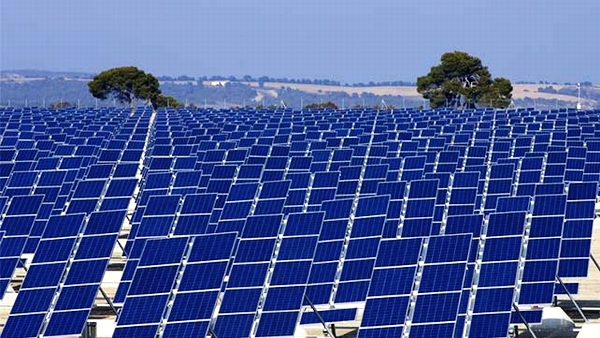
India’s first Namo Bharat regional rapid transit corridor is set to become substantially more dependent on renewable energy, with NLC India Renewables Limited and the National Capital Region Transport Corporation moving ahead with a 110-MW captive solar power project in Uttar Pradesh that is expected to meet nearly 60% of the electricity requirement of the Delhi-Ghaziabad-Meerut corridor.
The project will be implemented through NIRL NCRTC Renewables Limited, or NNRL, a joint venture established between NLC India Renewables Limited and NCRTC. NLC India Renewables, a wholly owned subsidiary of public-sector energy company NLC India Limited, holds a 74% stake in the venture, while NCRTC owns the remaining 26%. The companies have now executed the long-term Power Purchase Agreement that provides the commercial framework for development and supply of electricity from the project.
110 MW of Captive Solar Capacity
The solar facility will have an installed capacity of 110 MW AC and will be developed in Uttar Pradesh specifically under the captive-power model. Instead of selling its electricity into the general market, the project will primarily supply power required for operation of the Namo Bharat system.
Under the agreement, NCRTC will procure electricity generated by the solar project for 25 years, creating a long-term source of renewable electricity for the high-speed regional railway. The power plant is required to produce at least 180 million units of electricity annually, according to NLC India’s regulatory disclosure.
NCRTC originally selected NLC India through a competitive bidding process for development of the 110-MW grid-connected project. The accepted tariff was ₹2.73 per kilowatt-hour, providing NCRTC with long-term visibility over a significant portion of its electricity costs.
The project has been estimated at around ₹450 crore and is expected to be commissioned within 24 months of signing the Power Purchase Agreement. Once operational, it would become one of the most significant dedicated renewable-energy projects supporting a major public transport network in India.
Nearly 60% of Namo Bharat Power to Come From Solar Energy
The most important feature of the project is its scale relative to the electricity consumption of the Delhi-Meerut Namo Bharat corridor. NCRTC expects electricity generated from the 110-MW plant to meet nearly 60% of the corridor’s overall energy requirement.
Rail-based rapid-transit systems consume substantial amounts of electricity not only for train propulsion but also for stations, signalling, telecommunications, ventilation, lighting, depots, control centres and other infrastructure. Securing a large proportion of this demand through a dedicated renewable source can therefore have a significant effect on both operating costs and carbon emissions.
NCRTC has estimated that the solar arrangement could reduce its annual electricity expenditure by around 25%, while also reducing dependence on conventional grid electricity. The saving would be particularly significant over the 25-year duration of the PPA because energy remains one of the major recurring operating costs of an electrified transport network.
Around 1.77 Lakh Tonnes of CO2 Emissions Could Be Avoided Annually
The environmental impact is expected to be equally substantial. NCRTC has previously estimated that sourcing around 60% of the corridor’s electricity from captive renewable power could prevent approximately 177,000 tonnes of carbon-dioxide emissions every year.
That reduction would come from replacing a substantial quantity of conventional grid electricity with solar-generated power over the operating life of the project. Over two decades, the cumulative reduction could therefore run into several million tonnes, although actual savings will depend on generation levels, grid conditions and the future carbon intensity of India’s electricity system.
The project illustrates an important distinction in the environmental performance of electric public transport. Electrified trains do not produce direct exhaust emissions during operation, but their overall carbon footprint still depends substantially on how the electricity used to run them is generated. Increasing the proportion supplied from renewable sources therefore makes the transport system itself progressively cleaner.
NLC India Expands Beyond Conventional Power
The Namo Bharat project also reflects the rapid transformation underway at NLC India Limited, traditionally associated with lignite mining and thermal power generation.
The public-sector company has been steadily expanding solar and other renewable-energy capacity as part of its transition towards a more diversified generation portfolio. Its wholly owned renewable-energy subsidiary, NLC India Renewables Limited, was established to consolidate and accelerate that expansion.
The company had already received the Letter of Award from NCRTC for the 110-MW project, and creation of the NNRL joint venture has now established a dedicated corporate structure through which the solar plant will be developed.
The 74:26 ownership structure gives NLC India Renewables operational control while allowing NCRTC to participate directly in the generating company from which it will obtain electricity. This captive arrangement can provide greater long-term certainty than relying entirely on electricity purchased through conventional distribution channels.
Namo Bharat Already Uses Rooftop Solar
The new 110-MW plant will supplement renewable-energy systems that NCRTC has already installed directly along the corridor.
NCRTC has developed rooftop solar capacity at locations including the Duhai Depot, Ghaziabad and Muradnagar Receiving Sub-Stations and several Namo Bharat stations. Earlier installed rooftop capacity of around 4.7 MW was estimated to save approximately ₹2.1 crore annually while preventing about 4,900 tonnes of carbon-dioxide emissions each year.
Some Namo Bharat stations have also been designed to generate more solar electricity than their own auxiliary requirements during suitable periods, contributing to NCRTC’s objective of reducing the environmental footprint of station operations.
However, rooftop installations alone cannot supply the large quantity of electricity required to propel frequent high-speed trains along an entire regional corridor. The 110-MW captive plant addresses that limitation by adding utility-scale generation dedicated to the transport system.
Renewable Power for India’s First Namo Bharat Corridor
The Delhi-Ghaziabad-Meerut corridor is India’s first operational Regional Rapid Transit System, marketed under the Namo Bharat brand. The trains are designed for a maximum operating speed of 160 kmph, providing substantially faster regional connectivity than conventional suburban rail or metro systems across comparable distances.
The corridor links Delhi with major urban centres in western Uttar Pradesh and has been developed around the concept of high-frequency, high-speed regional commuting. Its infrastructure includes dedicated tracks, modern stations, advanced signalling, automated train-control technologies and purpose-built maintenance facilities.
Because the system is completely electrified, integrating renewable energy at scale offers NCRTC an opportunity to combine faster regional mobility with a lower-carbon operating model.
The solar project also demonstrates how large transport infrastructure can become an anchor consumer for new renewable-energy capacity. Long-term electricity demand from railways and rapid-transit systems can provide developers with predictable offtake, while transport operators gain access to competitively priced power over extended periods.
₹2.73 per Unit Provides Long-Term Cost Visibility
The contracted tariff of ₹2.73 per unit is another important aspect of the project. NCRTC selected NLC India for the solar development through an open bidding process, with the tariff fixed for electricity supplied under captive mode for 25 years.
Long-term renewable contracts can help public transport operators protect themselves from fluctuations in conventional electricity tariffs. Once a solar plant is constructed, fuel costs are effectively absent, meaning a large component of the cost of electricity is determined by the initial investment, financing, maintenance and transmission arrangements.
For a transport system expected to operate for several decades, predictable electricity pricing can therefore improve long-term financial planning while reducing exposure to increases in fossil-fuel-linked generation costs.
Annual Generation Target of 180 Million Units
NLC India’s disclosure also provides an important indication of how intensively the plant is expected to operate. The PPA stipulates an annual energy generation requirement of 180 million units, equivalent to 180 gigawatt-hours of electricity.
That output will feed directly into NCRTC’s requirements under the captive arrangement. Achieving the target will require appropriate solar-resource assessment, plant design, transmission connectivity and operational availability throughout the year.
The project’s commissioning deadline of 24 months from the signing of the PPA creates a defined implementation schedule for the joint venture. Once the project enters commercial operation, its performance will become an important test of the captive-renewable model for large Indian public-transport systems.
A Model for Greener Public Transport Infrastructure
The NLC India-NCRTC partnership could have significance beyond the Delhi-Meerut corridor. India is rapidly expanding metros, regional rapid-transit systems, suburban rail networks and electrified mainline railway operations, all of which create growing demand for electricity.
Linking these networks with dedicated solar, wind and energy-storage capacity could progressively shift a larger proportion of transport energy towards domestic renewable sources.
The approach also combines two major areas of India’s infrastructure transformation: expansion of high-capacity electric public transport and rapid growth in renewable power generation. Instead of addressing transport emissions and electricity-sector decarbonisation independently, captive renewable projects connect the two transitions directly.
For NLC India, the project provides another avenue for transforming a historically lignite-centred PSU into a diversified power producer with a growing renewable portfolio. For NCRTC, it offers a pathway towards lower operating costs, greater long-term energy-price certainty and a substantially smaller carbon footprint.
With the PPA now executed, a 110-MW plant, 180-million-unit annual generation requirement, 25-year power-supply arrangement and two-year commissioning window have moved the project from planning towards implementation. Once operational, nearly three-fifths of the electricity used by the Delhi-Meerut Namo Bharat corridor could effectively be backed by a dedicated solar-power source, making renewable energy an integral part of India’s emerging regional rapid-transit network.
You may also like
-
Government Finalises Airfare Pricing Rules to Protect Passengers from Excessive Ticket Charges
-
India’s Inland Waterway Cargo Movement Reaches 218 Million Tonnes, Surpasses 2030 Target Four Years Early
-
SberIndia Partners with Space 1 to Develop Russian-Indian Cooperation Center in New Delhi
-
GRSE Signs ₹1,032 Crore Contract with ONGC to Build Four Hybrid Platform Supply Vessels
-
QNu Labs Secures ₹150 Crore Govt Support to Develop Indigenous Quantum Security and Sensing Technologies
