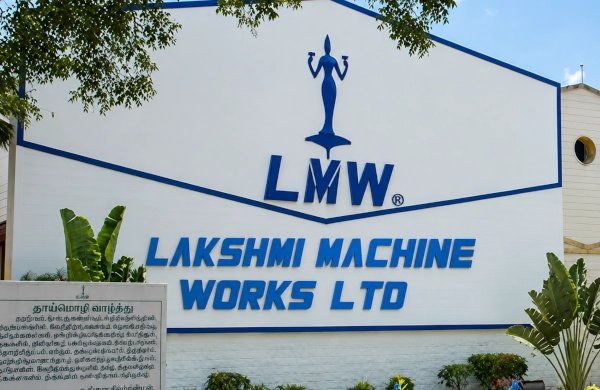
For more than six decades, LMW Limited, formerly Lakshmi Machine Works Limited, has been closely associated with India’s textile industry. Its spinning machinery became a familiar presence inside textile mills across the country, and the Coimbatore-based company grew into one of the few manufacturers worldwide capable of supplying a complete range of spinning machinery.
LMW, however, does not manufacture textiles itself. It manufactures the sophisticated machinery used by textile mills. That distinction helps explain a transformation that has largely taken place outside public attention: the engineering company that perfected machines for turning cotton into yarn is now manufacturing rocket structures, aircraft assemblies, aero-engine components and advanced carbon-fibre composites.
Its aerospace business is no experimental sideline. LMW’s Advanced Technology Centre supplies Indian organisations including ISRO, DRDO and Hindustan Aeronautics Limited, works with major international aerospace manufacturers and has produced some of the largest composite structures ever manufactured by Indian private industry.
The company’s journey illustrates an increasingly important development within Indian manufacturing. Firms that accumulated decades of competence in machine tools, metallurgy and precision engineering are beginning to enter industries previously dominated by specialised aerospace companies.
From Cotton Machinery to Precision Engineering
Lakshmi Machine Works was established in Coimbatore in 1962 to manufacture spinning machinery for India’s textile industry. It subsequently became one of the country’s largest textile-machinery producers and one of only a handful of manufacturers globally capable of supplying the complete spinning machinery chain.
Textile machinery itself is a demanding engineering business. Modern spinning machines contain high-speed rotating systems, precision-machined components, sophisticated controls and assemblies that must operate continuously while maintaining extremely tight tolerances.
LMW gradually extended these capabilities beyond textiles. It moved into CNC machine tools and established a foundry producing precision castings for industrial customers. These businesses gave the company expertise in machining, tooling, metallurgy, manufacturing automation and quality control.
Aerospace represented a much more demanding extension of those capabilities.
Instead of abandoning its existing engineering base and entering an unrelated sector from scratch, LMW effectively climbed the manufacturing value chain. The same organisational abilities required to build precision industrial machinery became a foundation for producing components in which tolerances, material behaviour and process repeatability are considerably more demanding.
The Aerospace Journey Began in 2010
LMW formally established its Advanced Technology Centre, or ATC, in 2010 at Coimbatore to manufacture critical components and sub-assemblies for aerospace applications.
The facility has subsequently expanded into both metallic and composite manufacturing. LMW says its aerospace campus occupies about 18 acres, with approximately 34,000 square metres of constructed manufacturing space and additional space reserved for future expansion.
ATC is not simply a machining workshop. It combines precision machining, sheet-metal fabrication, special processes, non-destructive testing, structural assembly and composite manufacturing within the same aerospace ecosystem.
Its quality systems are aligned with AS9100D, the international quality-management standard used by the aerospace industry, while several specialist processes carry NADCAP accreditation. Such certifications are essential for entering international aerospace supply chains because customers must be able to trace and verify virtually every stage involved in manufacturing a safety-critical component.
Carbon Fibre Changed the Scale of LMW’s Aerospace Ambitions
LMW took another significant step when it established a dedicated Aerospace Composites facility in 2018.
The approximately 7,450-square-metre facility was designed to handle the entire manufacturing chain, from raw-material storage through processing, inspection and final assembly. It includes controlled clean rooms and a large structural-assembly bay capable of accommodating major aerospace structures.
Carbon-fibre composites are fundamentally different from traditional metallic structures. Instead of machining a component from a block or forging of metal, manufacturers build the structure by arranging layers of carbon fibre impregnated with resin in precisely controlled orientations.
The structure is subsequently cured under carefully controlled temperature and pressure. The result can provide exceptional stiffness and strength while weighing substantially less than an equivalent conventional metallic structure.
Weight reduction is particularly valuable in aerospace. Every kilogram removed from a launch vehicle or aircraft can translate into additional payload, greater range or lower fuel consumption.
LMW’s move into composites therefore allowed it to progress from manufacturing individual precision components towards producing some of the much larger structural elements required by rockets and aircraft.
Building the Protective Shell Around ISRO’s Most Powerful Rocket
One of LMW’s most visible aerospace achievements has been its work on the Ogive Payload Fairing for ISRO’s LVM3, formerly known as GSLV Mk III.
The payload fairing is the enormous aerodynamic shell surrounding a satellite at the top of the launch vehicle. During the initial portion of a launch, the spacecraft inside must be protected against intense aerodynamic forces, vibration, acoustic energy and atmospheric heating.
Once the rocket has climbed beyond the dense atmosphere and the protective structure is no longer necessary, the fairing separates and falls away.
LMW has manufactured a composite fairing measuring approximately 5 metres in diameter and 10.75 metres in height. Its principal sections include the boat tail, cylindrical section, ogive and nose cap.
For a company whose name was historically associated with textile spinning machinery, manufacturing an enormous flight-certified carbon-composite rocket structure represents a remarkable technological transition.
Recent reporting has again drawn attention to this role, highlighting how LMW’s composite manufacturing capabilities have made the company an important private-sector partner in India’s launch-vehicle programme.
LMW’s Role Goes Beyond the LVM3 Fairing
The payload fairing is only the most visually impressive example of the company’s space work.
LMW lists composite interstage structures, radomes, antenna reflectors, solar-panel substrates, pressure vessels, motor cases and missile-launcher tubes among the products within its composite capability portfolio.
The company has already realised composite structures for Indian launch vehicles including a two-metre-diameter interstage structure for the Small Satellite Launch Vehicle, as well as four-metre-class structures associated with LVM3.
Its metallic division has also undertaken structural stage assemblies for SSLV.
LMW says it contributed to the Chandrayaan-3 programme through assembly, structural testing and non-destructive testing work. It also supplied composite sandwich panels associated with the GSLV-F14/INSAT-3DS mission and participated in payload-adaptor assembly work.
In September 2025, ISRO Chairman V. Narayanan visited the Advanced Technology Centre and reviewed its composite and metallic manufacturing capabilities. Discussions covered LMW’s work on LVM3 and SSLV as well as possible future cooperation involving India’s planned space-station programme and upcoming human-spaceflight activities.
That potential future role is significant. India’s space programme is gradually shifting from launch vehicles and individual satellites towards more complex systems involving human spaceflight, reusable technologies, larger spacecraft and an eventual orbital station. Each step increases demand for a deeper domestic industrial supply chain.
From Rockets to Fighter Aircraft
LMW’s aerospace transformation is not confined to space.
Its Advanced Technology Centre can machine structural parts measuring up to 10 metres in length, allowing it to manufacture unusually large aerospace components. Among the products listed by the company are wing spars, aircraft longerons and complex structural assemblies.
LMW has manufactured an air-intake assembly for the HAL Light Combat Aircraft Tejas and a tail-boom assembly for the HAL Chetak helicopter. Its aerospace portfolio also includes several structural sub-assemblies associated with the Su-30 fighter aircraft.
The company consequently occupies an interesting position within India’s aerospace industrial base. It can manufacture both the large metallic structures associated with conventional aircraft production and the lightweight composite structures increasingly used in modern aircraft and launch vehicles.
Helping Build India’s Airborne Early-Warning Aircraft
Another important demonstration of LMW’s capabilities emerged from its work with DRDO’s Centre for Airborne Systems.
The company fabricated and assembled the metallic structure of an airborne radar dome for an Indian airborne warning and control programme. According to LMW, the project involved thousands of precision-manufactured metallic parts and an extraordinarily large number of riveted joints.
The achievement earned LMW’s Advanced Technology Centre the DRDO Defence Technology Absorption Award.
Building such a structure is far more complex than producing its outer shape. Large airborne radar structures must maintain geometrical accuracy while surviving aerodynamic loads and vibration, and numerous individual components must align precisely during final assembly.
The programme demonstrated that an Indian private manufacturer could absorb specialised aerospace production technology and execute a large, complex structural assembly for a strategic programme.
Into Aero Engines
LMW has also entered one of aerospace manufacturing’s most difficult segments: aero-engine components.
Jet engines operate under extraordinary mechanical and thermal conditions. Parts may encounter extreme rotational forces, high temperatures and continuous vibration while operating with exceptionally small dimensional tolerances.
LMW says its ATC manufactures engine components from specialised and exotic alloys and supplies both commercial and military aero-engine programmes. It has also developed capabilities involving bleed-valve assemblies used in major aircraft engines.
The importance of this business extends beyond individual components. Aero-engine manufacturing is among the most technically demanding industrial activities in the world, and establishing a domestic supplier ecosystem capable of machining and processing aerospace alloys is essential for India’s long-term ambitions in aircraft-engine development.
An Extensive Range of Special Processes
One reason international aerospace manufacturing is difficult to enter is that machining a component often represents only one stage of its production.
Aerospace parts may require heat treatment, chemical treatment, welding, surface coatings and sophisticated inspection. Each process must be qualified, documented and performed repeatedly within strict tolerances.
LMW’s Coimbatore operation includes capabilities covering more than 25 specialist manufacturing processes.
Its facilities include chemical processing, aluminium anodising, robotic TIG welding, titanium processing, heat-treatment furnaces, fluorescent penetrant inspection and magnetic-particle inspection. Its robotic welding equipment can work with materials including Inconel, titanium, steel and aluminium alloys.
Bringing these capabilities in-house is strategically important because it reduces dependence on multiple external suppliers and gives the company greater control over quality and production schedules.
India’s Largest Composite Structures Require Giant Industrial Ovens
Manufacturing a 10.75-metre rocket fairing illustrates the physical scale required for advanced composite production.
After carbon-fibre material has been laid into the required shape, aerospace structures frequently undergo controlled curing inside an autoclave. These machines essentially function as enormous high-precision pressure ovens.
Temperature, pressure and curing cycles have to be controlled carefully so that resin bonds correctly and voids or defects do not compromise the final structure.
LMW’s investment in large composite-production infrastructure enables it to manufacture structures that would previously have remained within specialised government aerospace facilities.
This represents an important shift in India’s space industrialisation. ISRO can increasingly function as a designer, systems integrator and technology organisation while qualified private companies manufacture larger portions of launch vehicles and spacecraft hardware.
Aerospace Is Becoming a Meaningful Business for LMW
The transformation is also visible financially.
LMW reported that its Advanced Technology Centre generated ₹171.29 crore in turnover during FY2025-26, compared with ₹147.64 crore in the previous financial year, representing growth of approximately 16%.
More strikingly, aerospace has become one of the company’s most internationally oriented businesses. LMW reported ₹163.85 crore of aerospace-parts exports in FY2025-26, up from ₹139.05 crore a year earlier.
That indicates the division is not dependent solely on government contracts from ISRO, DRDO or HAL. LMW has built relationships with aerospace OEMs and Tier-1 suppliers in the United States and Europe and is increasingly integrated into global aerospace supply chains.
The company therefore represents something more substantial than a domestic supplier benefiting from India’s indigenisation policy. It is attempting to compete internationally in an industry where quality standards and certification requirements are exceptionally high.
Why a Textile-Machinery Company Could Make the Leap
On the surface, spinning machinery and rocket structures appear to have almost nothing in common.
At an engineering level, however, there are important connections.
Textile machines demand precision, automation, high-speed mechanical systems, complex manufacturing and extremely reliable production equipment. LMW’s subsequent expansion into CNC machine tools gave it an even deeper understanding of precision machining, while its foundry provided experience with metallurgical processes and complex castings.
Aerospace required a much higher level of certification, traceability and material control, but the underlying culture of precision engineering was already present.
LMW therefore did not jump directly from cotton yarn to rockets. It progressed through a sequence of increasingly sophisticated manufacturing capabilities: textile machinery, machine tools, precision castings, aerospace machining, structural assemblies and finally advanced composites.
That progression is perhaps the most important part of the story.
Coimbatore’s Industrial Ecosystem
LMW’s aerospace diversification also highlights the significance of Coimbatore as one of India’s deepest engineering clusters.
The city and surrounding region possess long-established capabilities in machine tools, pumps, motors, textiles, foundries, automotive components and precision engineering. Generations of suppliers, machinists and technical workers have accumulated manufacturing expertise that can increasingly be redirected towards aerospace, defence and space.
This is the type of industrial ecosystem India will require if it hopes to expand aircraft, helicopter, missile and launch-vehicle production substantially.
Major aerospace companies do not manufacture every component themselves. They depend on extensive networks of specialised suppliers capable of machining, forming, treating, inspecting and assembling components to certified standards.
Companies such as LMW can therefore occupy the crucial middle layer between national aerospace organisations and thousands of smaller manufacturing suppliers.
Potential Beyond Components
LMW’s ambitions have at various times extended far beyond supplying individual aerospace parts.
Corporate documents have expanded the company’s permitted business activities to include space-launch systems, satellites, spacecraft, military and civil aircraft, missiles, unmanned systems, propulsion, aerospace electronics and associated subsystems.
This does not mean that LMW currently manufactures complete aircraft, missiles or spacecraft. These corporate provisions should instead be understood as establishing the legal scope for future expansion should commercial opportunities arise.
The company previously considered transferring its Advanced Technology Centre into a dedicated subsidiary called LMW Aerospace Industries Limited, although the restructuring proposal was subsequently withdrawn. Aerospace operations therefore remain integrated with LMW’s broader engineering business.
Even so, the creation of the subsidiary and the breadth of the company’s aerospace objects demonstrate how seriously management has considered the sector’s long-term potential.
Part of a Larger Transformation in Indian Manufacturing
LMW’s journey mirrors a wider evolution now taking place across Indian industry.
Companies originally built around automobiles, machine tools, forgings, electronics, heavy engineering and industrial components are moving into aerospace and defence. India’s growing domestic procurement programmes provide one source of demand, while international aerospace companies increasingly seek additional manufacturing partners outside their traditional supply chains.
At the same time, ISRO’s expanding collaboration with private industry is creating opportunities that did not exist when virtually every major launch-vehicle structure was manufactured within government facilities.
The challenge is that aerospace rewards patience rather than rapid expansion. Components can take years to qualify. Production processes must be repeatedly audited. A single quality failure can threaten an entire customer relationship.
LMW’s aerospace journey beginning in 2010 therefore matters precisely because it demonstrates the length of time required to build genuine capability. The company’s position today is the result of more than fifteen years of investment rather than an overnight diversification.
From Spinning Cotton to Protecting Satellites
The contrast remains extraordinary.
Inside textile mills, LMW machinery helps transform cotton fibres into yarn. Inside the company’s Advanced Technology Centre, engineers work with carbon fibres and aerospace alloys to manufacture structures destined for rockets and aircraft.
One industry demands that millions of fibres be controlled accurately at high speed. The other demands that layers of high-strength fibre and precision-machined metal survive some of the harshest environments encountered by engineered structures.
The materials are different and the consequences of failure are vastly different, but the underlying industrial principle is remarkably similar: control materials with extreme precision and make the process repeatable.
That engineering foundation has allowed a company established to support India’s textile industry in 1962 to become a supplier to ISRO’s launch vehicles, DRDO programmes, HAL aircraft and international aerospace manufacturers.
LMW’s transformation therefore represents more than diversification by a single Coimbatore company. It shows how India’s established manufacturing industries can provide the industrial foundation for the country’s next generation of aerospace and defence capability.
The machines that once helped India become stronger in textiles have, six decades later, helped create the engineering expertise needed to build rocket fairings, aircraft structures and aero-engine components. In that transition lies an important lesson for India’s manufacturing ambitions: advanced aerospace capability does not always begin inside an aerospace company. Sometimes it begins on an ordinary factory floor and moves steadily upward—from cotton, to carbon fibre, and eventually to space.
You may also like
-
Xploder UGV — Major Rajprasad R.S.: A Soldier-Built Robot for IED Disposal and Combat Operations
-
India Moves to Build Port Cranes at Home, Reducing Dependence on Chinese Equipment
-
India and Uzbekistan Advance Long-Term Uranium Supply Partnership as Nuclear Cooperation Deepens
-
Indian Navy Commissions INS Nipun, Strengthening Deep-Sea Diving and Submarine Rescue Capability
-
India’s Telecom Base Crosses 1.35 Billion as Broadband Connections Near 1.1 Billion
