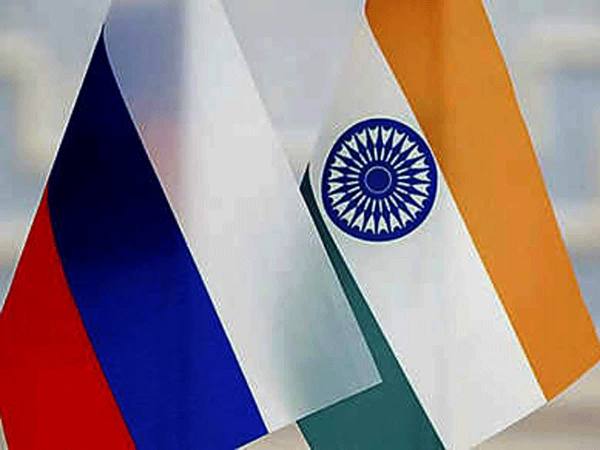
India and Russia have moved to deepen their economic partnership across trade, investment, energy, technology, industrial cooperation, connectivity and space, with the two countries seeking to build a broader and more balanced commercial relationship as they work towards a bilateral trade target of $100 billion by 2030.
External Affairs Minister S. Jaishankar and Russian First Deputy Prime Minister Denis Manturov co-chaired the 27th India-Russia Inter-Governmental Commission on Trade, Economic, Scientific, Technological and Cultural Cooperation (IRIGC-TEC) in Moscow on August 24, 2026. The commission is the principal institutional mechanism overseeing the expanding economic relationship between the two countries.
The latest meeting covered a wide range of sectors, including trade, investment, energy, fertilisers, nuclear cooperation, connectivity, technology, space and mobility. The discussions reflected an effort by both sides to move beyond the traditional energy-dominated relationship and develop a more diversified partnership based on industrial production, technology and long-term investment.
Bilateral trade has expanded dramatically over the past few years and now stands at close to $60 billion. India and Russia have set a joint objective of raising annual trade to more than $100 billion by 2030, making the next four years critical for building the logistics, payment infrastructure, industrial partnerships and market-access arrangements needed to sustain that scale of commerce.
However, the rapid expansion has also highlighted the need for a more balanced trade structure. India is seeking to substantially increase its exports to Russia, particularly in pharmaceuticals, agricultural products, engineering goods, machinery, chemicals, textiles and other manufactured products. The two governments have previously identified balanced trade as an important element of their economic strategy through 2030.
Reducing tariff and non-tariff barriers is therefore becoming an important part of the bilateral agenda. India and Russia are continuing discussions on greater market access while also supporting negotiations for a proposed free trade agreement between India and the Eurasian Economic Union. Such an agreement could give Indian exporters improved access not only to Russia but to a wider Eurasian market if negotiations are successfully completed.
Another priority is the development of reliable payment mechanisms. India and Russia have been working on systems that can facilitate bilateral settlements in national currencies while reducing dependence on financial channels vulnerable to external disruption. The two countries’ 2030 economic cooperation framework specifically calls for the development of bilateral settlement mechanisms using national currencies and the gradual introduction of digital financial instruments.
Energy continues to provide the largest foundation for the relationship. Russia remains an important supplier of crude oil and other energy resources to India, while both governments are exploring opportunities in liquefied natural gas, oil refining, petrochemicals and energy infrastructure. Russia has also indicated that its companies have the capacity to expand LNG supplies to the Indian market.
Civil nuclear cooperation remains another major pillar. Construction of additional units at the Kudankulam Nuclear Power Plant continues under the India-Russia partnership, while both sides have indicated interest in expanding cooperation in nuclear energy technologies and equipment. The sector represents one of the longest-running examples of advanced technology collaboration between India and Russia.
Fertilisers have also emerged as a strategically important component of bilateral commerce. Russia increased supplies of mineral fertilisers to India by around 40% during 2025, according to the Russian government, and the two sides are examining a joint urea production project. Such cooperation could strengthen India’s long-term fertiliser security while creating opportunities for investment and joint manufacturing.
Industrial cooperation is increasingly moving towards higher-value sectors. A separate India-Russia working group held earlier in August discussed cooperation in the Vande Bharat railway programme, railway infrastructure, SJ-100 regional aircraft, unmanned aerial vehicles, aero-engines, 3D printing, carbon-fibre technology, propulsion systems, critical minerals, lithium, titanium and rare-earth exploration. These discussions indicate that the economic partnership is gradually expanding from commodity trade into manufacturing and technology-intensive sectors.
The potential cooperation around the SJ-100 regional aircraft and aero-engine technologies is particularly significant for India’s broader manufacturing ambitions. If such projects progress into local production or joint development, they could strengthen India’s aerospace supply chain and create opportunities for domestic companies to participate in complex civil aviation manufacturing.
Critical minerals represent another emerging area. Both countries are exploring cooperation involving rare earths, lithium, titanium and mining technologies at a time when secure access to such materials is becoming increasingly important for electric vehicles, electronics, renewable energy, aerospace and defence manufacturing.
Connectivity remains crucial to achieving the $100-billion trade target. India and Russia have identified the International North-South Transport Corridor, the Northern Sea Route and the Chennai-Vladivostok maritime corridor as major logistical pathways capable of reducing transport times and diversifying shipping routes between the two countries. Their 2030 cooperation plan specifically calls for increasing cargo movement through these corridors.
The industrial dimension also gives the partnership a strong Make in India component. Russia has previously linked its push for technological sovereignty with India’s Make in India programme, identifying similarities between the two strategies and highlighting opportunities for joint manufacturing, localisation and technological cooperation. Russian officials have specifically advocated increasing the share of high-technology and non-commodity products in bilateral trade.
For India, deeper industrial cooperation with Russia could help diversify technology partnerships and strengthen domestic capabilities in areas such as aerospace, energy equipment, transport engineering, mining, fertilisers and advanced materials. At the same time, Indian pharmaceutical, engineering, agricultural and technology companies could gain greater access to the Russian market as both governments work to correct the existing trade imbalance.
The broader objective is therefore no longer simply to increase the volume of India-Russia trade. New Delhi and Moscow are attempting to transform a rapidly expanding commercial relationship into a more stable economic architecture based on local manufacturing, investment, technology transfer, connectivity, reliable financial mechanisms and diversified trade.
The 27th IRIGC-TEC meeting indicates that the economic partnership is entering a more implementation-focused stage. With a $100-billion trade target now approaching, success will depend on translating political agreements into projects, removing practical barriers faced by businesses and expanding cooperation into sectors where the two economies offer complementary strengths.
India-Russia economic relations could evolve from a partnership dominated by energy and commodities into a broader industrial and technology relationship, with Make in India, Russian technological capabilities and new Eurasian trade corridors increasingly forming part of the same economic framework.
You may also like
-
ICAR Scientists Develop Indigenous Protective Gloves for Cotton Farmers, Sign Commercial Manufacturing Agreement
-
India and Italy Hold First Maritime Security Dialogue in Rome, Strengthen Strategic Maritime Cooperation
-
BHEL–Coal India Joint Venture Begins Construction of ₹25,016 Crore Indigenous Coal Gasification Project in Odisha
-
India and Azerbaijan Agree to Strengthen Security, Trade, Energy and Economic Cooperation
-
PM Modi to Inaugurate RBI’s Tier IV Data Centre and Cybersecurity Training Institute in Bhubaneswar
